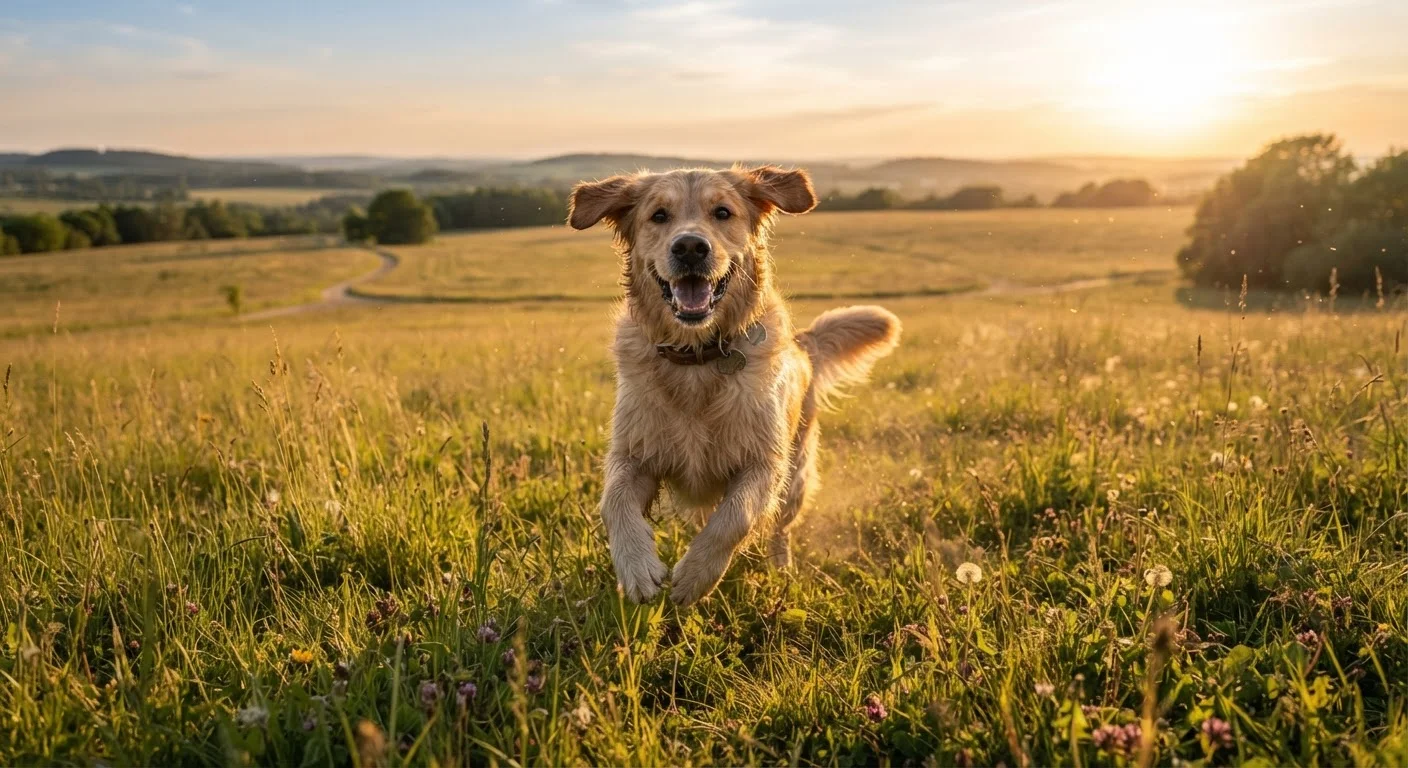
Why Recall Is a Safety Behavior, Not Just a Trick
A recall - the trained behavior of a dog returning to their owner on cue - is widely considered one of the most important behaviors any dog can learn. Unlike a sit or a down, which manage a dog in a stationary moment, a recall can interrupt a dog mid-sprint toward a road, another animal, or an unsafe situation. It is, in practical terms, a behavior that can save a dog's life.
The challenge is that recall competes directly with the dog's environment. Smells, movement, other animals, and freedom are all inherently reinforcing. For a recall to hold up under those conditions, it cannot be merely trained - it must be proofed, meaning practiced repeatedly in the presence of real-world distractions until the behavior is deeply reliable.
Before starting, gather what you'll need:
What you will need
If your dog already shows reactivity toward other dogs or strangers - making outdoor training difficult - review strategies in reactive dog training before proofing the recall in public spaces.
Tools That Support Recall Training
You don't need specialized gear to teach a recall, but a few items make the process significantly safer and more effective:
Long line (20-30 ft)
Allows the dog to practice distance recalls without the safety risk of an off-leash environment.
High-value treats
Motivates the dog strongly enough to compete with environmental distractions during proofing.
Clicker or verbal marker
Marks the exact moment the dog begins moving toward you, giving precise feedback.
Treat pouch
Keeps rewards accessible so reinforcement is delivered within one to two seconds of the behavior.
Step-by-Step: Building a Reliable Recall
Charge the recall cue in a zero-distraction setting
Choose a single recall word - "come" is common, but any word works as long as you use it exclusively for this behavior. In a quiet room, say the cue in a bright, upbeat tone, then immediately deliver a high-value treat regardless of what the dog is doing. Repeat 10-15 times across two or three short sessions. You are pairing the word with something great before the dog is expected to do anything with it.
Practice short-distance recalls indoors
With your dog a few feet away, say your recall cue once in a cheerful voice. The moment the dog turns toward you or takes a step in your direction, mark with "yes" or a clicker, then reward generously when they arrive. Crouch down, use animated body language, and make arriving at you the most rewarding thing in the room. Practice in every room of your home to build a strong indoor foundation.
Introduce the long line in a low-distraction outdoor space
Clip the long line to a flat collar or harness and let the dog explore a quiet yard or park. When the dog is calm and mildly engaged, call once. If they respond, mark and reward enthusiastically when they reach you. If they do not respond within two to three seconds, gently apply steady pressure on the long line - not a jerk - to guide them toward you, then reward warmly when they arrive. The long line prevents failure, not punishes it.
Build distance incrementally
Once your dog is responding reliably at 10 feet, gradually increase distance over multiple sessions - 15 feet, then 20, then the full length of the long line. Only increase distance when the dog is succeeding at roughly 80% or better at the current distance. If success rate drops, shorten the distance and rebuild confidence before moving forward again.
Proof the recall against distractions
Distractions must be introduced deliberately, not all at once. Start with mild distractions - another person standing nearby, low-level outdoor smells - and practice recalls in their presence. Gradually work toward more challenging stimuli: other dogs visible at a distance, wildlife scents, open spaces. Each new distraction is essentially a new starting point: begin close and with easy conditions, then build distance and complexity again. This is the same structured progression used in building a solid stay command.
Maintain the recall with real-life rewards
Once established, the recall must stay reinforced. Call your dog to you during walks not just to end the outing, but also to deliver a treat and then release them to keep sniffing. This prevents the recall from becoming a reliable predictor of "fun is over." Intermittent real-world rewards - a game of tug, a jackpot of treats, permission to greet another dog - keep the behavior strong across the dog's lifetime. For dogs who also pull on leash, a reliable recall pairs naturally with the skills covered in teaching a dog to walk calmly on a leash.
Never Use the Recall Cue to Punish
If a dog reaches you after a recall and receives scolding, a harsh leash correction, or even a neutral reaction, the cue begins to predict something neutral or negative. From that point forward, the dog has a logical reason to avoid coming when called. The recall cue must - without exception - predict a positive outcome every time it is used in training.
Once your dog is responding consistently, the next step is to gradually reduce the predictability of food rewards - not eliminate them, but vary them. That process, known as fading the lure, is covered in detail in fading food lures for reliable obedience.
Common Mistakes That Undermine Recall
Even owners following a solid training plan can inadvertently weaken their dog's recall. The most common errors include:
- Calling the dog for something unpleasant. If the recall cue consistently predicts a bath, nail trim, or the end of off-leash time, the dog will become reluctant to respond. Recall to reward, then send the dog back to play - or deliver the unpleasant thing without calling the dog at all.
- Repeating the cue. Saying "come, come, COME" teaches the dog to wait for urgency. One calm, bright cue is the standard; if it fails, reset the environment.
- Skipping proofing. A recall that works in the living room is not a recall - it's a very good indoor behavior. Real reliability requires practicing in dozens of different environments and contexts.
- Punishing a slow return. If the dog eventually comes back after hesitating, that hesitation is irrelevant - what matters is that they came. Punishing a slow recall produces a dog that stops coming at all.
Use a 'Recall Party' to Celebrate Arrival
When your dog reaches you during training, make it a genuine celebration - multiple treats delivered rapidly, animated praise, or a burst of play. The more over-the-top the reward, the more motivated the dog will be to repeat the behavior. Think of arrival at your side as the best possible outcome from the dog's perspective.