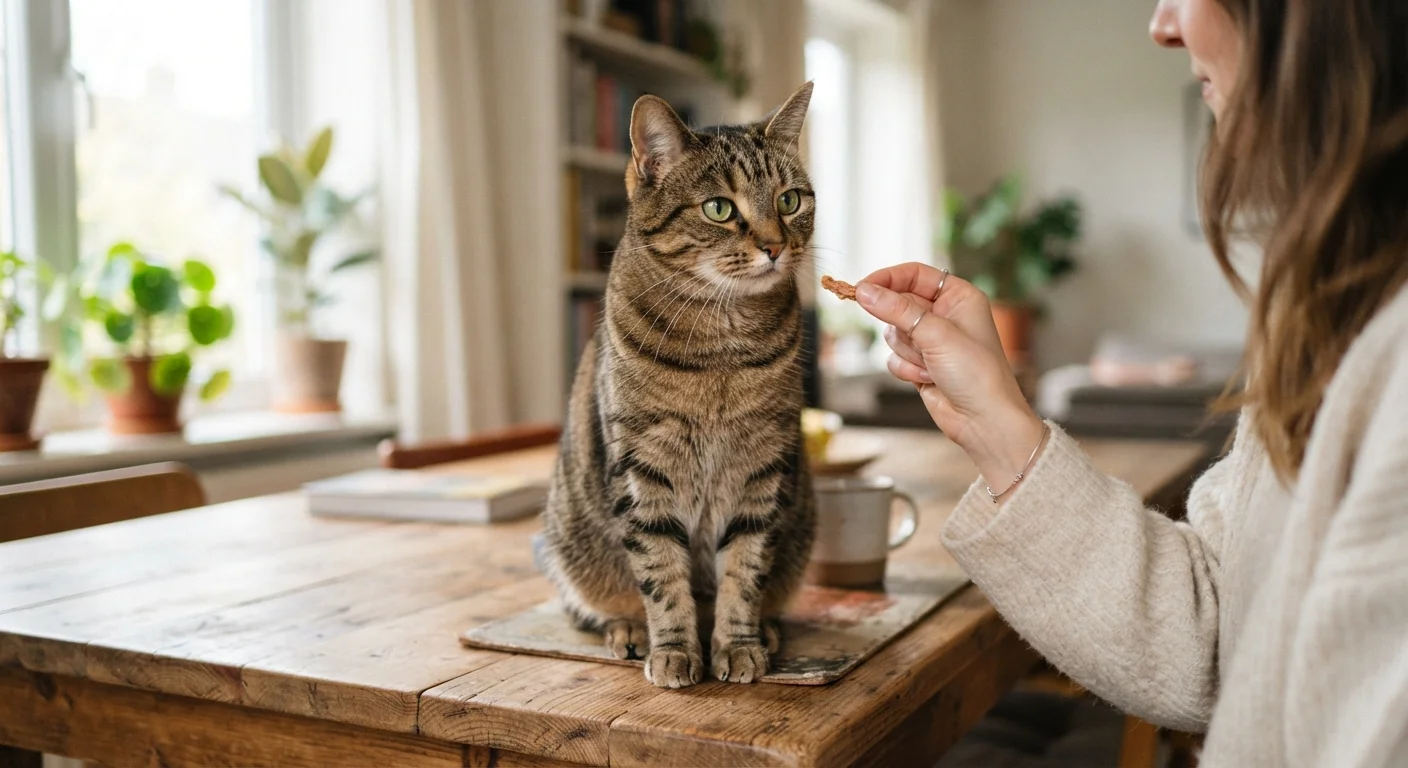
The Myth That Cats Can't Be Trained
The idea that cats are untrainable is one of the most persistent myths in pet ownership - and one directly contradicted by behavioral science. Cats are not indifferent to learning; they are simply more selective than dogs about what motivates them. Understanding that distinction is the starting point for any successful training effort.
Animal behaviorists have documented cats performing complex learned behaviors in laboratory and applied settings for decades. The mechanisms cats use to learn - associating actions with outcomes - are the same ones that underpin training in virtually every vertebrate species. The challenge isn't the cat's capacity; it's matching the method to how cats actually think.
For a broader look at how consistency shapes animal learning, see why consistency matters more than intensity in pet training.
How Cats Actually Learn: The Science
Cats learn primarily through operant conditioning - a process in which behavior is shaped by its consequences. When a cat performs an action and something good follows immediately, the cat is more likely to repeat that action. When nothing rewarding follows, or when a behavior leads to something unpleasant, it tends to decrease.
This is not unique to cats. It is the same framework used to train dolphins, horses, dogs, and birds. What varies between species - and between individual animals - is the type of reward that's motivating, the pace of learning, and the length of productive sessions.
2-5 min
Ideal length of a single training session
Animal behaviorists generally recommend keeping feline training sessions brief to maintain engagement and end before frustration develops.
3×/day
Recommended training session frequency
Multiple short daily sessions produce more reliable behavior than single long sessions, consistent with research on habit formation in animals.
~0.5 sec
Window to mark a behavior effectively
Timing is critical in marker training - rewards or markers delivered more than a second after the behavior are less effective at communicating which action was correct.
For cats, positive reinforcement consistently outperforms punishment in research settings. Punishment-based approaches - spraying water, startling sounds, or physical correction - can produce fear and avoidance without teaching the cat what to do instead. They also risk damaging the trust that makes training possible in the first place.
This mirrors findings in dog training research, where punishment-based methods have similarly been shown to increase stress behaviors. You can read more about how training myths affect outcomes in training myths that make dog behavior worse.
The Core Method: Marker Training With Positive Reinforcement
The most widely recommended technique for training cats is marker training, sometimes called clicker training. It works by pairing a precise signal - the click of a small handheld clicker, or a consistent short word like "yes" - with an immediate reward. Over time, the marker itself communicates to the cat: "That exact action earned you something good."
Here's how to apply it:
- Choose a motivating reward. Identify what your cat finds genuinely exciting - a specific treat, a bit of cooked chicken, or play with a preferred toy. The reward must be desirable enough to compete with whatever else the cat could be doing.
- Charge the marker. Before introducing any behavior, help the cat associate the clicker with the reward by clicking and immediately delivering a treat several times in a row. After a dozen or so repetitions, the click alone will begin to signal "reward is coming."
- Capture or lure the behavior. Either wait for the cat to offer the desired behavior naturally and mark it the moment it occurs, or use a treat to gently guide the cat into position. Mark and reward immediately.
- Keep sessions short. Two to five minutes, two or three times a day, is far more productive than a single long session. Cats disengage quickly, and ending on a successful repetition keeps motivation high.
- Build gradually. Once a behavior is reliable in one context, slowly add duration, distance, or distractions - one variable at a time.
Always End on a Win
Finish each session with a behavior the cat already knows well so it can succeed and receive a reward before you stop. This keeps the cat's association with training positive and increases willingness to engage in the next session. Avoid pushing for a new skill when the cat is already showing signs of disengagement.
A practical application of this method: teaching a cat to use a scratching post instead of furniture. The step-by-step approach to redirecting scratching follows these same principles.
What Training Does for Your Cat Beyond Obedience
Training a cat isn't only about correcting problem behaviors or teaching tricks. It provides mental stimulation - an often-underappreciated component of feline wellbeing. Indoor cats in particular benefit from activities that engage their problem-solving instincts.
Training also builds a communication bridge between cat and owner. Cats that are accustomed to interacting with their owners in structured, predictable ways are often easier to handle during veterinary visits and are more tolerant of necessary care routines like nail trims and grooming.
For owners who want to support overall feline health from multiple angles, the Pet Care Basics hub covers nutrition, grooming, and wellness alongside training fundamentals. You can also explore evidence-based feeding guidance in separating fact from fiction about cat nutrition.
This article is for general informational and educational purposes only. For concerns about your cat's health or behavior, consult a licensed veterinarian or a certified applied animal behaviorist.