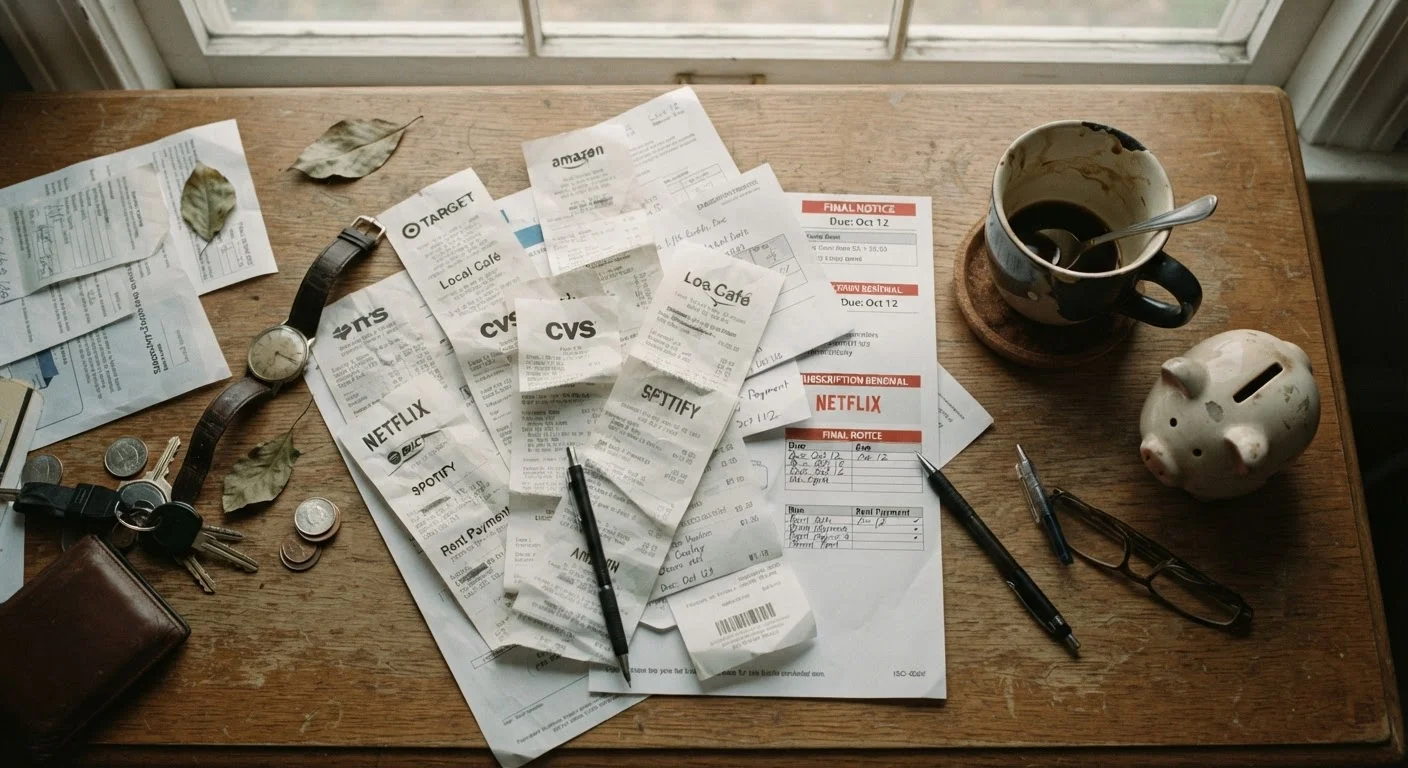
Why Small Spending Patterns Carry Outsized Consequences
Most Americans who struggle to grow their savings aren't making one large financial mistake - they're making many small ones, repeatedly. A $14 streaming service, a $7 daily coffee, a $30 impulse purchase on a Tuesday: individually, none feels significant. Collectively, they can swallow hundreds of dollars a month that were never consciously allocated.
The challenge is that these habits operate below the threshold of awareness. They don't show up as a single alarming line item; they appear scattered across a bank statement as a dozen entries that each seem defensible in isolation. Understanding where the leaks tend to form is the first step toward sealing them. For a broader look at how spending patterns relate to your overall plan, the Budgeting Basics hub is a useful starting point.
Paying for subscriptions that are rarely or never used.
Why it happens: Free trials convert to paid plans quietly, and services feel hard to cancel once set up. The low monthly price makes each one seem not worth the effort to review.
Relying on convenience spending instead of planned purchasing.
Why it happens: Busy schedules push people toward the nearest, fastest option - takeout instead of groceries already at home, a last-minute airport purchase instead of packing ahead. Each decision feels rational given the moment.
Spending to match a social environment or perceived peer standard.
Why it happens: Dining out at expensive restaurants, upgrading to a newer phone, or vacationing because others are - these decisions are often driven by social comparison rather than personal priority or budget capacity.
Treating irregular expenses as surprises rather than planning for them.
Why it happens: Annual fees, seasonal expenses, and periodic car or home maintenance bills feel unpredictable, so people don't budget for them. When they arrive, they're paid from savings or put on credit.
Skipping a monthly spending review and assuming the budget is on track.
Why it happens: Reviewing finances feels tedious, and many people assume that if they're not overdrafting, things must be fine. Months can pass before a pattern of overspending becomes visible.
How to Reclaim Control Over Your Spending
Identifying these habits is only half the work. The other half is building systems that make the better choice the default one - because relying on motivation or willpower alone is rarely sufficient.
$219/month
Average amount Americans waste on unused subscriptions
A 2022 survey by C+R Research found that consumers underestimate their subscription spending by a significant margin, often forgetting active services entirely.
1 in 3
Americans with no dedicated emergency savings
Federal Reserve survey data has consistently shown that a substantial share of U.S. adults would struggle to cover an unexpected $400 expense from savings alone.
Start by auditing your last two months of bank and credit card statements. Flag every recurring charge and every purchase you don't clearly remember making. That list is your savings roadmap. Next, set up an automatic transfer to a dedicated savings account on the same day your paycheck arrives - this is sometimes called "paying yourself first," and it ensures savings happen before discretionary spending has a chance to absorb the surplus. If you're working with a tight budget, even a modest automatic transfer builds the structural habit.
For predictable large expenses - car registration, annual insurance, holiday gifts - a sinking fund approach prevents you from raiding general savings or turning to debt when those bills arrive. Assign each goal a monthly contribution and treat it like a fixed bill.
Watch for Signs You're Spending Beyond Your Means
If you find yourself consistently ending the month with little or nothing left to save, or regularly carrying a credit card balance, these are signals worth taking seriously. The article on warning signs you're living beyond your means outlines the key red flags to watch for. Addressing them early prevents the gap between income and spending from widening further.
Finally, recognize that spending habits don't exist in isolation - they're often tied to income growth. If your expenses have risen alongside every pay increase, that's a pattern worth examining before it continues. The article on lifestyle inflation explains how this dynamic develops and how to interrupt it. For the behavioral side of why budgets succeed or fail, see the habit loop behind sticking to a budget.
This article is for general informational and educational purposes only and does not constitute personalized financial advice. Consider consulting a qualified financial professional for guidance specific to your situation.