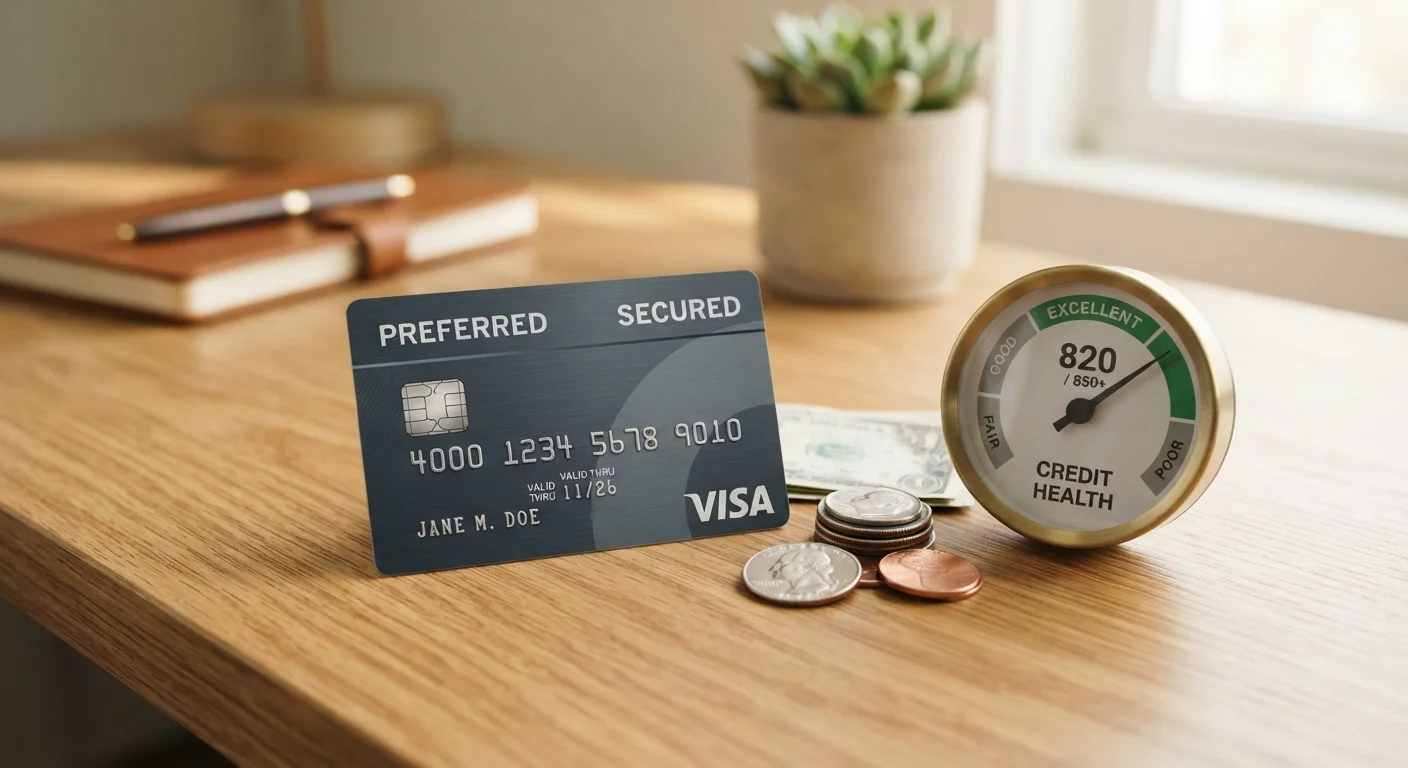
How a Secured Card Actually Works
A secured credit card functions almost identically to a standard credit card at the point of sale - you swipe or tap to pay, receive a monthly statement, and owe a minimum payment. The key difference is the deposit. Before you can use the card, you provide a cash deposit to the issuer, which is typically held as collateral and sets your credit limit.
That deposit is not used to pay your bill. You still owe the full balance each month, and if you miss payments, the issuer may eventually apply the deposit to cover the debt. As long as you pay responsibly and close the account in good standing, the deposit is returned to you.
The critical mechanism for credit-building is reporting. Secured card issuers report your payment activity - on-time payments, missed payments, and your balance relative to your limit - to the three major credit bureaus (Equifax, Experian, and TransUnion). This reported history is what builds your credit file over time. Unlike a debit card, a secured card creates a trackable credit record that lenders can evaluate.
What Actually Moves Your Credit Score
Owning a secured card does not automatically raise your score. Your behavior with the card is what matters. Two factors carry the most weight in common credit scoring models:
- Payment history: Paying on time, every time, is the single largest factor in your score. A single missed payment can cause noticeable damage, especially when your credit file is thin.
- Credit utilization: This is the ratio of your current balance to your credit limit. Carrying a balance that is consistently below 30% of your limit is generally considered favorable. Lower is better.
If your secured card has a $500 limit, try to keep your statement balance under $150. Charging more is not automatically harmful - what matters is the balance reported to the bureaus each month, which is typically your statement balance at the end of the billing cycle.
35%
Weight of payment history in FICO score
According to FICO's published scoring model breakdown, payment history is the single largest factor in a standard FICO credit score.
30%
Weight of credit utilization in FICO score
FICO's model weights amounts owed - including your utilization ratio - as the second most influential factor in your credit score.
~45 million
Americans with no scoreable credit file
The Consumer Financial Protection Bureau has estimated that tens of millions of Americans are either credit invisible or have unscorable credit files.
Beyond those two factors, the age of your account, the mix of credit types you have, and recent applications also influence your score - though these matter less in the short term for someone just starting out. For a broader look at how score factors interact, see our article on common credit score myths.
The Real Costs of a Secured Card
Secured cards are not free tools. Many carry annual fees, and some add monthly maintenance or processing fees on top of that. Interest rates on secured cards are frequently higher than on standard unsecured cards, which matters significantly if you carry a balance month to month.
Pay Your Full Balance Every Month
You do not need to carry a balance to build credit with a secured card - that is a common misconception. Paying your full statement balance each billing cycle avoids interest charges entirely while still generating the positive payment history that improves your score. Treat the card like a debit card: only charge what you can afford to pay off completely when the bill arrives.
The practical guidance here: pay your statement balance in full each month. This avoids interest charges entirely and still generates the on-time payment history that builds your score. If you carry a balance and pay high interest, you are paying a recurring cost for the same credit-building effect you could get by paying in full.
Before applying for any secured card, read the full terms. Look specifically at the annual fee, any other recurring fees, the APR, and the deposit refund policy. This is general educational guidance - your individual situation and the specific card terms will determine the true cost. Consulting a licensed financial adviser can help if you are weighing multiple options.
When a Secured Card Makes Sense - and When It Doesn't
A secured card is well-suited for people with no credit history or a damaged credit file who want a structured, low-risk way to demonstrate responsible borrowing. It is also a reasonable option for someone rebuilding after a financial setback, since many secured cards are accessible to applicants who would be declined for standard cards.
However, it is not the only path. Other options for building credit from scratch include credit-builder loans, becoming an authorized user on someone else's account, or reporting rent and utility payments through specialized services. Each approach has trade-offs worth understanding.
A secured card is less useful if you cannot consistently pay on time, if the fees consume a large share of your deposit's value, or if you are tempted to carry a high balance. The card works best as a deliberate credit-building tool, not as general-purpose spending capacity. Once your score improves and you have a track record of responsible use, many issuers will upgrade you to an unsecured card and return your deposit - that graduation is the goal. For guidance on responsible habits once you have any credit card, see our piece on responsible credit card use.
This article is for general informational and educational purposes only and does not constitute personalized financial or credit advice. Individual results vary based on your complete credit profile and financial situation. Consult a licensed financial professional for guidance tailored to your circumstances.