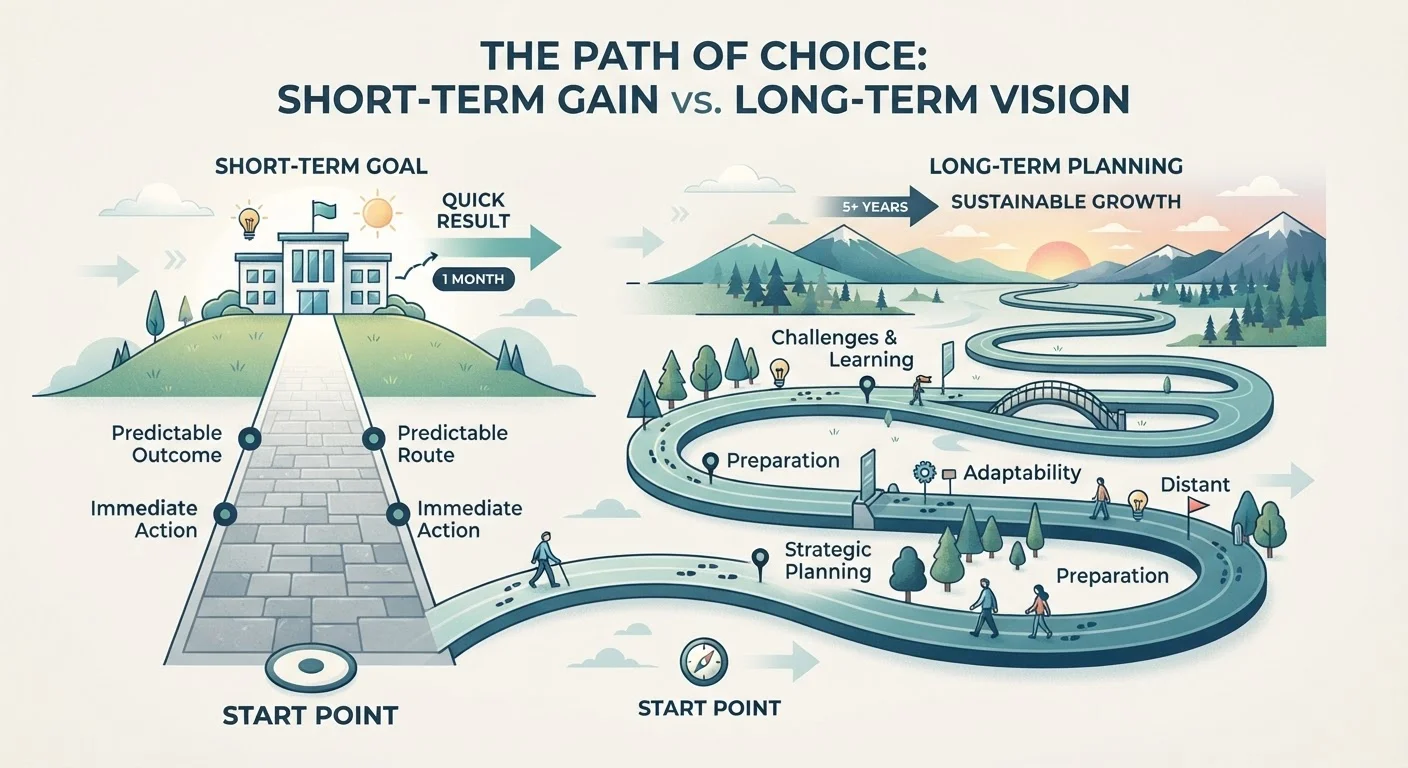
How Each Policy Is Structured
At their core, both term and permanent life insurance pay a death benefit - a lump sum to named beneficiaries when the insured person dies. What separates them is when that benefit applies and what else, if anything, the policy does while the insured is still alive.
Term life insurance is built around a defined coverage period - commonly 10, 20, or 30 years. You pay premiums throughout that term. If you die during it, your beneficiaries receive the death benefit. If the term expires while you're still alive, coverage simply ends. There is no residual value. Think of it as renting protection for a specific window.
Permanent life insurance is designed to last your entire lifetime. As long as premiums are paid (or the policy is otherwise sustained), coverage remains active. Permanent policies also contain a cash value account - a portion of each premium is directed into this account, which grows over time on a tax-deferred basis. This structure is what makes permanent coverage considerably more complex - and more expensive - than term.
For a deeper look at how policy documents are organized and what the various sections mean, see our full insurance policy breakdown.
| Criterion | Term Life Insurance | Permanent Life Insurance |
|---|---|---|
| Coverage duration | Fixed term (e.g., 10-30 years) | Lifetime, as long as premiums are paid |
| Death benefit | Paid only if death occurs in-term | Paid whenever death occurs |
| Cash value | None | Accumulates over time |
| Premium level | Lower | Substantially higher |
| Policy complexity | Straightforward | More complex, varies by type |
| Borrowing against policy | Not available | Available against cash value |
| Common subtypes | Level term, decreasing term | Whole, universal, variable life |
The Cash Value Mechanic - What It Is and What It Isn't
The cash value component within permanent life insurance is frequently misunderstood. It is not the same as the death benefit. These are two separate buckets within the same policy.
Cash value grows according to rules that vary by policy type. In a whole life policy, growth is at a fixed, guaranteed rate. In a universal life policy, growth is often tied to current interest rates. In a variable life policy, the cash value is invested in sub-accounts similar to mutual funds, meaning it can grow significantly - or lose value.
Cash Value Is Separate From the Death Benefit
Many policyholders assume the cash value they've built up will be added to the death benefit paid to their beneficiaries - but that's generally not how it works. In most permanent policies, the insurer pays the stated death benefit, and the cash value that accumulated within the policy reverts to the insurer. The two figures are accounted for separately. Always review your specific policy documents or ask your agent how these amounts interact in your contract.
Policyholders can typically borrow against the cash value or make partial withdrawals. However, unpaid loans accrue interest and reduce the death benefit paid to beneficiaries. Cash value is not a liquid savings account - accessing it has consequences that should be understood before acting. Consulting a licensed insurance professional before making changes to your policy is strongly advisable.
Term policies carry none of this complexity. They pay a benefit or they don't - there is no cash accumulation, no loans, and no surrender value.
Premium Differences and What Drives Them
One of the most noticeable contrasts between the two structures is cost. Term premiums are calculated primarily on the probability of the insurer paying out during the defined period - which, for healthy applicants buying coverage in their 30s or 40s, is statistically low. That keeps premiums modest.
Permanent premiums are higher for two reasons: the insurer is guaranteed to eventually pay a death benefit (since coverage doesn't expire), and a portion of every premium goes toward funding the cash value account. Both factors are priced into what you pay each month.
~80%
Term policies that never pay a death benefit
Industry research has long noted that a large majority of term life policies lapse or expire without a claim, reflecting both the time-limited nature of the coverage and healthy policyholders outliving their terms.
5-15×
Typical permanent vs. term premium difference
For equivalent death benefit amounts, permanent life insurance premiums are commonly estimated to run several times higher than term premiums, though the ratio varies by age, health, and policy type.
It's worth noting that "permanent life insurance" is not a single product - it's a category. Whole life, universal life, indexed universal life, and variable life each have distinct premium structures, risk profiles, and cash value mechanics. Comparing term and whole life specifically can help clarify how one common type of permanent coverage differs from term in practical terms.
Regardless of which type you're evaluating, premiums also depend on your age, health status, the death benefit amount, and the insurer's underwriting criteria. This content is general educational information - not personalized advice. A licensed insurance agent can help you understand how these variables apply to your specific situation.
Choosing Between Them: Questions Worth Asking
No policy structure is objectively superior. The right fit depends on what you're trying to accomplish and for how long. A few questions help clarify the decision:
- Is your coverage need time-limited? If the primary goal is income replacement while dependents are young, or protecting against a specific debt, a term policy may align well with that finite window.
- Do you want coverage that doesn't expire? If leaving a death benefit regardless of when you die is important - for estate planning or to provide for a dependent with long-term needs - a permanent policy keeps that guarantee in place.
- How do premiums fit your budget? A permanent policy you can't sustain will lapse, leaving you without coverage. A term policy you can afford and maintain may serve you better in practice.
- Is the cash value component relevant to your financial plan? For some, the tax-deferred growth of cash value is a meaningful planning tool. For others, it adds complexity and cost without clear benefit.
For context on how these structures map to different life stages, matching coverage to life stage offers a complementary lens. And if you ever need to understand what happens after a claim is filed, how life insurance pays out walks through the beneficiary process in plain terms.
This article is intended for general informational and educational purposes only and does not constitute personalized insurance, financial, or legal advice. Coverage terms, eligibility, and premiums vary by insurer and individual circumstances. Please consult a licensed insurance professional before making decisions about your coverage.