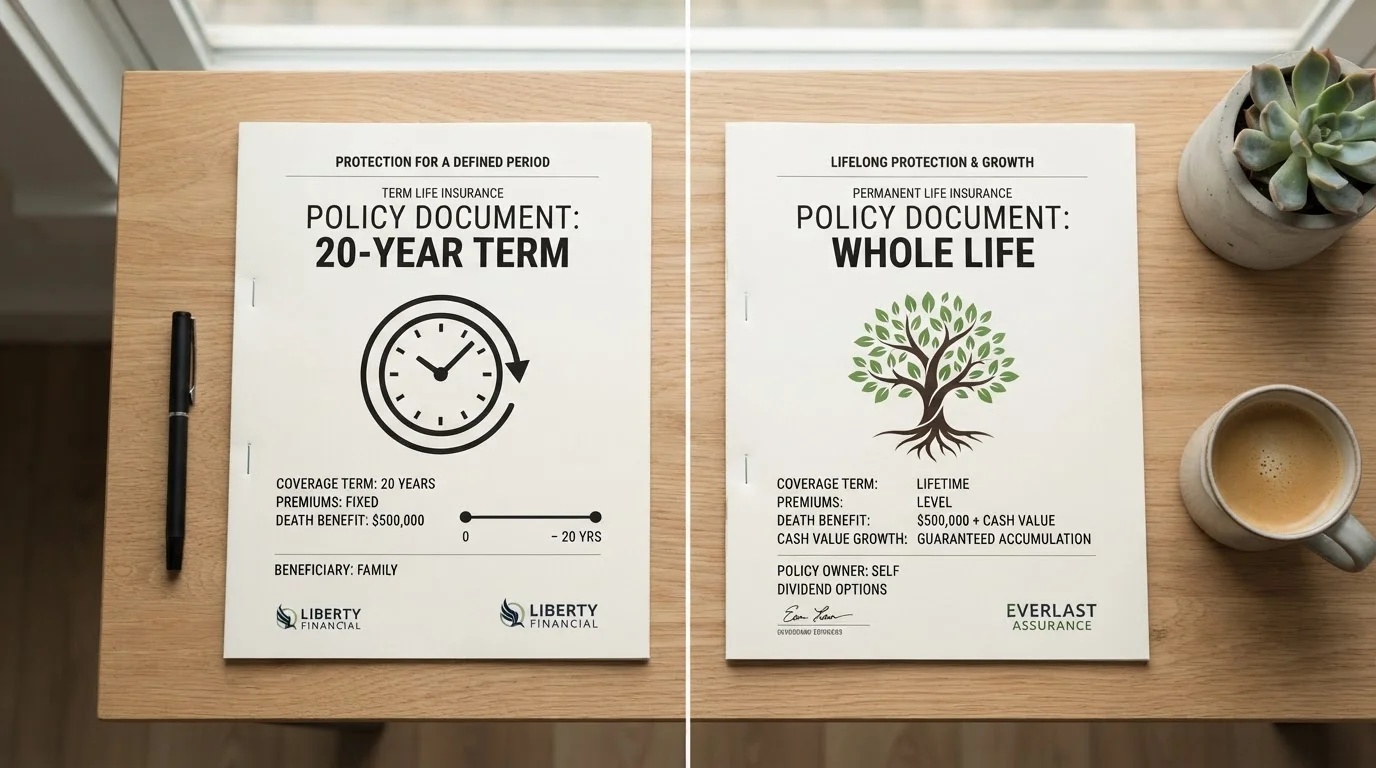
How Each Policy Type Is Structured
At their core, both term and whole life insurance provide a death benefit - a lump-sum payment made to your named beneficiaries when you die. That shared purpose is where the similarities largely end.
Term life insurance is active for a specific period, commonly 10, 20, or 30 years. If the policyholder dies during that term, beneficiaries receive the death benefit. If the term expires and the policyholder is still living, the coverage ends with no payout. Some policies allow renewal or conversion at the term's close, though premiums typically rise considerably at that stage.
Whole life insurance is a form of permanent life insurance, meaning it remains in force for the policyholder's entire life - provided premiums are paid. It also includes a cash value component: a portion of each premium is set aside in a savings-like account that grows at a guaranteed rate over time. Policyholders may borrow against or withdraw from this cash value, though doing so affects the death benefit if not repaid. For a broader look at how these structural categories compare, see how term and permanent policy structures actually work.
| Criterion | Term Life Insurance | Whole Life Insurance |
|---|---|---|
| Coverage duration | Fixed term (e.g., 10-30 years) | Lifetime (as long as premiums paid) |
| Premium cost | Generally lower | Significantly higher |
| Death benefit | Paid only if death occurs during term | Paid whenever death occurs |
| Cash value | None | Accumulates over time |
| Policy complexity | Simple and straightforward | More complex; includes savings element |
| Best suited for | Temporary, high-value obligations | Permanent coverage and estate planning |
Cost Differences and What Drives Them
Premium cost is one of the starkest differences between these two policy types. Term life premiums are generally significantly lower than whole life premiums for the same death benefit. A healthy 35-year-old might pay a fraction of the cost for a 20-year term policy compared to an equivalent whole life policy.
The higher cost of whole life reflects what you're buying: lifelong coverage, guaranteed cash value growth, and the insurer's obligation to pay a death benefit no matter when death occurs. Term coverage, by contrast, statistically results in no payout for the majority of policyholders - most people outlive their term - so insurers can price it more affordably.
~98%
Term policies that never pay a death benefit
Industry data consistently shows the vast majority of term life policies lapse or expire without a claim, which is a key reason term premiums are lower.
5-15×
Typical whole life premium multiple vs. term
Whole life premiums for an equivalent death benefit are often several times higher than term, reflecting permanent coverage and cash value guarantees.
When evaluating affordability, it helps to think about what the premium buys in each scenario. Term buys pure protection for a defined window. Whole life bundles protection, savings, and permanence into one product - at a price that reflects that added scope. To understand how the amount of coverage you need factors into this, see how coverage amount decisions are calculated.
Matching Policy Type to Your Financial Situation
Choosing between term and whole life isn't about which is objectively better - it's about which fits your current obligations and long-term goals. Matching coverage to life stage is a useful framework for thinking through this decision.
Term life is commonly chosen by people with time-sensitive financial obligations: a mortgage, dependent children, or years of income that a surviving spouse or family would need to replace. Once those obligations are satisfied - the mortgage is paid off, children are financially independent - the need for a large death benefit may shrink.
Whole life tends to appeal when coverage needs are genuinely permanent: funding a special-needs dependent's future care, leaving a specific inheritance, or covering final expenses no matter when death occurs. Some people also value the forced savings discipline the cash value component encourages, though financial advisers vary in how they assess this compared to other savings vehicles.
Life Insurance and Long-Term Care Are Separate Needs
Life insurance - whether term or whole - pays a death benefit; it does not cover the cost of nursing home care, assisted living, or home health services. Those needs fall under a different product category. If coverage for long-term care services is a concern, see what long-term care insurance covers for a clear explanation of how that coverage works.
Whatever direction you lean, understanding how a death benefit is actually paid out is equally important. Learn how life insurance coverage pays out so your beneficiaries are prepared to navigate that process.
This article is for general informational purposes only and does not constitute personalized insurance, financial, or legal advice. Coverage terms, premiums, and eligibility vary by insurer and individual circumstances. Consult a licensed insurance agent or financial adviser to evaluate options suited to your specific situation.