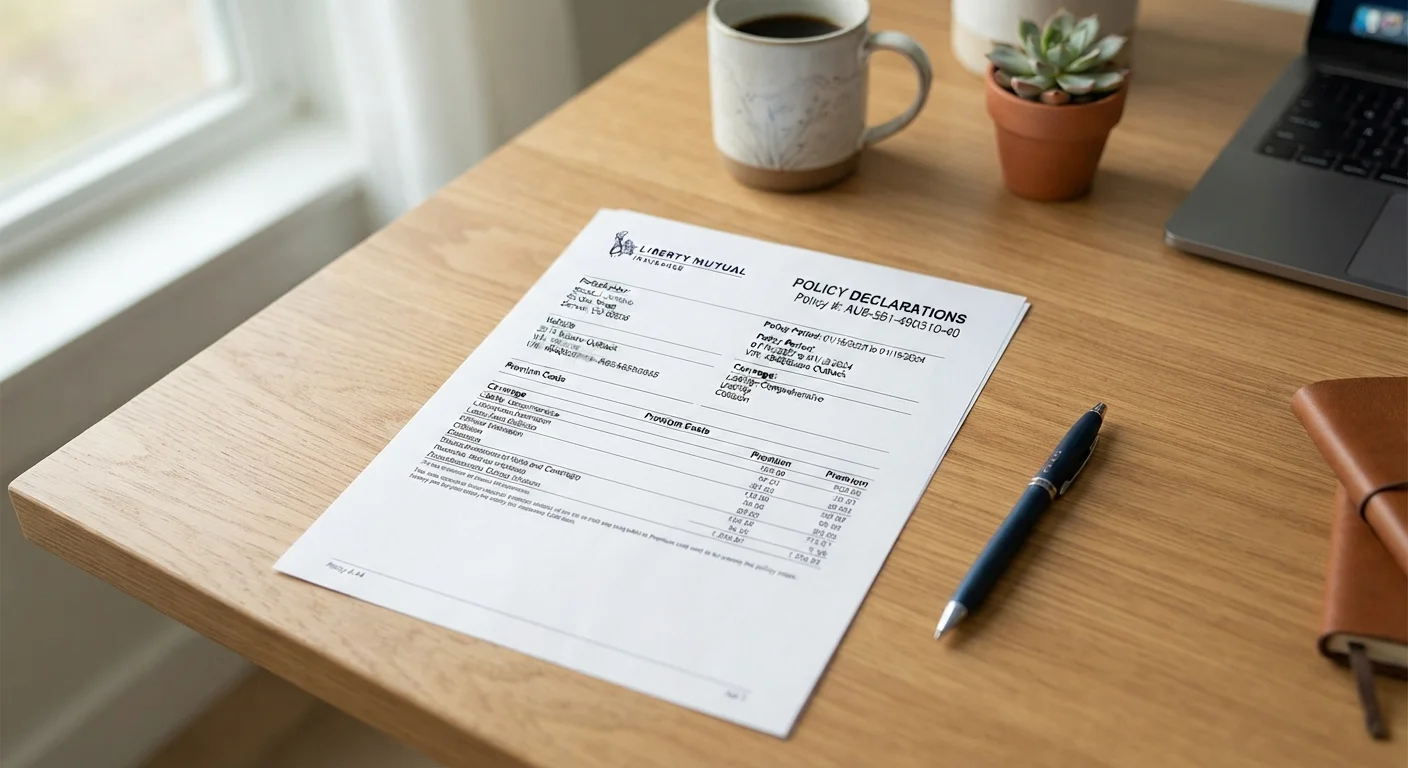
What the Declarations Page Actually Is
Most policyholders receive a thick policy packet and set it aside. The declarations page is the document designed to prevent that from being a problem - it is the one-page summary of your entire policy. Think of it as the cover sheet that tells you who is covered, what is covered, how much the insurer will pay, and for how long.
It does not contain every detail of your policy. Definitions, conditions, and the full list of exclusions are in the body of the policy document. But the declarations page tells you the key numbers and facts at a glance, which makes it the right place to start any review.
For a deeper look at how the declarations page fits within the larger policy structure, the overview of what a declarations page tells you explains each component in further detail. If you have an auto policy specifically, reading your car insurance declarations page walks through the auto-specific line items.
What you will need
How to Read It Step by Step
Gathering the right materials before you start makes the process faster and more productive. You will need your declarations page, the full policy document for cross-referencing, and a way to note any questions that arise.
Your current declarations page
The document you will read and verify during this process.
Your full policy document
Used to cross-check definitions, exclusions, and endorsements referenced on the declarations page.
A highlighter or digital annotation tool
Mark any line items that need clarification or appear incorrect.
Contact information for your agent or insurer
To ask questions or request corrections once you have reviewed the document.
Locate and Identify Your Declarations Page
The declarations page - often called the dec page - is typically the very first page of your policy packet, or it may be emailed separately when a policy is issued or renewed. It is usually one to two pages long and is labeled "Declarations" or "Policy Declarations" at the top.
If you cannot find it, log in to your insurer's online portal, check your email for a document attachment at the time of purchase or renewal, or call your agent and request a copy.
Confirm the Named Insured and Contact Information
The named insured section identifies who the policy legally covers as the primary policyholder. Verify that your full legal name is spelled correctly and that your address matches your current residence. For auto policies, confirm that all licensed drivers in your household are listed if required by your insurer.
An incorrect name or address is not just cosmetic - it can affect whether a claim is honored. If anything is wrong, flag it immediately.
Check the Policy Period (Effective and Expiration Dates)
Every declarations page lists a policy period - the start date (effective date) and end date (expiration date) of your coverage. Confirm these dates are correct and that there is no unintended gap between the expiration of an old policy and the start of a new one.
Gaps in coverage - even a single day - can leave you unprotected and may create complications for future insurers assessing your coverage history.
Review Coverage Types and Limits
This is the most detailed section of the declarations page. It lists each coverage type your policy includes along with its corresponding limit - the maximum amount the insurer will pay for a covered loss.
For example, a homeowners policy might list:
- Dwelling coverage: $300,000 - covers damage to the structure of your home
- Personal property: $150,000 - covers belongings inside the home
- Liability: $100,000 - covers you if someone is injured on your property
Verify that each limit reflects what you actually requested and that it is adequate for your situation. If you are unsure what any coverage type means, the full policy term breakdown is a useful reference.
Identify Your Deductibles
Your deductible is the amount you pay out of pocket before your insurer covers the rest of a claim. The declarations page will list the deductible for each coverage type, which may differ - for instance, a homeowners policy might have a standard deductible for most claims but a separate, higher deductible for wind or hurricane damage.
Make sure the deductible amounts match what you agreed to when setting up or renewing the policy, and confirm you could realistically pay that amount if a claim arose.
Note Any Endorsements, Riders, or Exclusions Listed
Endorsements (also called riders) are modifications to your base policy - they can add coverage, remove it, or change terms. Common examples include scheduled personal property coverage for high-value jewelry, or a home business endorsement. Any endorsements you have requested should be reflected on the declarations page.
Some declarations pages also flag major exclusions - losses the policy will not cover. This section is a summary only; the full exclusion list lives in the policy body. For guidance on what to look for before committing to a policy, see the pre-signing checklist.
Record Your Insurer's Contact Information and Policy Number
The declarations page includes your policy number - a unique identifier you will need when filing a claim, asking a question, or making changes. It also lists the insurer's name, your agent's contact details, and often a claims hotline number.
Store this information somewhere accessible: a notes app, a printed card in your wallet, or a saved photo on your phone. You will rarely need it - but when you do, you will need it immediately.
Errors Here Can Cost You at Claim Time
A mistake on your declarations page - a wrong address, an unlisted driver, or an incorrect coverage limit - is not just a clerical issue. It can lead to a denied or reduced claim. Contact your insurer immediately if you spot any discrepancy, and ask for written confirmation of any correction.
Don't Assume Renewal Means No Changes
Insurers can adjust your premiums, deductibles, and coverage limits at renewal. Never assume your renewed policy is identical to the previous one. Review your updated declarations page line by line each renewal period and ask your agent to explain any changes in writing.
Keep a Digital Copy Within Easy Reach
Scan or photograph your declarations page and store it in a secure cloud folder or email it to yourself. In an emergency - a car accident, a burst pipe - you'll want instant access to your coverage limits and your insurer's contact information without searching through paper files.
This article is for general informational and educational purposes only and does not constitute insurance, legal, or financial advice. Coverage terms, limits, and eligibility vary by insurer and by state. Always read your actual policy documents carefully and consult a licensed insurance agent or adviser for guidance specific to your situation.
After the Review: What to Do With What You Find
Once you have worked through every section, you likely fall into one of two situations: everything looks correct, or something needs attention.
If everything is accurate, file the declarations page somewhere you can retrieve it quickly - digitally and in paper form if possible. If you have questions about whether your coverage limits are appropriate, the choosing coverage guides provide context for evaluating different coverage types against your needs.
If you found an error or have a question about a line item, contact your insurer or agent promptly. Document your communication in writing - email is preferable to phone calls for this purpose - so you have a record. Before your next renewal, consider using the step-by-step guide to reading your full policy to go deeper than the declarations page alone.