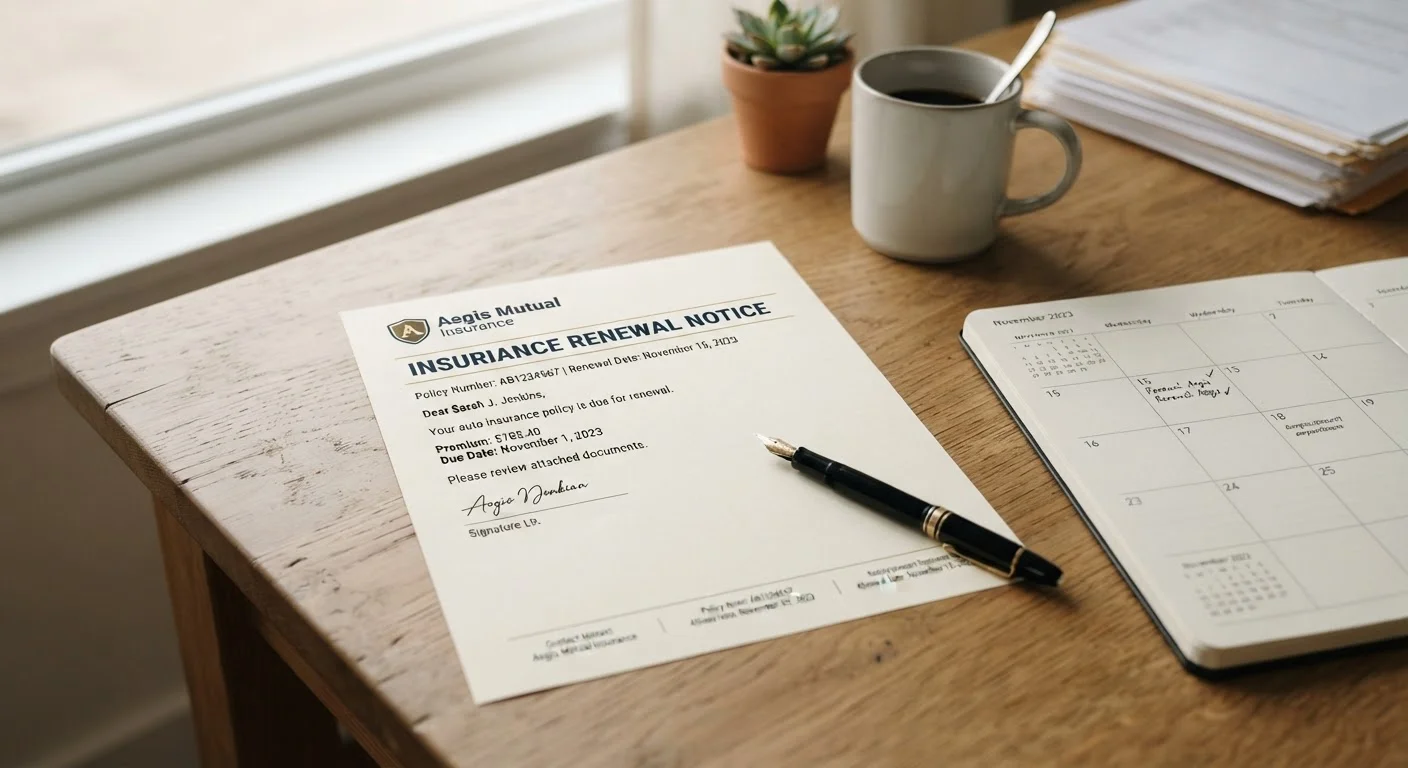
How Renewal and Automatic Rollover Actually Work
When an insurance policy reaches the end of its term - typically 6 or 12 months - the insurer evaluates whether to continue coverage and on what terms. Two outcomes are common:
- Active renewal: You receive a renewal offer, review the updated terms, and consciously accept (usually by paying the new premium).
- Automatic rollover: Your coverage continues into the next term without any action on your part, typically because you have auto-pay enabled or your policy contains a continuous-coverage clause.
The critical point is this: neither process guarantees identical terms. Insurers re-underwrite policies at renewal, meaning they reassess your risk profile based on new data - claims history, credit-based insurance scores (where permitted by state law), changes to the insured property, or shifts in their own pricing models. The result can be a meaningfully different policy, even if you did nothing and your insurer said nothing dramatic.
For a broader look at what renewability clauses can mean for your long-term security, see Guaranteed Renewability vs. Conditionally Renewable Policies.
What Typically Changes at Renewal
The renewal declaration page - the summary document your insurer sends before the new term - is where changes surface. Common items that may shift include:
| Policy Element | Active Renewal Review | Automatic Rollover | |
|---|---|---|---|
| Premium amount | Reviewed and accepted before payment | Applied automatically; may differ from prior term | |
| Coverage limits | Confirmed or adjusted by policyholder | Carried forward unless insurer changes them | |
| Deductibles | Opportunity to revise | Rolled over from prior election | |
| Endorsements/add-ons | Verified still in place | May be silently dropped if discontinued | |
| Exclusions | Checked against updated language | New exclusions may apply without explicit notice | |
| Reader action required | Yes - deliberate comparison | None - passive continuation |
Not every change requires your insurer to call you. Many states require written notice only when changes exceed a certain threshold or when coverage is being reduced. For smaller adjustments, the renewal packet itself is the notification. This is why reading it matters.
Don't Assume 'No News' Means No Changes
Some policyholders assume that because they received no alarming communication, their renewal terms are identical to last year's. This is not always correct. Premium adjustments, revised sublimits, or new exclusions may be disclosed only in the renewal packet itself - which many people discard without reading. Always open and review the renewal declaration page before the new term begins.
What Stays the Same (Usually)
Continuity does exist. Several elements typically carry forward unless you or your insurer actively changes them:
- Named insureds and listed drivers (unless you remove them)
- Policy number and insurer (a rollover is not a new policy issuance in most cases)
- Deductible elections you chose in prior terms
- Core coverage types - liability, comprehensive, collision - generally persist unless the insurer modifies its product offering
However, "stays the same" is not a promise. If your insurer files new rates with your state's insurance department and those rates are approved, they apply at your next renewal regardless of your claims history. This is general industry practice, not a specific insurer's policy.
How to Conduct a Meaningful Renewal Review
A renewal review does not need to be exhaustive. The goal is to catch meaningful changes and confirm your coverage still fits your life. A practical approach:
- Compare declaration pages side by side. Pull last year's and this year's declarations. Look at premium totals, coverage limits, and listed exclusions.
- Check for added or removed endorsements. An endorsement (a policy add-on) can quietly disappear at renewal if the insurer discontinues it.
- Account for life changes. If you renovated your home, added a driver, or bought valuables, your existing limits may be insufficient. See Navigating Insurance Coverage After a Major Life Change for a coverage checklist tied to common life events.
- Ask questions before you pay. Once you pay the renewal premium, you have generally accepted the new terms. If something looks unfamiliar, call your agent before that payment clears.
Set a Renewal Calendar Reminder
Most insurers send renewal documents 30 to 45 days before the term ends. Mark your calendar a week after that expected delivery date so you have time to review, ask questions, and - if necessary - request changes or shop alternatives before the deadline. Even five minutes comparing the new declaration page to the prior year's can surface a meaningful change.
Before signing or renewing anything, it also helps to revisit the foundational questions any policyholder should ask. Our Key Questions to Ask Before Signing Any Insurance Policy is a useful pre-renewal checklist.
When Rollover Becomes a Problem
Automatic rollover is a convenience feature - but convenience can work against you in specific situations:
- After a claim: Your insurer may have adjusted your risk classification. A rollover locks in the new, potentially higher premium without prompting you to shop.
- After a lapse in your circumstances: If you no longer need a coverage type or added a risk the policy doesn't cover, rolling over perpetuates the mismatch.
- When your insurer non-renews but you miss the notice: A non-renewal notice - where an insurer declines to offer a new term - is distinct from a cancellation. If you miss it, you may believe you have active coverage when you do not. The difference between a policy cancellation and a non-renewal carries real practical consequences worth understanding.
This article is for general informational purposes only and does not constitute personalized insurance, financial, or legal advice. Coverage terms, renewal rules, and insurer obligations vary by policy type, provider, and state. Always read your actual policy documents and consult a licensed insurance agent or adviser about your specific situation.