The Sequence: Deductible First, Coinsurance Second
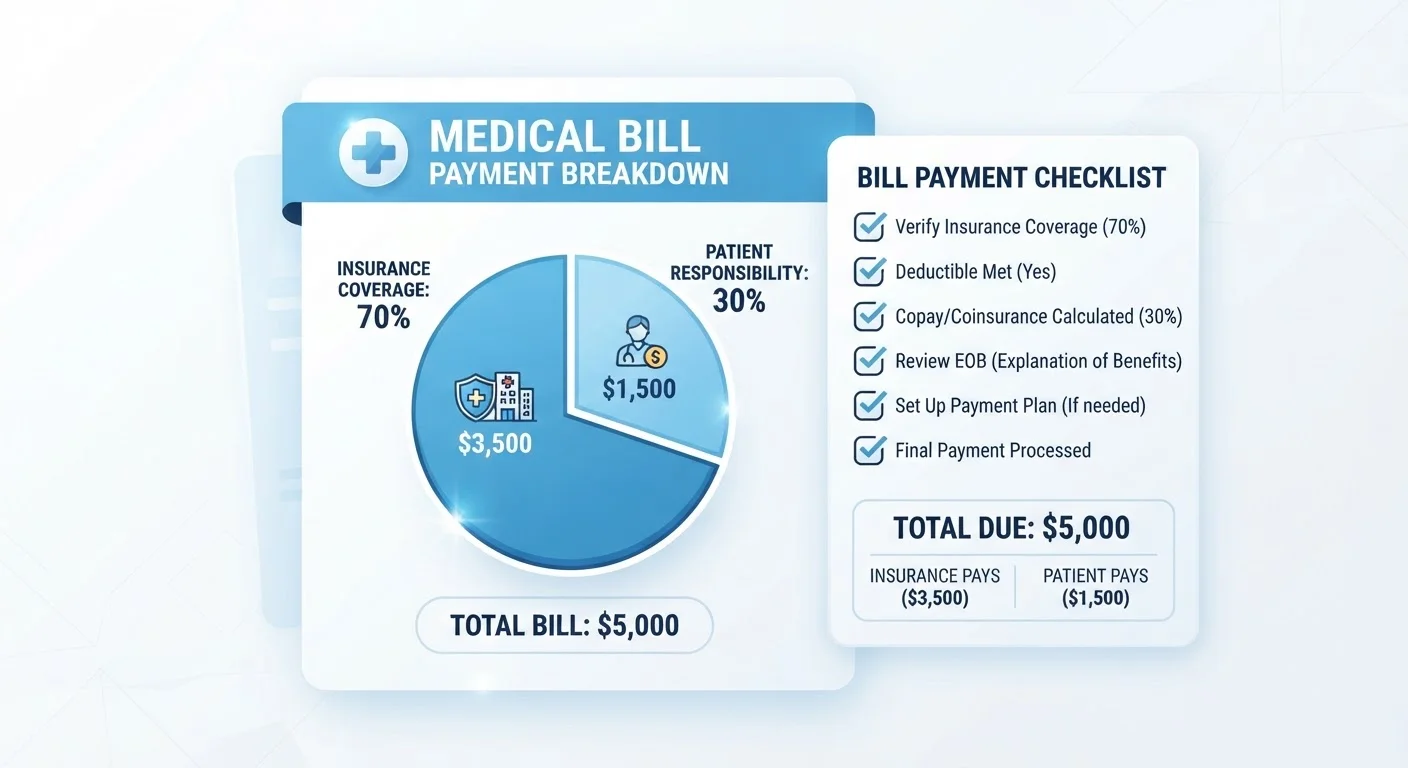
Many policyholders are surprised to discover that coinsurance doesn't apply from the very first dollar of a medical bill. Instead, it only enters the picture once your annual deductible has been fully paid. Understanding that sequence is the foundation for predicting what you'll actually owe.
Here's how the order works:
- You receive covered care. Your insurer processes the claim at negotiated rates.
- You pay toward your deductible. Every dollar counts until you reach your deductible amount for the year.
- Coinsurance begins. Once the deductible is met, you and your insurer split remaining covered costs according to your plan's percentage split.
- You reach your out-of-pocket maximum. At this point, your insurer covers 100% of eligible covered costs for the rest of the plan year.
For a deeper look at how deductibles function in this chain, see our deductible explainer.
Check Your Explanation of Benefits
After any covered claim is processed, your insurer issues an Explanation of Benefits (EOB) document. This is not a bill - it shows what was charged, what your insurer negotiated or covered, and what you owe. Reviewing your EOB is the clearest way to verify your coinsurance is being applied correctly.
How to Calculate Your Coinsurance Share
Calculating what you owe under coinsurance is straightforward once you know your plan's split. The most common arrangement is 80/20 - your insurer pays 80%, you pay 20% - but plans also use 70/30, 60/40, or other ratios.
A simple example: Suppose you've already met your $1,500 deductible and you receive a covered outpatient bill for $1,000. Under an 80/20 plan:
- Your insurer pays: $1,000 × 80% = $800
- You pay: $1,000 × 20% = $200
That $200 coinsurance payment also counts toward your out-of-pocket maximum. If your maximum is $5,000 and you've already paid $1,500 in deductible, you have $3,500 of remaining cap before your insurer covers everything.
80/20
Most common coinsurance split in employer health plans
The 80/20 arrangement - insurer pays 80%, enrollee pays 20% - is the most widely seen coinsurance ratio in U.S. employer-sponsored health insurance.
$9,450
ACA individual out-of-pocket maximum (2024)
The Affordable Care Act sets annual caps on out-of-pocket costs for ACA-compliant plans; in 2024, the limit for individual coverage is $9,450, capping total coinsurance and other cost-sharing.
It's worth noting that the bill used in this calculation is typically the negotiated rate your insurer has with the provider - not the original sticker price. This negotiated rate is usually lower, which affects how much both parties ultimately pay.
Coinsurance Percentages and What They Signal About Your Plan
The coinsurance split in your plan is directly connected to your premium - the monthly cost of your coverage. Generally speaking:
- Higher coinsurance share for you (e.g., 30% or 40%) often comes with lower monthly premiums. You absorb more risk when you need care.
- Lower coinsurance share for you (e.g., 10% or 20%) usually means higher premiums. Your insurer absorbs more of each covered bill.
This trade-off is central to choosing a plan. Someone who rarely uses medical services might accept a higher coinsurance rate to keep monthly premiums low. Someone managing a chronic condition may find a lower coinsurance rate more cost-effective overall.
Coinsurance also interacts closely with copays and your out-of-pocket maximum - a relationship explained in detail in our guide to copays, coinsurance, and out-of-pocket maximums.
Coinsurance in Property Insurance Works Differently
In homeowners and commercial property insurance, "coinsurance" refers to a clause that requires you to insure your property up to a minimum percentage of its value. If you're underinsured relative to that threshold, your claim payout may be reduced - even if you have coverage. This is a distinct concept from the health insurance cost-sharing described in this article. For more on that version, see how coinsurance clauses affect claim payouts.
Common Coinsurance Pitfalls to Avoid
Even with a solid grasp of the concept, coinsurance surprises do happen. Here are the situations most likely to catch policyholders off guard:
- Out-of-network care: Most plans apply a different - typically higher - coinsurance percentage when you see a provider outside your network. A plan that charges you 20% in-network may charge 40% or more out-of-network. Verify before scheduling care.
- Separate deductibles: Some plans have a combined family deductible and individual deductibles. Each tracks separately, which affects when coinsurance kicks in for each covered member.
- Services subject to copays instead: Certain services - like primary care visits or generic prescriptions - may use a flat copay rather than coinsurance, even after the deductible is met. Your plan's Summary of Benefits and Coverage will specify which applies where.
Understanding how all three cost-sharing elements interact is essential. See how deductibles, copays, and coinsurance shape your real coverage experience for a broader view.
This article provides general insurance education and is not personalized financial or insurance advice. Coverage terms, coinsurance rates, and out-of-pocket limits vary by plan and provider. Always review your actual policy documents and consult a licensed insurance agent or adviser for guidance specific to your situation.