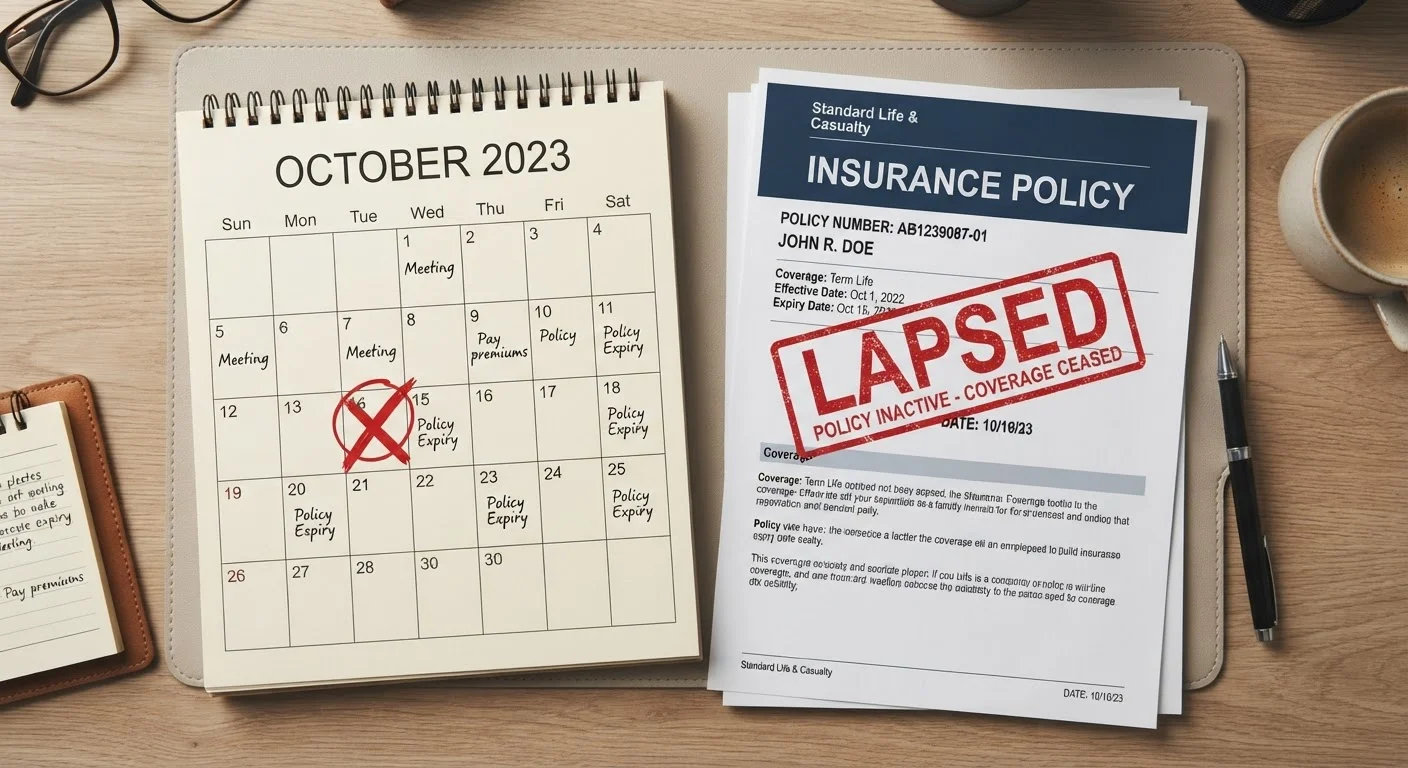
What Causes a Coverage Lapse
Most lapses happen not because someone chose to go uninsured, but because of an overlooked bill, a missed renewal, or a payment method that failed. Common causes include:
- Missed premium payments - the most frequent cause, often due to a changed bank account or expired credit card.
- Failure to renew - policies that require active renewal and aren't set up for automatic continuation.
- Policy cancellation by the insurer - which can occur after a bounced payment, material misrepresentation, or too many claims.
- Letting coverage lapse intentionally - for example, dropping auto insurance on a vehicle assumed to be parked, which still triggers legal consequences in most states.
Regardless of the reason, the insurance company's obligation to pay claims ends when coverage ends. There's no retroactive protection once a lapse is confirmed.
Understanding what a lapse means - and how to avoid one - is part of the broader work of spotting gaps in your coverage before a claim reveals them.
How Lapses Affect Each Type of Insurance
The consequences of a coverage lapse differ significantly depending on which type of policy goes inactive.
Auto Insurance
Auto lapses carry the most immediate legal risk. Nearly every U.S. state mandates continuous liability coverage for registered vehicles. When a policy lapses, many states receive automatic notification from the insurer. Consequences can include fines, license suspension, vehicle registration revocation, and requirements to file an SR-22 form - a certificate of financial responsibility that itself raises premiums.
Health Insurance
For marketplace plans, missing payments triggers a grace period - usually 30 days for unsubsidized plans and up to 90 days for those receiving premium tax credits. If the grace period expires, coverage is terminated. Re-enrollment is typically restricted to the next open enrollment period unless a qualifying life event applies.
Homeowners Insurance
A lapse in homeowners coverage can violate your mortgage agreement. Lenders typically require continuous coverage as a loan condition. If your policy lapses, your lender may purchase force-placed insurance - also called lender-placed insurance - on your behalf at rates far higher than what you'd pay on your own. This cost is then passed to you.
Life Insurance
Life insurance policies typically include a grace period of 30 to 31 days after a missed premium. If the policy lapses, the death benefit is no longer in force. Reinstatement is possible with some policies within a set window, but may require proof of insurability - meaning a new medical evaluation.
~14%
U.S. drivers estimated to be uninsured
According to the Insurance Research Council, an estimated 14% of U.S. motorists drove without insurance in a recent study period, reflecting the scale of the lapse problem on U.S. roads.
30-90 days
Typical health plan grace period before termination
Federal rules under the ACA generally allow a 30-day grace period for unsubsidized marketplace enrollees and up to 90 days for those receiving advance premium tax credits.
2-3x
Typical cost multiplier for force-placed home insurance
Consumer advocates and state insurance regulators have noted that lender-placed homeowners policies routinely cost two to three times more than standard market-rate coverage.
The Long-Term Record: How Lapses Follow You
Beyond the immediate loss of protection, a coverage lapse creates a record that insurers can access when you apply for future coverage. Auto insurers frequently check databases that track continuous coverage history. A gap - even a brief one - marks you as a higher risk, which most insurers price accordingly.
This means the financial impact of a lapse isn't limited to the period when you were unprotected. You may pay more for coverage for months or years afterward. Common coverage gaps people discover too late often include exactly this kind of invisible cost - the downstream pricing effect that follows a lapse long after coverage is restored.
“A lapse in insurance coverage is not a neutral event. It creates a documented gap in your risk profile that insurers factor into their underwriting decisions - sometimes for years.”
— Insurance Basics Editorial Team, Insurance Education Publisher
It's also worth noting that a lapse is distinct from a coverage limit shortfall. Even active policies can leave you underprotected if the limits are too low for your actual exposure. For a broader understanding of how limits interact with protection, see how coverage limits work and why they matter.
Preventing a Lapse: Practical Steps
Most lapses are avoidable with simple planning habits:
- Set up autopay for premium payments and verify the payment method is current, especially after changing banks or cards.
- Track renewal dates on a calendar - many policies renew annually and may not come with a prominent reminder.
- Read cancellation notices promptly - insurers are required to provide advance notice before cancellation, giving you a window to cure a missed payment.
- Coordinate coverage transitions - if switching insurers, ensure the new policy's start date aligns exactly with the prior policy's end date.
- Don't drop coverage assuming a vehicle is safe to leave uninsured - most states treat an uninsured registered vehicle as a lapse regardless of whether it's being driven.
Set a Coverage Calendar Reminder
Add your policy renewal dates to a digital calendar with a reminder 30 days in advance. This gives you time to confirm your payment method is current, shop for alternatives if needed, and ensure no gap exists between an expiring and a new policy.
If you're evaluating your overall coverage picture, the Choosing Coverage hub provides structured guidance on selecting policies that match your actual needs and risks.
This article is for general informational and educational purposes only and does not constitute insurance, legal, or financial advice. Coverage terms, grace periods, and legal requirements vary by insurer, policy type, and state. Consult a licensed insurance agent or adviser for guidance specific to your situation, and always review your actual policy documents.