The 'Healthy Food' Assumption and Where It Falls Short
Many Americans operate under a reasonable-sounding belief: if a food is healthy, eating more of it is fine - or at least harmless. This assumption drives choices like doubling up on granola, finishing a large bowl of brown rice, or snacking freely on mixed nuts. The logic feels sound, but it overlooks a fundamental principle of nutrition: quantity shapes outcomes just as much as quality does.
Olive oil is a genuinely health-supportive fat, but a single tablespoon contains around 120 calories. Almonds are packed with fiber, protein, and micronutrients, but a generous handful can exceed 300 calories. Whole-grain bread provides more fiber and nutrients than refined white bread, yet eating four slices at a meal still delivers a significant carbohydrate load. None of these foods is problematic in appropriate amounts - the issue arises when portion size goes unexamined.
For readers interested in how nutrition guidance gets interpreted and sometimes distorted, our article on why nutrition advice seems to keep changing provides useful context.
2-3×
Typical restaurant portion vs. labeled serving size
Research published in nutrition journals has repeatedly found that restaurant and fast-food portions often exceed standard serving sizes by two to three times or more.
~50%
Americans who underestimate calorie intake
Studies using dietary recall methods consistently find that adults significantly underreport caloric intake, with estimates suggesting underreporting by roughly 40-50% in some populations.
Half
Plate share recommended for vegetables
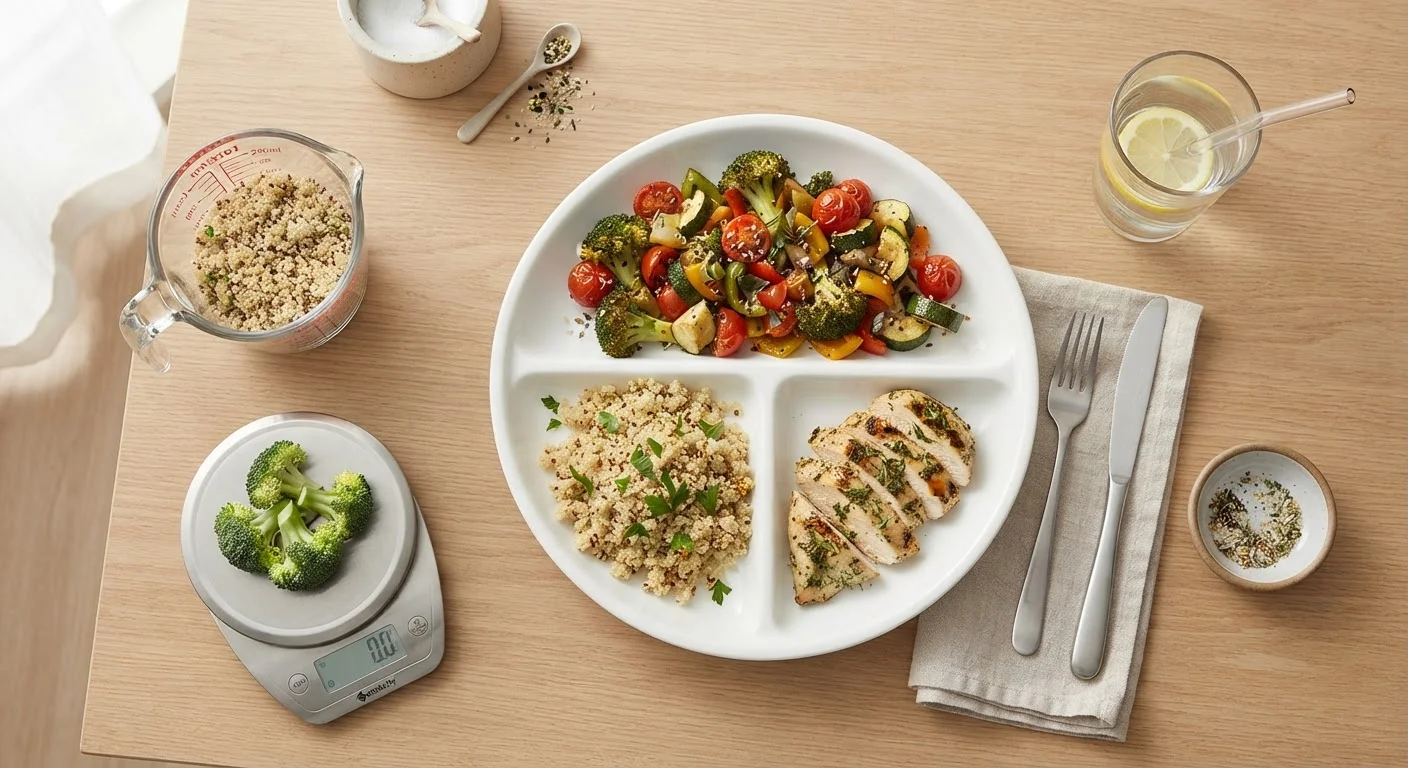
The USDA's MyPlate dietary guidance recommends filling at least half of each meal plate with fruits and vegetables as a practical portion-control framework.
Serving Size vs. Portion Size: An Important Distinction
Food labels in the U.S. list a standardized serving size - a reference unit set by the FDA to make nutritional information comparable across products. A portion, by contrast, is simply what ends up on your plate or in your hand. These two numbers rarely match in real life.
A standard serving of cooked pasta is typically around half a cup. A restaurant entrée or home-cooked bowl often delivers two to three times that amount. When someone scans the nutrition label and sees 200 calories, they may not register that what they actually ate contained 500-600 calories. This gap between labeled serving and actual portion is one of the most common - and underappreciated - sources of unintentional overconsumption.
The FDA updated its Nutrition Facts label format (effective for most manufacturers by 2020) to reflect more realistic serving sizes based on how Americans actually eat, which was a meaningful step toward closing this gap. Still, consumers benefit from cross-referencing label servings with what they actually consume.
Nutrition Labels Reflect Servings, Not Portions
When reviewing a nutrition label, check the 'servings per container' line before reading the calorie count. A single-serving-looking package of crackers or yogurt may contain two or more servings by FDA standards. Multiplying all nutrient values by the number of servings you actually consume gives you an accurate picture of your intake.
Practical Ways to Calibrate Your Portions
Developing portion awareness does not require obsessive tracking or eliminating entire food groups. Several accessible approaches help most people eat more intentionally:
- The plate method: Fill half your plate with non-starchy vegetables, one quarter with a lean protein source, and one quarter with a whole grain or starchy vegetable. This structural guide requires no measuring tools.
- Visual hand guides: A cupped palm approximates a half-cup of grains or beans. A closed fist is roughly a cup. A thumb length approximates a tablespoon of a fat like nut butter or oil.
- Measuring tools: For foods where portions are hard to eyeball - cereals, cooking oils, dressings - measuring cups or a kitchen scale used occasionally can recalibrate your visual estimates significantly.
- Mindful eating habits: Eating slowly, plating food rather than eating from packaging, and pausing mid-meal to assess hunger can all help prevent unintended overconsumption.
It is also worth noting that portion needs vary by individual - age, activity level, body size, and health status all play a role. Children's nutritional needs differ from adults in ways that affect appropriate portion sizes significantly, and guidance from a pediatric provider is recommended for younger eaters.
Use Your Plate as a Built-In Portion Guide
Switching to a smaller dinner plate - around nine inches instead of twelve - naturally reduces the amount of food served without requiring measurement. Research in behavioral nutrition suggests that people tend to fill whatever plate is in front of them, making plate size a simple environmental cue for portion control. This works best when combined with a balanced food distribution across food groups.
Portion Awareness in Context: Budget, Lifestyle, and the Bigger Picture
Portion awareness supports more than just energy balance - it also connects to financial sustainability. Eating appropriate portions means food stretches further, which matters when grocery budgets are tight. Our guide to eating well on a budget explores how to maintain dietary quality without overspending, and portioning deliberately is one of the most effective tools in that context.
Physical activity also interacts with portion needs. Someone with a highly active lifestyle requires more energy and may need larger portions of certain foods to support recovery and performance. The Fitness & Exercise hub offers practical guidance for readers building or adjusting an active routine.
It is worth noting that the principles of portion awareness extend beyond human nutrition. Overfeeding is a common and often unintentional pattern in pet care as well - a dynamic explored in our article on why overfeeding a pet is easier than it looks.
Food quality and portion size are not competing priorities - they are complementary ones. Building awareness of both, without rigid restriction or anxiety, is the foundation of a genuinely balanced approach to eating. As always, readers with specific health concerns or conditions should consult a registered dietitian or healthcare provider for personalized guidance.
This article is for general informational purposes only and does not constitute medical or dietary advice. Please consult a qualified healthcare professional for guidance specific to your health needs.