How the Glycemic Index Works
The glycemic index was developed in the early 1980s by researcher David Jenkins and colleagues at the University of Toronto as a way to scientifically rank how different carbohydrates affect blood glucose. Each food is assigned a score based on how much it raises blood sugar compared to pure glucose (scored at 100) over a two-hour window.
In practice, foods are grouped into three tiers:
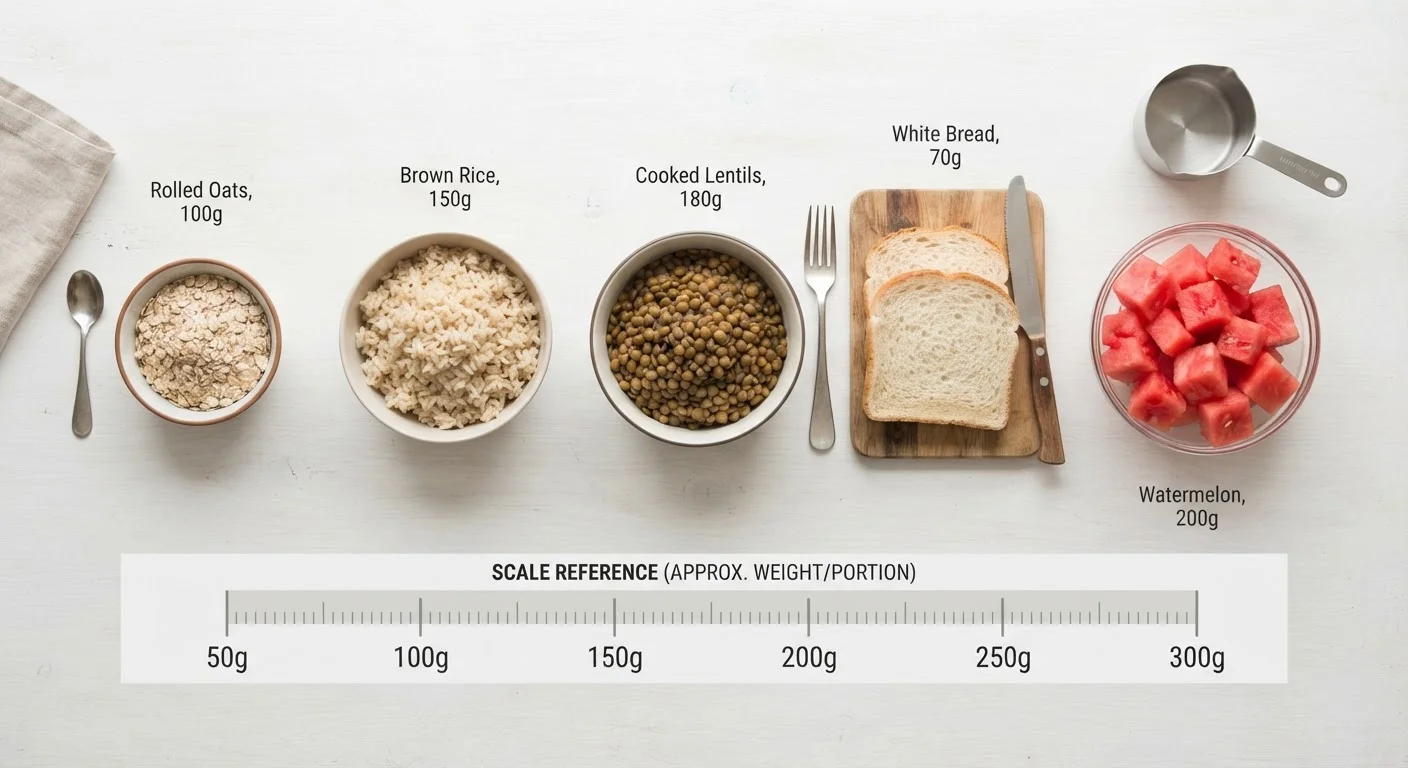
- Low GI (55 or below): Lentils, most fruits, steel-cut oats, plain yogurt
- Medium GI (56-69): Whole wheat bread, brown rice, ripe bananas
- High GI (70 and above): White bread, instant oatmeal, most breakfast cereals, potatoes
The appeal of the GI is straightforward - it offers a quantified shortcut for identifying which carbohydrates digest more slowly, generally producing steadier energy and less pronounced blood sugar swings. For this reason, it has been widely adopted in nutrition education and in dietary guidance for managing blood glucose. To understand more about how nutrition terminology is used, see our plain-language nutrition glossary.
0-100
Glycemic index scoring scale range
Pure glucose is the reference point at 100; most whole foods fall well below this benchmark.
72
Approximate GI of watermelon
Despite its high GI score, watermelon's low carbohydrate density per serving gives it a low glycemic load - illustrating why GI alone can mislead.
~20%
Variation in individual glycemic response
Research published in Cell (Zeevi et al., 2015) found substantial variation in blood glucose responses to identical foods among different individuals.
Where the Glycemic Index Falls Short
Despite its usefulness as a teaching tool, the GI has well-documented real-world limitations that every reader should understand before using it to make food decisions.
Portion size is ignored
GI scores are calculated using a standardized 50-gram portion of carbohydrate - not the actual amount you'd eat. Watermelon, for example, has a high GI of around 72, but a typical serving contains so few carbohydrates that its blood sugar impact is modest. This disconnect gave rise to glycemic load (GL), which multiplies GI by the actual grams of carbohydrate per serving, then divides by 100. GL is widely considered a more informative metric for everyday eating.
Meals don't consist of single foods
Eating fat, protein, or fiber alongside a carbohydrate measurably slows glucose absorption and can significantly lower the combined GI effect. A plain baked potato has a high GI; a baked potato eaten with sour cream, vegetables, or a protein source behaves quite differently in the body.
Preparation and ripeness change the score
How a food is cooked alters its starch structure and, therefore, its GI. Al dente pasta digests more slowly than soft-cooked pasta. A slightly green banana has a lower GI than a fully ripe one. These variations mean a single published GI score represents a snapshot, not a fixed property of the food.
Individual responses vary
Blood glucose responses to the same food differ meaningfully between individuals, influenced by gut microbiome composition, metabolic health, timing of eating, and stress levels. Research has increasingly demonstrated that personalized glycemic response is real and significant - making population-level GI averages an imperfect guide for any single person.
Try Glycemic Load for a More Realistic Picture
Calculate glycemic load by multiplying a food's GI by the grams of carbohydrate in your actual serving, then dividing by 100. A GL of 10 or below is generally considered low. This simple adjustment accounts for portion size and tends to reflect real-world blood sugar impact far more accurately than GI alone.
Using GI Practically - and Keeping It in Context
The glycemic index is best understood as one informative data point within a much broader picture of nutrition, not a standalone dietary rulebook. Like calorie counting, it captures something real and useful while leaving important factors out of frame.
A few balanced ways to use GI information:
- Use it to compare similar foods in similar portions - choosing between white bread and whole-grain bread, for instance.
- Pair higher-GI foods with protein, fat, or fiber to moderate the overall glycemic response of a meal.
- Consult glycemic load values when portion size matters - which it usually does.
- Remember that nutrient density, fiber content, and food quality matter alongside GI. A food with a low GI is not automatically healthy.
For readers who want to apply these concepts to their own health, our guide to reading a Nutrition Facts label offers a practical companion - including how to interpret added sugars and fiber content, both of which influence real-world glycemic impact.
“The glycemic index is a useful concept, but it was never designed to be used in isolation. Meal context, portion size, and individual metabolism all shape how a person actually responds to a given food.”
— David Jenkins, Professor of Nutritional Sciences, University of Toronto, and originator of the glycemic index concept
This article is for general informational and educational purposes only and is not a substitute for professional medical or dietary advice. If you have questions about blood sugar management, diabetes, or how dietary choices affect your health, please consult a qualified healthcare provider or registered dietitian.