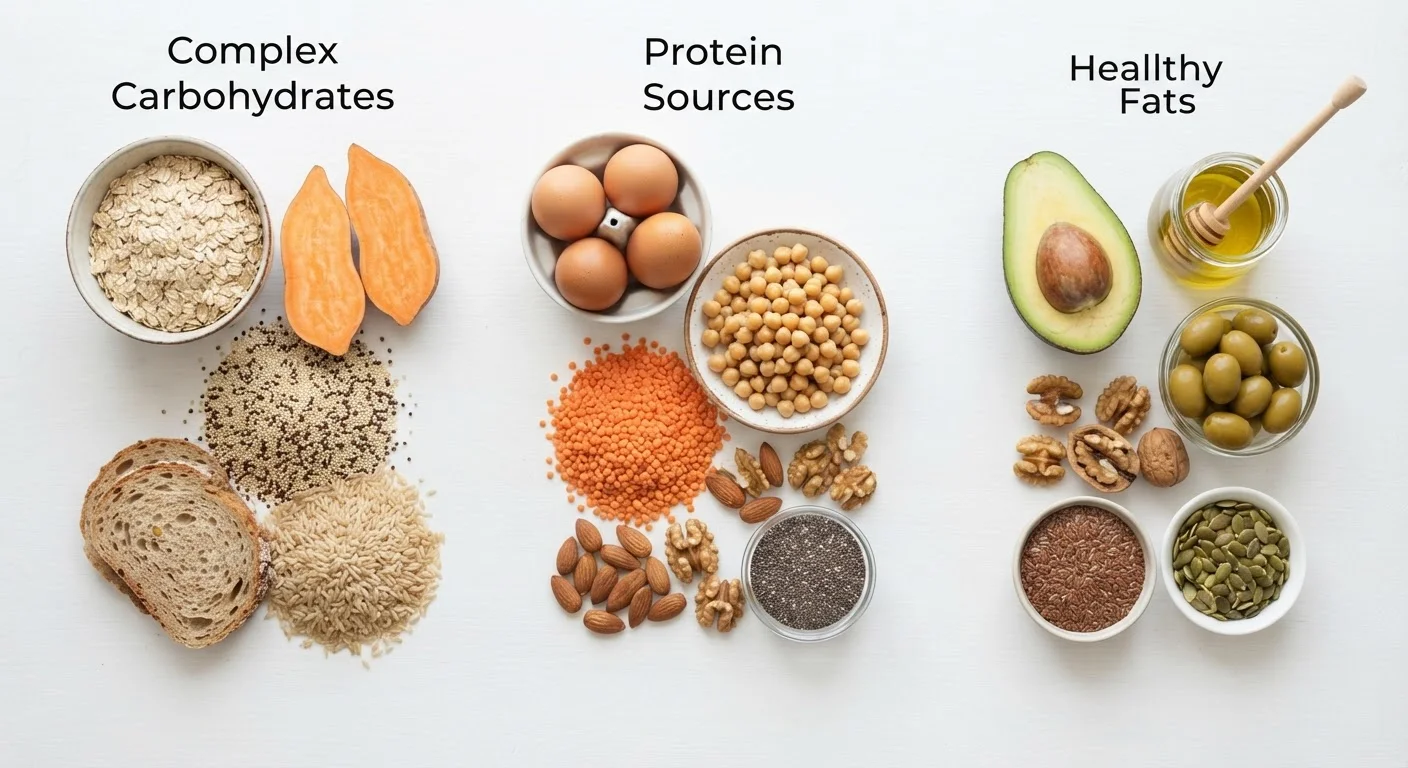
Why Macronutrients Matter
Walk into any grocery store or scroll through a nutrition app and you'll encounter a constant stream of macronutrient claims - high-protein, low-carb, healthy fats. But what do these terms actually mean, and why does your body need all three?
Macronutrients are the foundation of your diet. They supply energy, build and repair tissue, regulate hormones, and keep your organs functioning. While popular diets often pit one macronutrient against another, the science is more nuanced: all three are necessary, and the real conversation is about quality and proportion, not elimination.
To go deeper on the vocabulary that surrounds these topics, see our plain-language nutrition glossary for definitions of terms you'll encounter as you read food labels and research your diet.
4 cal/g
Energy from carbohydrates and protein
Both carbohydrates and protein provide 4 calories per gram, according to established nutritional science used by the USDA and FDA.
9 cal/g
Energy density of dietary fat
Fat is the most calorie-dense macronutrient at 9 calories per gram, more than double that of carbs or protein.
~16g
Average daily fiber intake for U.S. adults
The Dietary Guidelines for Americans note that most U.S. adults consume far less fiber than the recommended 25-38 grams per day.
Carbohydrates: Your Body's Preferred Fuel
Carbohydrates are broken down into glucose - the form of sugar your cells use for energy. The brain, in particular, depends heavily on a steady glucose supply. When you eat carbs, your digestive system converts them to glucose, which enters the bloodstream and is either used immediately or stored in the liver and muscles as glycogen for later use.
Not all carbohydrates behave the same way in the body. Simple carbohydrates - found in table sugar, white bread, and many processed snacks - are digested quickly and can cause rapid spikes in blood sugar. Complex carbohydrates - found in whole grains, legumes, vegetables, and fruits - digest more slowly and tend to provide more sustained energy, along with fiber that supports digestive health.
Fiber is technically a carbohydrate, but the body can't fully digest it. Instead, it slows digestion, feeds beneficial gut bacteria, and helps regulate blood sugar and cholesterol levels. Most Americans fall well short of recommended fiber intake.
Choose Carbs by Quality, Not Just Quantity
Rather than counting carbohydrates, focus on the type you're eating most often. Whole grains, vegetables, fruits, and legumes bring fiber, vitamins, and minerals alongside their carbohydrate content. Processed foods high in refined sugars offer fewer of these additional benefits. Small shifts - like swapping white rice for brown or choosing whole fruit over juice - can make a meaningful difference over time.
Protein: Builder and Regulator
Protein is made up of chains of amino acids - organic compounds that the body uses to build and repair muscle, produce enzymes and hormones, support immune function, and transport molecules through the blood. There are 20 amino acids in total; nine of them are considered essential, meaning your body cannot make them and must obtain them from food.
Animal-based proteins - such as meat, poultry, fish, eggs, and dairy - are considered complete proteins because they contain all nine essential amino acids in adequate amounts. Many plant-based proteins are incomplete, meaning they're lower in one or more essential amino acids, but eating a varied diet that includes different plant foods can meet full amino acid needs over time.
Protein also plays a role in satiety - it tends to be the most filling macronutrient, which is why higher-protein meals are often associated with reduced hunger afterward.
Fat: Essential, Not the Enemy
Dietary fat has had a complicated reputation, but research over the past few decades has clarified its essential roles. Fat is required for absorbing fat-soluble vitamins (A, D, E, and K), producing hormones including sex hormones, insulating nerves, and maintaining healthy cell membranes. The brain itself is roughly 60% fat by dry weight.
Fats are categorized by their chemical structure. Unsaturated fats - found in olive oil, avocados, nuts, and fatty fish - are associated with cardiovascular benefits in most dietary research. Saturated fats - found in red meat, butter, and full-fat dairy - are not inherently dangerous in moderate amounts but are generally recommended in limited quantities by major health organizations. Trans fats, which were artificially produced through a process called hydrogenation, have been largely removed from the U.S. food supply due to their documented cardiovascular risks.
Once you understand how these macronutrients show up in your food, learning to read the label becomes far more useful. See how to interpret a Nutrition Facts label to put this knowledge into practice.
“There are no essential carbohydrates, but there are essential amino acids and essential fatty acids. That tells us something important: a diet completely devoid of fat or protein is incompatible with life, while the body has more flexibility with carbohydrates - though that doesn't make them dispensable.”
— Walter Willett, Professor of Epidemiology and Nutrition, Harvard T.H. Chan School of Public Health
This article is for general informational and educational purposes only and is not a substitute for professional medical or dietary advice. Consult a qualified healthcare provider or registered dietitian before making significant changes to your diet.