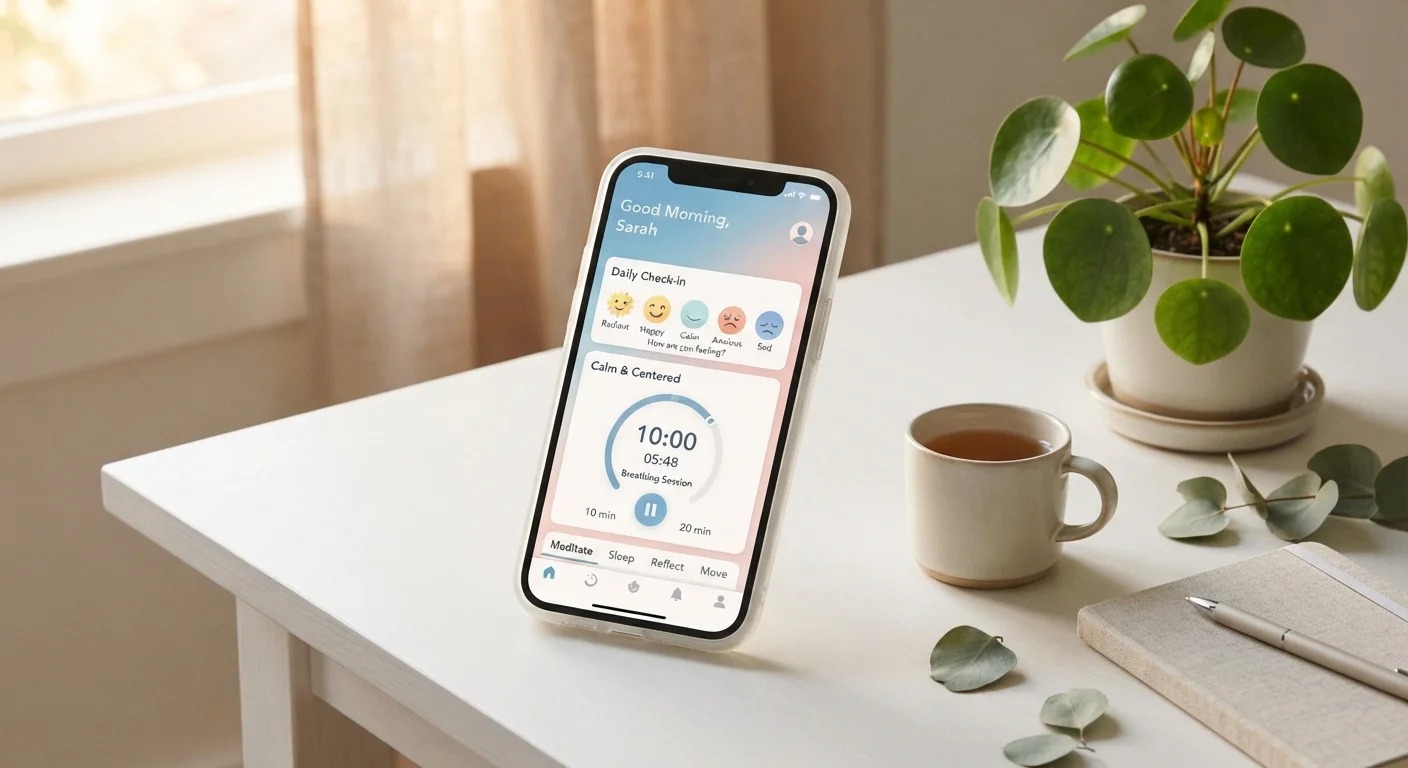
What Mental Health Apps Actually Offer
The mental health app market has expanded dramatically, with offerings ranging from guided meditation and breathing exercises to structured cognitive behavioral therapy (CBT) modules and mood journals. These tools generally fall into a few categories: mindfulness and relaxation, mood tracking, CBT-based skill exercises, sleep improvement, and peer support communities.
For many users, apps lower the barrier to engaging with mental wellness practices. Opening an app at 11 p.m. when anxiety spikes is simply more accessible than calling a therapist. That accessibility has real value - particularly for people on waiting lists for care, those in underserved areas, or anyone building foundational self-care habits.
Understanding where you fall on the mental health spectrum helps clarify which tools are appropriate. Apps tend to serve people who are coping, managing, or mildly struggling - not those in acute crisis.
Accessible anytime, including outside office hours
Apps offer support during evenings, weekends, and moments of acute stress when professional services aren't immediately available. This 24/7 access can help bridge gaps in care.
Lower cost than traditional therapy sessions
While many apps have premium tiers, free versions and affordable subscriptions make certain self-care tools reachable for people who cannot afford regular therapy. This is general information - costs vary widely by app and region.
Builds consistent self-care habits
Daily reminders and structured exercises can help users establish routines around breathing, journaling, or mindfulness that reinforce overall wellbeing over time.
Useful complement to professional therapy
Apps can reinforce skills learned in sessions - such as thought records or relaxation techniques - making therapy more effective by extending practice between appointments.
Reduces stigma barrier to seeking support
For people who feel hesitant about formal mental health care, an app can be a lower-stakes entry point to engaging with mental wellness concepts and self-understanding.
Where Apps Fall Short
Despite their appeal, mental health apps carry meaningful limitations that users deserve to understand clearly. Most apps are not regulated as medical devices, which means their claims are not independently verified before reaching consumers. The quality of content varies enormously, and some apps use clinical-sounding language without credentialed oversight behind the design.
Apps cannot diagnose conditions, provide individualized therapeutic relationships, or adapt in real time to emotional complexity the way a trained clinician can. For conditions like major depressive disorder, PTSD, bipolar disorder, or severe anxiety, app-based tools are not a substitute for professional evaluation and treatment. Self-treating a serious condition with an app while avoiding qualified care can delay necessary help.
Privacy is another significant concern. Mental health data is highly sensitive, yet many apps collect and share data with third parties in ways users may not fully anticipate. Before entering detailed mood logs or personal reflections, review the app's privacy policy carefully.
Not a replacement for clinical diagnosis or treatment
Apps cannot assess, diagnose, or treat clinical mental health conditions. Relying solely on an app for serious symptoms may delay appropriate professional care.
Data privacy risks with sensitive personal information
Many apps collect mood data, journal entries, and behavioral patterns - often sharing or monetizing this data. Privacy protections vary significantly and are not always transparent.
Evidence base is limited or inconsistent
While some app features have research support, many lack rigorous clinical validation. Effectiveness claims are not independently verified before apps reach users.
No real therapeutic relationship or clinical judgment
A qualified therapist adapts to emotional nuance, asks follow-up questions, and exercises professional judgment. Apps cannot replicate this individualized, responsive human connection.
Can encourage avoidance of necessary professional care
If an app feels sufficient, some users may postpone seeking qualified help for conditions that genuinely require it - potentially allowing symptoms to worsen over time.
Crisis Situations Require Immediate Help
Mental health apps are not appropriate tools for managing a mental health crisis. If you or someone you know is experiencing thoughts of suicide or self-harm, contact the 988 Suicide and Crisis Lifeline by calling or texting 988 in the United States. For life-threatening emergencies, call 911. No app should be a substitute for emergency care.
What the Research Actually Supports
The evidence base for mental health apps is genuinely mixed. Some CBT-based apps have been studied in peer-reviewed contexts and shown modest benefits for mild-to-moderate anxiety and depression symptoms. Mindfulness apps have a broader research footprint - though as our overview of mindfulness meditation research notes, effect sizes are often modest and study quality varies considerably.
Mood tracking features have face validity - regularly observing your emotional patterns can build self-awareness - but studies confirming long-term clinical benefit are limited. Sleep-focused apps show more consistent evidence for improving sleep hygiene behaviors, particularly those using structured stimulus-control techniques.
10,000+
Mental health apps available in major app stores
Estimates from health technology researchers suggest tens of thousands of mental health-related apps are available, with quality and clinical grounding varying enormously across them.
~20%
Adults with any mental illness in the U.S.
According to SAMHSA's National Survey on Drug Use and Health, roughly one in five U.S. adults experiences a mental illness in a given year, highlighting the scale of unmet need.
It's also worth noting that heavy app use has its own tradeoffs. Screen time and wellbeing research suggests that passive, unstructured digital consumption can worsen mood - so intentional, time-limited app use is preferable to habitual scrolling through wellness content.
Using Apps Responsibly as Part of Your Self-Care
Used thoughtfully, mental health apps are best understood as supplementary tools rather than standalone solutions. If you're currently working with a therapist or counselor, an app can reinforce skills, provide between-session check-ins, and build consistency. If you're not in treatment but are managing day-to-day stress, apps offer structured practices that many people find genuinely helpful.
A few practical considerations: look for apps that are transparent about who developed the content and whether mental health professionals were involved. Be cautious of apps that make strong outcome promises or that nudge you toward premium subscriptions in ways that feel manipulative. If you notice symptoms worsening - or if you're experiencing thoughts of self-harm - stop relying on an app and contact a qualified mental health professional or crisis line immediately.
If reducing overall screen exposure is a parallel goal, consider pairing intentional app use with the screen time management tools built into your device.
This article is for general informational and educational purposes only and is not a substitute for professional mental health advice, diagnosis, or treatment. Always consult a qualified mental health professional regarding any mental health concerns or before making changes to your care.