What Fitness Benchmarks Actually Are
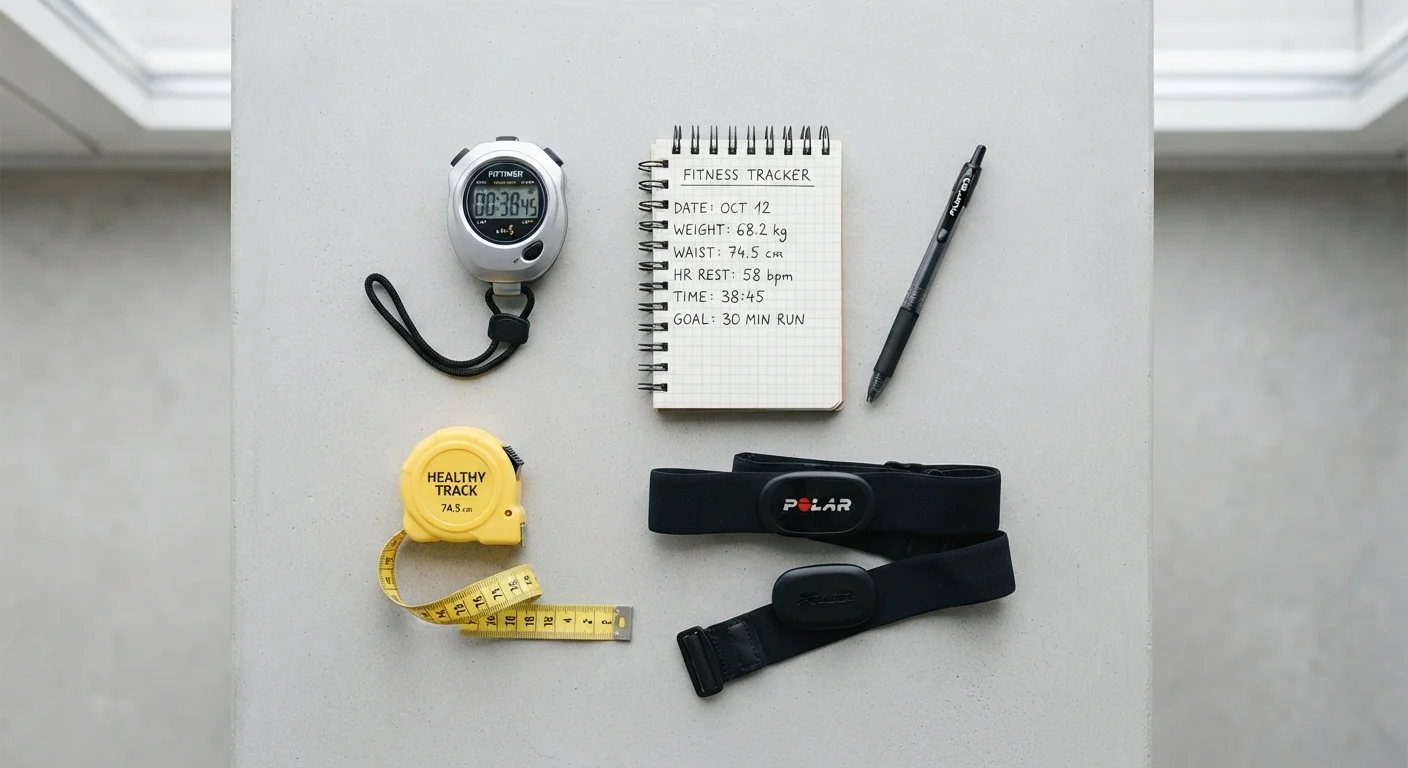
Fitness benchmarks are population-derived reference ranges - not personal report cards. They're compiled from large studies, clinical assessments, and physical fitness testing programs to give researchers and health professionals a way to describe what typical performance looks like across age groups and sexes. For everyday Americans, they serve as general orientation points: a rough map of where you stand relative to a broader population sample.
Importantly, these numbers come with real limitations. They reflect averages from specific tested populations, which may not represent every background, body type, or health condition. A number that falls outside a typical range doesn't mean something is wrong - it's a prompt for curiosity and, if warranted, a conversation with a qualified healthcare provider. Common fitness myths often stem from misreading benchmarks as fixed goals rather than flexible reference points.
| Normal Resting Heart Rate | 60-100 bpm (American Heart Association general reference) |
| Average Adult Mile Time (recreational) | 9-12 minutes (General fitness literature consensus) |
| Average Push-Ups (adults 30-39, men) | 22-29 reps (ACSM fitness testing norms) |
| Average Push-Ups (adults 30-39, women) | 17-21 reps (ACSM fitness testing norms) |
| VO₂ Max - Average (women 30-39) | 31-37 mL/kg/min (ACSM Guidelines for Exercise Testing) |
| VO₂ Max - Average (men 30-39) | 35-42 mL/kg/min (ACSM Guidelines for Exercise Testing) |
Key Metrics and General Reference Ranges
The following reference points are drawn from widely used fitness assessment frameworks, including those from the American College of Sports Medicine and federal physical activity research. These ranges vary by age and sex - the figures below reflect general adult averages and should be interpreted accordingly.
Resting Heart Rate
A resting heart rate (RHR) between 60 and 100 beats per minute (bpm) is considered within the normal range for most adults, according to general cardiology references. Athletes and highly conditioned individuals often see lower RHRs - sometimes in the 40-55 bpm range - because a stronger, more efficient heart pumps more blood per beat. Values consistently above 100 bpm at rest (called tachycardia) or unusually low values with symptoms warrant medical evaluation.
Push-Up Performance
Push-up counts are a common proxy for upper-body muscular endurance. For adults aged 30-39, general population averages often cited in fitness literature suggest roughly 17-21 repetitions for women and 22-29 repetitions for men as an "average" range. These numbers shift with age - expected counts tend to decline across older age brackets. If you're returning to exercise after a long break, starting at any number and building gradually is what matters most.
Mile Run Time
A commonly cited average mile time for general adult fitness falls in the range of 9 to 12 minutes for recreational runners. Trained runners typically run well below 8 minutes. Walking a mile in 15-20 minutes is a reasonable baseline for someone just getting started.
VO₂ Max (Cardiorespiratory Fitness)
VO₂ max measures how efficiently the body uses oxygen during intense exercise. It's considered one of the strongest predictors of long-term cardiovascular health. For adults aged 30-39, a score around 31-37 mL/kg/min is often described as "average" for women, and 35-42 mL/kg/min for men, though ranges vary by source. Wearable devices estimate VO₂ max - see what fitness trackers measure well and where they fall short for a realistic picture of how accurate those estimates tend to be.
Age and Sex Affect All These Numbers
Every benchmark listed here shifts with age and differs between sexes - a 25-year-old and a 55-year-old will have different reference ranges for the same metric. Always look for age- and sex-stratified tables when using benchmark data to interpret your own results. Your healthcare provider can help you understand what specific numbers mean in your personal context.
Using Benchmarks Wisely - and Knowing Their Limits
The most useful thing a fitness benchmark can do is prompt progress tracking over time - comparing yourself to yourself. A meaningful fitness goal isn't matching a population average; it's consistent, gradual improvement from your own starting point. The federal Physical Activity Guidelines for Americans offer a more actionable framework: they focus on weekly activity volume and intensity rather than performance outputs.
If a benchmark number concerns you - particularly around heart rate, breathlessness, or pain during activity - bring it to a healthcare professional. Benchmarks are starting points for awareness, not substitutes for clinical evaluation.
Resting Heart Rate (RHR)
The number of times the heart beats per minute while the body is at complete rest. It is typically measured first thing in the morning before physical activity.
VO₂ Max
The maximum rate at which the body can consume oxygen during intense exercise. It is widely used as an indicator of cardiorespiratory fitness and overall aerobic capacity.
Muscular Endurance
The ability of a muscle or muscle group to perform repeated contractions against a load for an extended period of time, without significant fatigue.
Benchmark
A reference point derived from population data, used to describe typical performance or physiological values across a specific group. Benchmarks are descriptive, not prescriptive.
Tachycardia
A resting heart rate consistently above 100 beats per minute. It can have many causes and should be evaluated by a healthcare professional.
This article is for general informational and educational purposes only and is not medical advice. Always consult a qualified healthcare professional before beginning or significantly changing an exercise program, especially if you have a health condition or injury.