Why the Premium Myth Is So Persistent
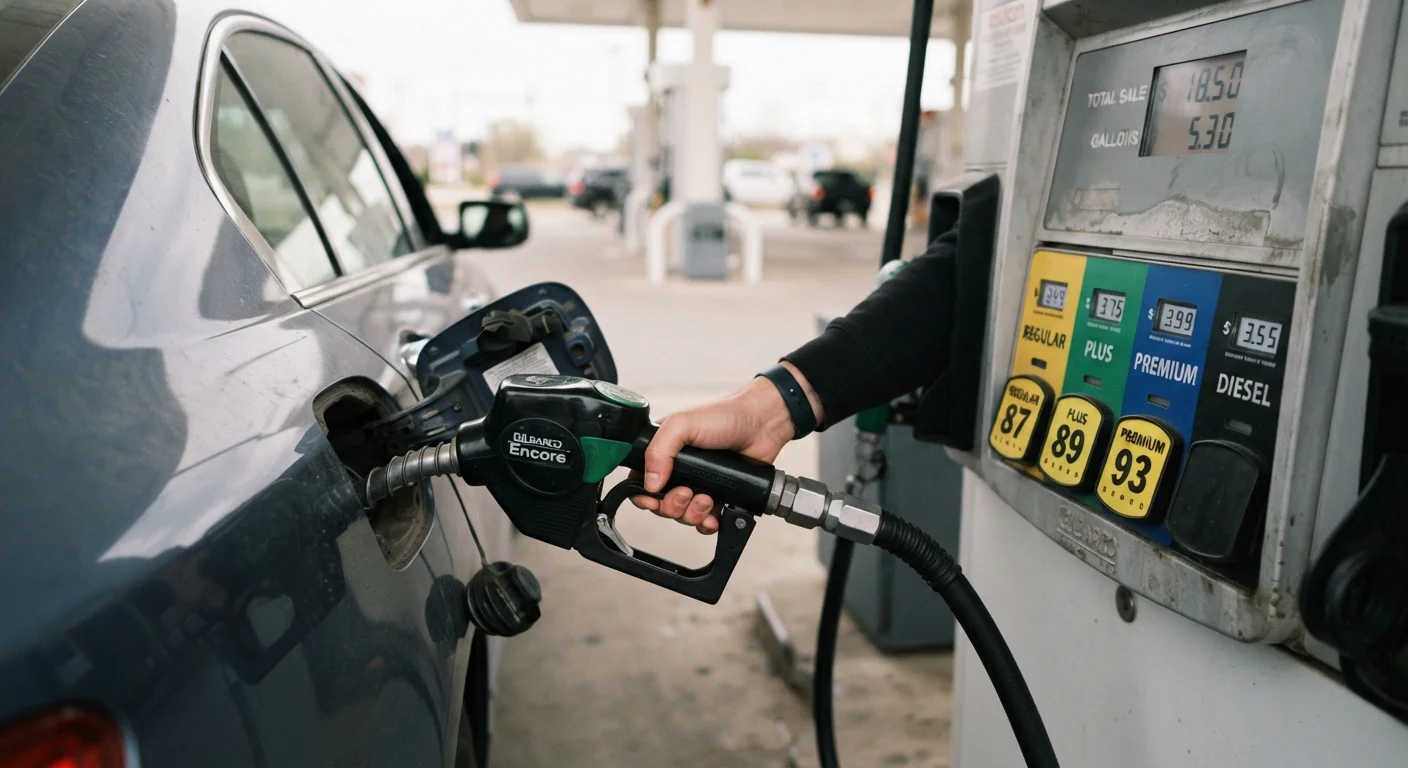
The belief that premium gasoline is simply 'better' fuel runs deep in American driving culture. It's reinforced by price - we're conditioned to associate higher cost with higher quality - and by the fact that some performance and luxury vehicles genuinely do require it. The problem is that this logic gets applied broadly, even to minivans, economy sedans, and family SUVs that were never designed with high-octane fuel in mind.
Understanding octane rating is the foundation of making a smarter choice at the pump. Octane doesn't measure energy content or fuel cleanliness; it measures a fuel's resistance to premature ignition under compression. Whether your engine needs that resistance depends entirely on how it was engineered - not on what grade you prefer or what you've always used. This is the same kind of scrutiny worth applying when evaluating whether any premium product actually delivers on its implied promise, as explored in our piece on common myths around premium and generic products.
Myth
Premium gasoline makes any car run better and produce more power.
Fact
Premium fuel only benefits engines specifically designed for higher octane ratings. In engines tuned for regular unleaded, it produces no measurable power gain.
Octane rating measures a fuel's resistance to engine knock, not its energy content or quality. High-compression and turbocharged engines require high-octane fuel to prevent knock under pressure. Engines with lower compression ratios - the majority of vehicles on American roads - are calibrated for 87 octane. Pouring 93 octane into one of these engines does not give the engine more to work with; the combustion chemistry simply doesn't change in any meaningful way for that application.
Myth
Premium fuel improves gas mileage, so you break even on the price difference.
Fact
Independent testing consistently shows no meaningful fuel economy improvement when using premium in vehicles that don't require it.
This myth persists partly because premium fuel costs more, and consumers instinctively look for a return. The U.S. Department of Energy and the Federal Trade Commission have both noted that using premium in a regular-grade vehicle typically delivers no fuel economy advantage. If your car is rated for regular, you are paying a premium of roughly 20-50 cents more per gallon and receiving nothing additional in return. Over a year of typical driving, that adds up to hundreds of dollars spent unnecessarily.
[stat_highlights]Myth
Premium gasoline cleans your engine better than regular grades.
Fact
All grades of gasoline sold in the U.S. are required to contain detergent additives that help keep fuel injectors and intake valves clean.
Since 1995, the EPA has required that all gasoline sold at retail contain a minimum level of detergent additives regardless of octane grade. Some fuel brands market 'Top Tier' detergent standards, which go beyond the EPA minimum - but this distinction exists across all grades, not just premium. Buying premium at a standard station does not guarantee better cleaning performance than buying regular from a Top Tier retailer.
Myth
If premium is 'recommended,' you should always use it to protect the engine.
Fact
A 'recommended' designation means the engine can safely operate on regular fuel; it is not a warning that regular will cause damage.
Modern engines equipped with knock sensors actively adjust ignition timing to compensate for lower-octane fuel. When a 'premium recommended' engine detects incipient knock, it retards timing to prevent damage - a process that happens automatically and continuously. You may theoretically lose a small amount of peak power under extreme conditions like towing at maximum capacity or hard acceleration in high heat, but in ordinary commuting and highway driving, the difference is rarely perceptible. The financial case for using regular in a 'recommended' vehicle is strong for most drivers.
[warning_callout]Myth
Premium gas has a longer shelf life, making it better for cars that sit unused.
Fact
Octane grade has no bearing on how long gasoline remains stable in a tank or storage container.
Fuel stability is affected by ethanol content, exposure to oxygen, and temperature fluctuations - none of which correlate with octane rating. Both regular and premium degrade at roughly the same rate. Gasoline generally remains usable for about three to six months in a properly sealed container. For vehicles stored long-term, a fuel stabilizer additive is the recommended approach, regardless of the grade of fuel already in the tank.
What the Evidence Actually Shows - and What to Do
The myths around premium fuel share a common thread: they substitute marketing intuition for engineering reality. Your owner's manual is the only document that reflects what your engine's designers actually determined through testing and calibration. Consulting it takes less than two minutes and can save a meaningful amount of money over years of ownership.
Check Your Owner's Manual First
The only authoritative source for your vehicle's fuel requirement is the manufacturer's owner's manual. Words matter here: 'required' means the engine needs higher octane to function correctly; 'recommended' means the car can run on regular without damage. Ignoring this distinction is the most common and costly mistake drivers make at the pump.
For drivers who own vehicles where premium is genuinely required, budget planning matters. Fuel costs are a recurring ownership expense worth factoring into the total cost of a vehicle - much like insurance, maintenance, and depreciation. Our editorial on when paying more actually pays off offers a useful framework for deciding where a spending premium is genuinely justified and where it isn't. In the case of fuel grade, the evidence is clear: if your engine doesn't require it, premium is a cost with no return.
If you're evaluating a vehicle purchase and want to avoid unexpected ongoing expenses - including fuel grade requirements - doing thorough research before buying is essential. Our coverage of car buying myths that cost drivers money addresses how misconceptions at the purchase stage can affect long-term ownership costs as well.