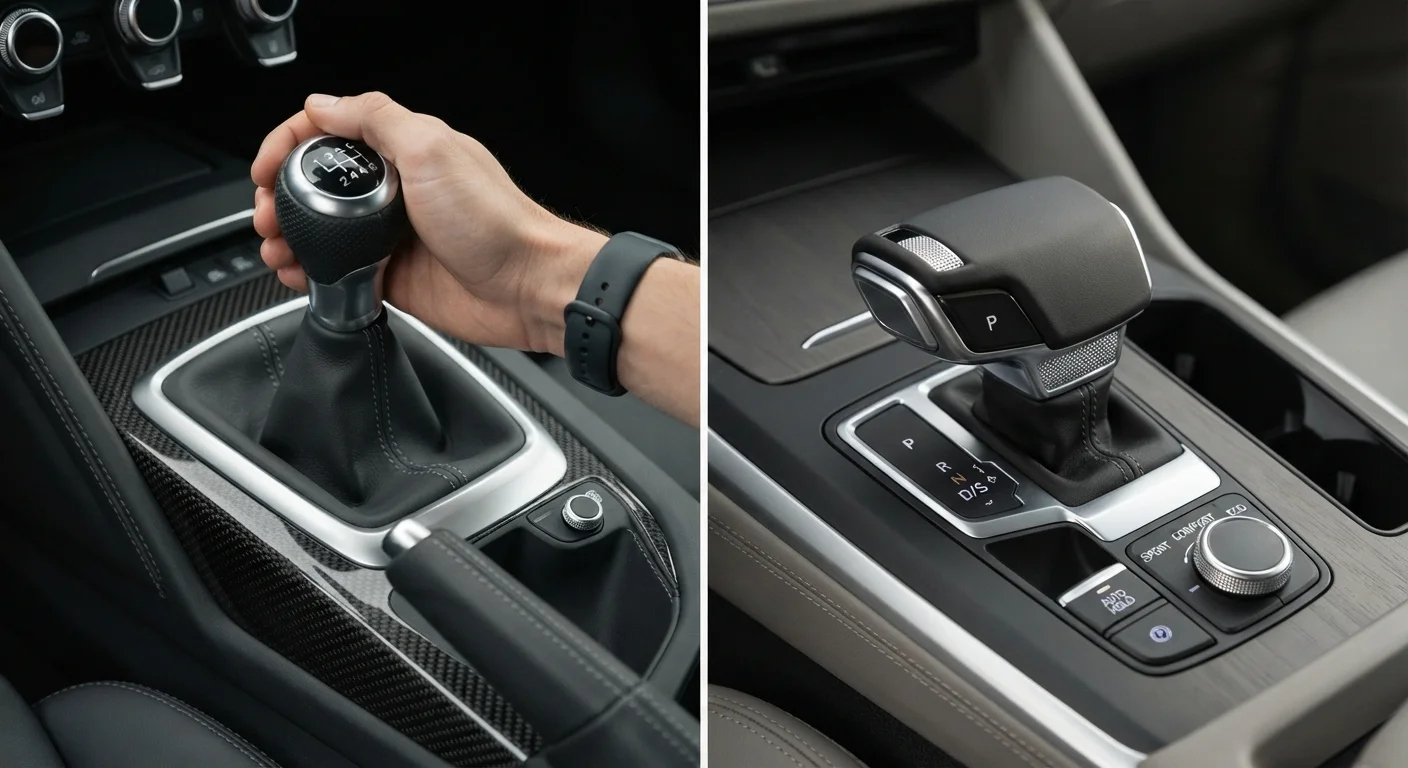
The Maintenance Schedules Are Genuinely Different
Understanding how each transmission type is serviced is the first step in estimating true ownership costs. The maintenance demands are distinct enough that drivers switching from one to the other sometimes get caught off-guard.
Manual Transmission Service
Manual transmissions use a relatively simple gear-and-shaft design lubricated by gear oil. Most manufacturers recommend changing this fluid every 30,000 to 60,000 miles, though some sealed units are labeled "lifetime fill" - a term worth scrutinizing, since many mechanics consider periodic changes beneficial regardless. The major periodic expense unique to manuals is clutch replacement. A clutch is a wear item; how long it lasts depends almost entirely on driving style. Aggressive city driving and frequent hill starts can wear a clutch out before 60,000 miles, while a smooth-handed highway driver may see one last past 100,000. Replacement parts and labor together typically run in the hundreds of dollars, varying by vehicle and region.
Automatic Transmission Service
Automatic transmissions are hydraulically operated systems with more internal components - valve bodies, torque converters, solenoids - and they rely critically on clean transmission fluid (ATF). Most manufacturers recommend ATF changes every 30,000 to 60,000 miles for traditional automatics, though continuously variable transmissions (CVTs) and dual-clutch automatics (DCTs) have their own service intervals that should be confirmed in the owner's manual. Skipping fluid changes is one of the leading causes of premature automatic transmission failure. See our guide to routine maintenance intervals for a broader reference on service timing.
Check Your Owner's Manual First
Manufacturer service intervals for transmission fluid vary significantly by vehicle and transmission type. Always use the interval and fluid specification listed in your owner's manual rather than relying on general rules of thumb. Using the wrong fluid type - especially in CVTs and DCTs - can cause serious damage.
Repair Costs When Things Go Wrong
Routine maintenance is one dimension; major repairs are another. This is where the cost gap between transmission types becomes most visible.
| Manual Transmission | Automatic Transmission | |
|---|---|---|
| Primary wear item | Clutch assembly | Transmission fluid & internal friction materials |
| Fluid change interval (typical) | 30,000-60,000 miles | 30,000-60,000 miles (CVT/DCT varies) |
| Major repair cost | Generally lower | Generally higher |
| Technician availability | Decreasing as manuals decline | Widely available |
| Driver behavior impact | High (clutch wear) | High (fluid heat & load) |
| Potential longevity | 150,000+ miles with care | 150,000+ miles with care |
When a manual transmission needs internal repair - a worn synchro, a bent shift fork - the labor and parts are generally less expensive than equivalent automatic work because the components are simpler and more accessible to a wider range of mechanics. A manual transmission rebuild is typically less costly than rebuilding a modern automatic.
Automatic transmission rebuilds or replacements are among the most expensive drivetrain repairs a vehicle can need, often running into the thousands of dollars depending on vehicle type and the shop's labor rate. CVTs, which are increasingly common in fuel-efficient vehicles, are particularly expensive to repair and are sometimes replaced outright rather than rebuilt. For a broader view of how repair costs factor into vehicle ownership across time, see our piece on long-term ownership vs. frequent upgrades.
Don't Defer Transmission Fluid Changes
Delaying ATF changes is one of the most common causes of premature automatic transmission failure. Degraded fluid loses its ability to protect internal components from heat and friction. If you're unsure when a used vehicle last had its transmission fluid serviced, having it inspected is a sound first step - not a guaranteed fix, but a meaningful precaution.
Longevity and Driver Behavior
Both transmission types are capable of lasting the life of a well-maintained vehicle. Longevity studies and mechanic experience consistently point to the same conclusion: how a transmission is driven matters as much as which type it is.
For manuals, riding the clutch, slipping it excessively on hills, or using it as a footrest shortens clutch life dramatically. Downshifting aggressively without rev-matching stresses synchronizers. For automatics, towing beyond rated capacity, overheating the fluid, or neglecting fluid changes degrades the valve body and friction materials inside. CVTs are especially sensitive to overheating and improper fluid.
One practical consideration: the shrinking availability of manual-equipped vehicles in the U.S. market means that finding a qualified manual transmission specialist may become harder over time in some regions, and some parts may see reduced availability for older manuals as production winds down. This is worth factoring in if you're planning long-term ownership. For a full picture of what ownership involves from acquisition through eventual sale, the Complete Guide to Vehicle Ownership is a useful companion resource.
This article is for general informational purposes only. Maintenance intervals, repair costs, and service recommendations vary by vehicle make, model, and region. Always consult your owner's manual and a qualified automotive technician for guidance specific to your vehicle.