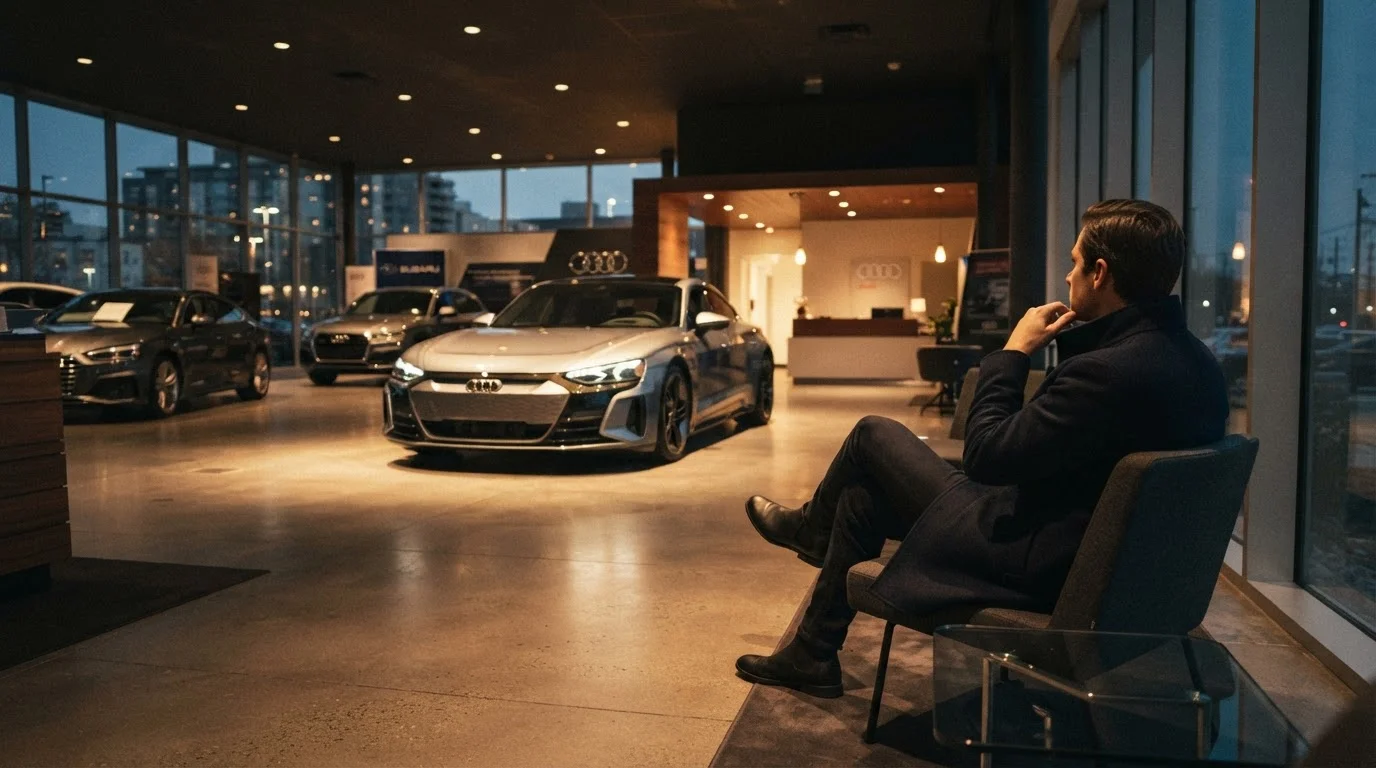
Why Car Buying Is an Emotional Experience
Purchasing a vehicle isn't just a financial transaction - it's a milestone. For many Americans, a car represents independence, status, and practical necessity all at once. That emotional weight is exactly what makes the dealership environment so psychologically complex.
Research in consumer behavior consistently shows that high-involvement purchases - those that are expensive, infrequent, and personally significant - generate stronger emotional responses than everyday buying decisions. Cars sit at the top of that category. The result is that by the time most buyers walk onto a lot, they're already primed for emotional reasoning, not purely logical analysis.
Understanding this isn't about self-criticism. It's about recognizing the landscape so you can navigate it more clearly. As our guide on why we overspend explains, awareness of emotional triggers is itself a protective tool.
60%+
Buyers who decide within a single dealership visit
Consumer surveys consistently find that a majority of car buyers make their final purchase decision on the same day they visit the dealership, often under significant emotional momentum.
72 months
Average loan term length, rising trend
The average auto loan term has extended markedly over the past decade, partly because longer terms lower monthly payments - making purchases feel more affordable in the moment than they are in total cost.
~17 million
New vehicles sold in the U.S. annually
According to industry data, the U.S. new vehicle market regularly sees roughly 15-17 million sales per year, reflecting how frequently Americans face this high-stakes, emotion-laden decision.
The Key Emotions That Shape Buying Behavior
Several distinct emotional states tend to surface during the car-buying process, each with its own influence on decision-making:
- Excitement: Test drives and shiny showroom floors trigger genuine enthusiasm. This is positive, but excitement compresses time horizons - buyers focus on how good something feels right now rather than how it fits their life over five years.
- Urgency: Perceived scarcity - limited inventory, end-of-month sales pressure, or a competing buyer - activates loss aversion. People work harder to avoid a loss than to secure an equivalent gain, so urgency is a powerful lever. See how anchoring and urgency tactics function more broadly in retail pricing.
- Status anxiety: Vehicles are visible signals of identity. Buyers sometimes stretch budgets to acquire models that project a self-image they aspire to, rather than choosing vehicles suited to their actual financial situation.
- Fear of regret: Concern about choosing the 'wrong' car can paradoxically push buyers toward faster decisions - accepting a dealer's recommendation rather than continuing to research independently.
Name Your Emotional State Before You Negotiate
Before entering any pricing conversation, take a moment to honestly identify what you're feeling - excited, pressured, or anxious. Simply naming the emotion has been shown in behavioral research to reduce its influence on subsequent decisions. It sounds simple, but it creates a brief pause between impulse and action.
How Dealership Environments Amplify These Feelings
Dealership design and sales processes are not accidental. Comfortable seating, attentive staff, and the physical experience of sitting inside a new vehicle all create a sense of ownership before any paperwork is signed. This phenomenon - called the endowment effect - causes people to value something more highly once they feel it belongs to them, even temporarily.
Negotiation structure also plays a role. Monthly payment conversations, for instance, can shift focus away from total vehicle cost, making an expensive purchase feel more manageable in the moment. Buyers who understand how the full car buying process works - from lot to signed contract - are better positioned to evaluate each stage on its own merits rather than being swept along.
“The car buying process is one of the few retail experiences designed to create a sense of belonging before ownership. Once you feel attached to a vehicle, every objection feels like a personal loss.”
— Dan Ariely, Behavioral economist and author on predictable irrationality in consumer decision-making
Practical Ways to Stay Grounded During the Process
Emotional awareness doesn't require you to become a cold, detached negotiator. It simply means building structures that give your rational mind a fair chance alongside your instincts.
- Set limits before you go. A written budget ceiling and a prioritized feature list act as anchors you control. Refer back to them when the conversation drifts toward upgrades or higher trims.
- Evaluate vehicles on the test drive with purpose. Our article on test drive red flags is a useful pre-visit read - it reframes the experience as a mechanical evaluation, not just an enjoyable preview.
- Impose a cooling-off period. For most buyers, sleeping on a decision before signing significantly reduces post-purchase regret and financially driven errors. Reputable dealerships will hold a vehicle for a reasonable period.
- Bring objective support. A trusted companion who is less emotionally invested in the outcome can serve as a useful reality check.
First-time used car buyers face some unique emotional pressures as well. The used car buying roadmap addresses how to evaluate vehicles and close deals confidently when the stakes feel especially uncertain.
Emotions Aren't the Enemy
Feeling enthusiastic about a vehicle purchase is entirely normal and doesn't indicate poor judgment. The goal isn't to eliminate emotion from the process but to ensure it doesn't crowd out practical evaluation. Buyers who prepare thoroughly tend to feel both satisfied and financially comfortable after the purchase - which is the actual goal.