Where the Misconceptions Come From
For many consumers, the word "refurbished" triggers immediate skepticism. The assumption is that a refurbished computer is somehow damaged goods - a device that failed, got patched up just enough to resell, and is waiting to fail again. That mental picture is understandable, but it doesn't match how certified refurbishment programs actually work.
The skepticism often traces back to genuine bad experiences with informal secondhand purchases - buying a used laptop from a private seller with no inspection, no warranty, and no accountability. That is a genuinely different situation from buying a unit that has passed through a structured reconditioning process. Conflating the two leads to decisions based on myth rather than evidence.
Before you evaluate any computer - new or refurbished - it helps to know what you're actually comparing. Our computer buying checklist outlines the specs, ports, and build-quality factors worth scrutinizing regardless of whether a machine is fresh from the factory or professionally reconditioned.
Myth
Refurbished computers were broken and only partially fixed - they're just waiting to fail again.
Fact
Many refurbished units were never defective. Common sources include customer returns, corporate lease rotations, and overstock - not failed hardware.
A large share of refurbished inventory arrives in reconditioning programs because a customer changed their mind within a return window, a business refreshed its fleet on schedule, or a retailer had surplus units. The device may have seen minimal use or none at all. Even units that did have a specific component failure are reconditioned by replacing the failed part and then testing the full system - not by disguising the problem.
Myth
Refurbished computers don't come with any warranty, so you're on your own if something goes wrong.
Fact
Certified refurbished programs from manufacturers and authorized resellers routinely include warranties, sometimes matching the coverage on new devices.
Warranty terms vary by seller and program, so reading the specific coverage before purchase matters. However, the blanket assumption that refurbished means warranty-free is not accurate. Many manufacturer-certified programs offer 90-day to one-year warranties as standard, and some offer extended coverage options. The key distinction is between certified programs and informal private sales, which typically carry no warranty at all.
Myth
You can't trust the software on a refurbished computer - it might have leftover data or malware from the previous user.
Fact
Legitimate refurbishment processes include a factory reset and fresh operating system installation, wiping all prior user data.
Certified refurbishers are required to perform data sanitization as part of reconditioning - both for consumer protection and because businesses trading in used equipment face legal obligations around data privacy. A device sold through a structured program should arrive with a clean OS install. That said, once you have the device, applying current security updates promptly is always good practice. For context on what software protections actually do and don't cover, common antivirus misconceptions is worth a read.
Myth
Refurbished computers are always significantly older models with outdated specs.
Fact
Refurbished inventory spans a wide range of ages and configurations - recent models appear regularly, particularly from business lease returns.
Corporate and institutional buyers frequently refresh their computer fleets on two- to four-year cycles for budgeting or software support reasons, not because the hardware has failed. This puts relatively recent, well-maintained machines into refurbishment pipelines. While older models are also available, assuming all refurbished stock is outdated limits your options unnecessarily. Checking release dates and component generations is a straightforward step during evaluation.
Myth
Refurbished means the battery is worn out and will barely hold a charge.
Fact
Reputable refurbishment programs test battery health and replace batteries that fall below an acceptable capacity threshold.
Battery condition is one of the most scrutinized aspects of laptop reconditioning precisely because it's one of the most visible performance factors. Programs that meet manufacturer standards typically require batteries to hold a defined percentage of original capacity - often 80% or higher - before the unit can be sold. If you're evaluating a refurbished laptop independently, asking for the battery health report or checking it yourself after purchase is a reasonable step.
What Certification Actually Involves
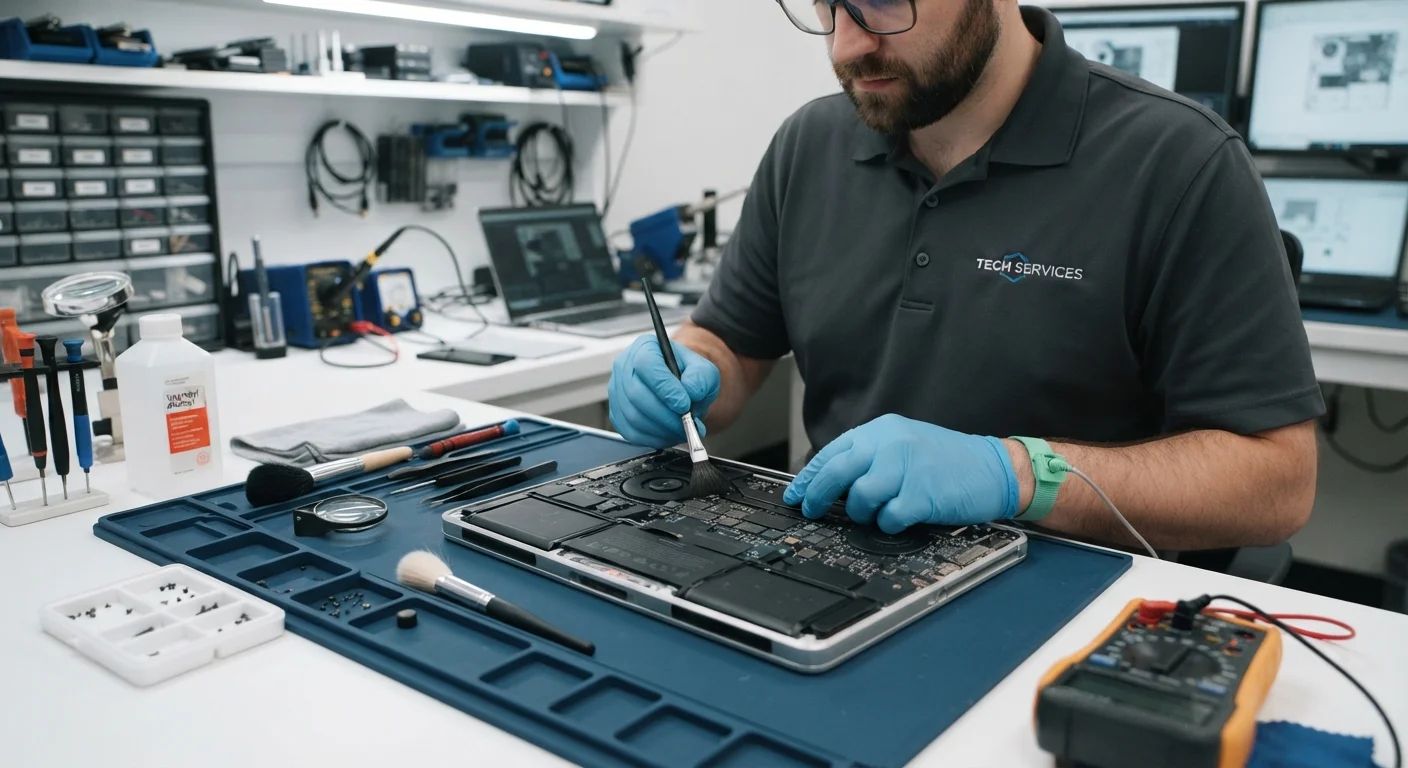
The term "certified refurbished" is not purely marketing language. Programs run by manufacturers and major authorized refurbishers typically require technicians to test individual components - battery, display, storage drive, ports, keyboard, and cooling system - and replace any part that falls below a defined performance threshold. The device is then reset to factory software settings and, in many cases, repackaged.
That process is meaningfully different from a private resale. It also differs from simply buying "open box," which usually means a customer returned an item that may never have been used at all.
~15%
Typical price reduction vs. new equivalent
Industry observers generally note refurbished certified devices are priced roughly 15-30% below comparable new units, though this varies widely by program and model.
3-4 years
Typical corporate device refresh cycle
Many organizations replace computing equipment on three-to-four-year schedules, feeding relatively recent hardware into refurbishment channels regardless of device condition.
One area where consumers should stay alert is grade labeling. Refurbished devices are often sold in tiers - sometimes labeled Grade A, B, or C - reflecting cosmetic condition rather than functional status. A Grade B unit may have minor scratches on the casing but pass every functional test identically to a Grade A. Understanding the grading scale before purchase helps set accurate expectations. For a broader look at evaluating secondhand goods, the principles in secondhand shopping guidance translate well to electronics too.
Not All 'Refurbished' Labels Are Equal
The term 'refurbished' is not uniformly regulated, which means quality can vary significantly between sellers. A unit sold as refurbished through a manufacturer-certified program has met documented standards; a listing on an informal marketplace with the same label may not have. Always confirm who performed the reconditioning, what tests were run, and what warranty - if any - is included before committing to a purchase.
It's also worth knowing that computers don't need to be replaced every time performance dips. Sometimes the better decision is an upgrade rather than a replacement - certified refurbished or otherwise. Understanding a computer's realistic lifespan can sharpen that judgment considerably.