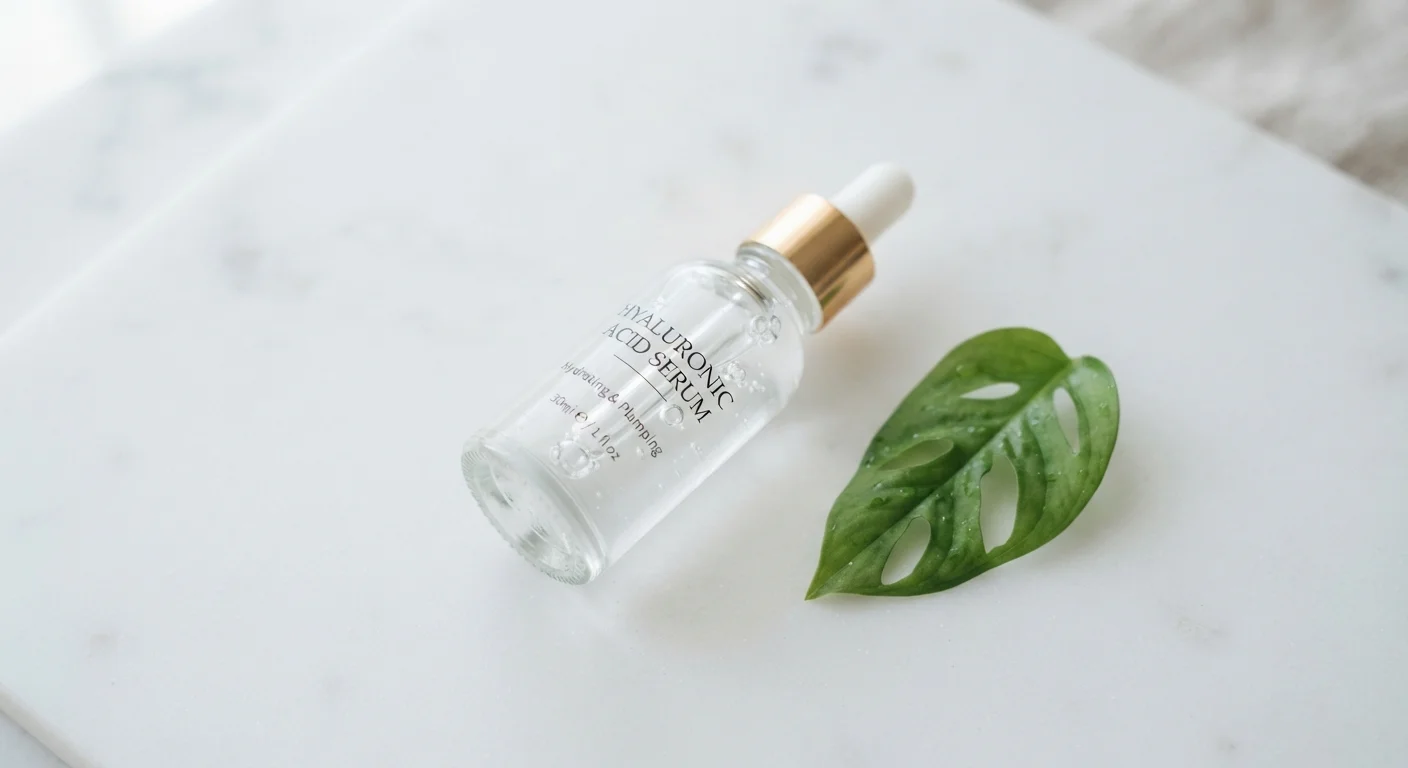
The Ingredient Everyone's Talking About
Hyaluronic acid - often abbreviated as HA - has become one of the most recognized ingredients in skincare. It shows up in serums, toners, sheet masks, moisturizers, and even lip glosses. But with all that buzz comes a fair amount of confusion about what it actually does, and more importantly, what it doesn't do. Let's separate the science from the marketing.
HA is a naturally occurring molecule found in your skin, eyes, and connective tissue. Its main job in the body is to retain water - it can hold up to 1,000 times its weight in moisture. As we age, natural HA levels decline, which is one reason skin can start to feel less plump and bouncy over time. Topical HA products aim to supplement that function, though how well they succeed depends on a few key factors.
If you're also sorting out where HA fits among your other watery skincare steps, our guide on toners, essences, and mists can help you build a logical routine around it.
Myth vs. Fact: What Hyaluronic Acid Really Does
From "it's a moisturizer" to "it'll smooth all your wrinkles," here are the most common misconceptions - and the accurate science behind each one.
Myth
Hyaluronic acid is a moisturizer.
Fact
HA is a humectant, which means it attracts and holds water - it doesn't add moisture on its own.
The terms "hydration" and "moisture" are often used interchangeably in beauty marketing, but they describe different things. Hydration refers to water content in the skin; moisture generally refers to oils that prevent water loss. Hyaluronic acid is a humectant - it draws water to the skin from the environment or deeper skin layers. A true moisturizer also contains emollients or occlusives to seal that water in. HA alone won't do that sealing work, which is why layering matters.
Myth
More hyaluronic acid means better results.
Fact
Concentration alone doesn't determine effectiveness - molecule size and formulation matter just as much.
Hyaluronic acid comes in different molecular weights, and this affects where and how it works. High molecular weight HA sits on top of the skin's surface and creates a temporary plumping effect. Low molecular weight HA can penetrate more deeply into the upper layers of the dermis. Some products combine multiple weights for layered results. A product boasting a very high HA percentage without addressing molecular size may not outperform a well-formulated lower-concentration option.
Myth
Hyaluronic acid will fill in wrinkles and lines.
Fact
Topical HA can temporarily reduce the appearance of fine lines caused by dehydration, but it cannot structurally fill deep wrinkles.
When skin is well-hydrated, fine lines caused by dryness become less visible - that's a real, if temporary, effect. But deeper wrinkles formed by repeated muscle movement or collagen loss are structural issues that topical HA cannot address. Injectable HA fillers (used in cosmetic procedures) work differently, physically adding volume beneath the skin. Topical serums don't have that capability, and no over-the-counter product can replicate that mechanism. Claims to the contrary should be viewed skeptically.
Myth
Hyaluronic acid is only for dry skin types.
Fact
HA is appropriate for virtually all skin types, including oily and acne-prone skin.
Because hyaluronic acid is lightweight, non-greasy, and typically non-comedogenic (meaning it's unlikely to clog pores), it works well across skin types. Oily skin can still be dehydrated - oil production and water content are separate functions. In fact, dehydrated oily skin sometimes overproduces sebum as a compensatory response. Adding a lightweight HA serum may support the skin barrier without contributing to congestion. As always, individual responses vary, so patch testing a new product is a sensible first step.
Myth
Hyaluronic acid serums work the same in any climate.
Fact
In very dry or low-humidity environments, topical HA may pull moisture from deeper skin layers if there's not enough water in the air.
This is one of the more nuanced truths about humectants. In humid conditions, HA has plenty of atmospheric moisture to draw from, making it very effective. In arid climates or cold winter air, the moisture in the environment is limited, so the ingredient may draw from the skin itself - potentially worsening dryness. The fix is straightforward: apply HA to slightly damp skin and always follow with an occlusive or emollient-rich moisturizer to trap hydration and prevent it from escaping.
Getting the Most From Hyaluronic Acid
Understanding the science also means knowing how to use it. A few practical habits make a real difference in how effective HA is on your skin.
1,000x
Water weight HA can hold
Hyaluronic acid molecules are capable of retaining up to 1,000 times their weight in water, according to dermatological research on skin humectants.
~50%
HA lost from skin by age 40
Research suggests that natural hyaluronic acid in skin decreases significantly with age, contributing to reduced elasticity and plumpness over time.
Apply to damp skin. Because HA works by attracting water, applying it to bone-dry skin can actually backfire in low-humidity environments - the molecule may pull moisture from deeper layers of skin instead of from the air. Misting your face lightly or applying HA right after cleansing while skin is still slightly damp gives it the water source it needs.
Layer a moisturizer or facial oil on top. HA is a humectant, not an occlusive. Without a sealing layer, water can evaporate right off the surface. Following with a cream or oil locks everything in.
Check those label claims. Products labeled "hyaluronic acid" can vary significantly in formulation. Our guide on decoding common label claims is a good resource for understanding what ingredient marketing actually guarantees - and what it doesn't.
Don't Skip the Moisturizer After HA
Applying hyaluronic acid and stopping there - especially in dry indoor air - can leave skin feeling tighter than before. HA needs a moisturizing layer on top to seal in the water it attracts. This is especially important in winter months or heated indoor environments where air humidity is low.