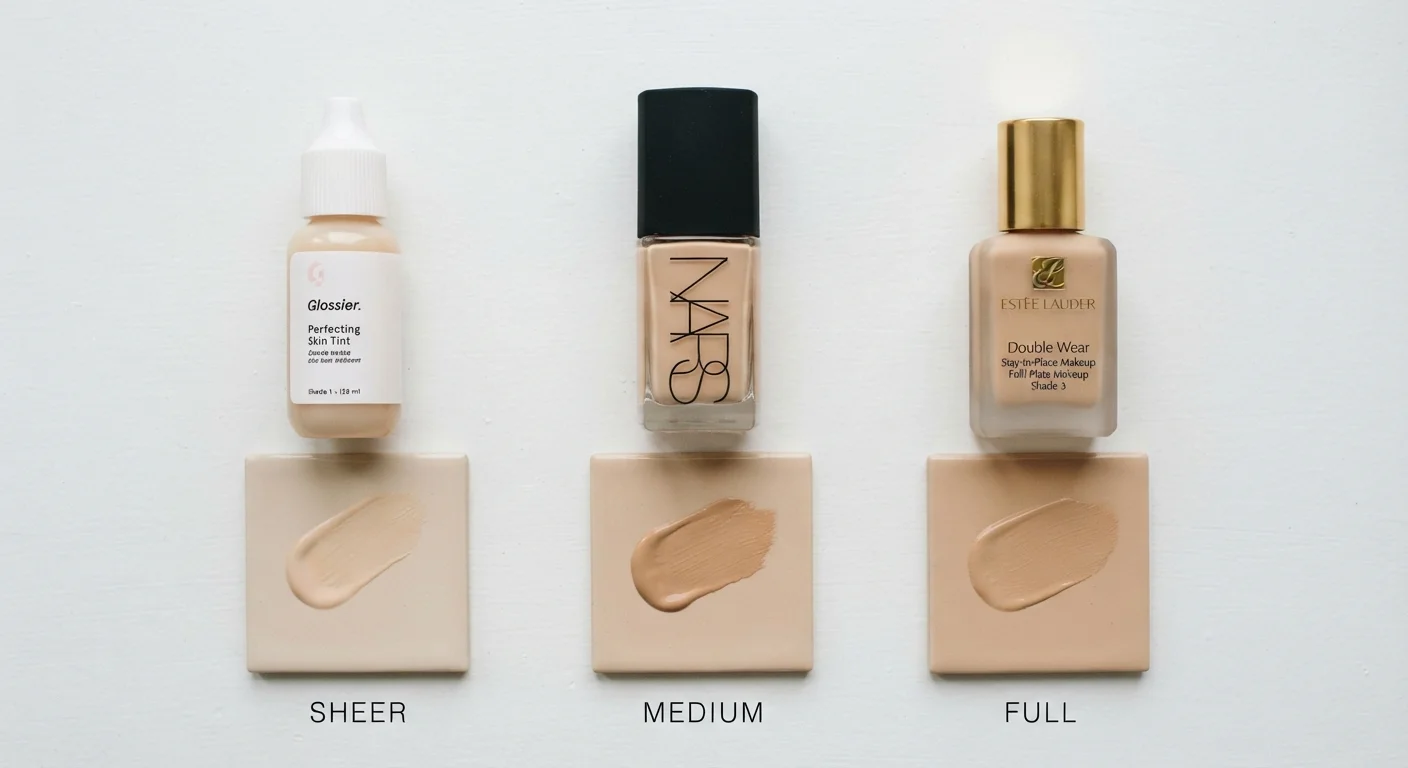
What Coverage Level Even Means
Walk into any beauty aisle and you'll see the words sheer, medium, and full coverage on nearly every foundation box. But those labels are more of a spectrum than a strict standard - no universal measuring system governs them, and one brand's 'medium' might look like another's 'full.' What the terms do reliably signal is how much of your natural skin a formula is designed to conceal or allow to show through.
Coverage is primarily driven by pigment concentration. A sheer formula has fewer color pigments suspended in its base, so light passes through and your skin's natural undertones, texture, and freckles remain visible. A full-coverage formula packs in significantly more pigment and often film-forming ingredients that create a denser layer on the skin's surface. Medium coverage lands in between - enough pigment to minimize minor unevenness, not so much that your skin disappears entirely.
~70%
Foundation buyers who cite coverage as their top purchase factor
Industry consumer research consistently shows coverage level is among the primary criteria shoppers use when selecting a foundation product.
3-4 layers
Typical passes needed to build sheer to near-full coverage
Makeup artists note that buildable formulas generally require multiple thin layers rather than one heavy application to achieve fuller coverage without caking.
Sheer Coverage: The 'Your Skin But Better' Option
Sheer formulas are the go-to when your skin is already in relatively good shape and you want the lightest possible feel. They don't erase freckles, visible pores, or natural texture - and that's the whole point. The goal is a perfected, glowy version of your bare complexion rather than a polished finish.
Tinted moisturizers, skin tints, and many BB creams fall into this category. They're generally more forgiving to apply because sheerness hides blending mistakes. Sheer formulas also tend to be more comfortable for long wear, especially in warmer months when heavier formulas can feel suffocating.
Best for: Even or nearly-even skin tones, casual or outdoor occasions, and anyone who prefers a barely-there makeup look.
Sheer Formulas Work Best on Prepped Skin
Because sheer coverage doesn't mask texture or dryness, the condition of your skin before application matters more than with heavier formulas. Apply a lightweight moisturizer suited to your skin type and let it absorb fully before layering a skin tint or sheer foundation on top. This keeps the formula from clinging to dry patches or looking blotchy.
Medium Coverage: The Everyday Workhorse
Medium coverage is arguably the most versatile category. It blurs minor redness, light discoloration, and small blemishes without reading as heavily made-up. You'll still see some natural skin variation underneath, but the overall complexion looks more refined and uniform.
Most traditional liquid foundations sit in this range. They're buildable enough that you can pat a second layer over a problem spot for extra concealment without the rest of your face looking overdone. This makes medium coverage a strong default for everyday wear - professional enough for work, lightweight enough for weekends.
Best for: Mild redness, acne scars, or hyperpigmentation, plus anyone who wants flexibility to go lighter or heavier depending on the day.
Full Coverage: When You Want Skin to Look Completely Even
Full-coverage formulas are heavily pigmented and designed to neutralize significant discoloration, deeper acne scarring, vitiligo patches, or rosacea-related redness. They genuinely deliver a smooth, uniform canvas - but that power requires a bit more skill in application to avoid a flat or cakey result.
The keys to a natural-looking full-coverage finish are a well-moisturized base, a damp sponge (rather than a brush) for blending, and setting with a light-handed dusting of powder only where needed. Skipping primer or applying too heavily in one pass are the most common pitfalls.
Best for: Significant skin concerns, events where you want your makeup to photograph well, or anyone who simply prefers a more polished, high-coverage aesthetic day-to-day.
“Foundation isn't meant to hide who you are - it's a tool for showing up as the version of yourself you want to present that day. Coverage level is just about choosing the right tool for the job.”
— A professional makeup artist, Licensed cosmetologist and beauty educator
Matching Coverage to Your Skin Goals
The 'right' coverage level is personal, situational, and completely changeable day to day. You might reach for a sheer tint on a beach vacation and a full-coverage formula for a wedding - that's not inconsistency, that's smart tool selection.
A few questions worth asking before you shop:
- What am I trying to even out? Minor unevenness responds well to sheer or medium; deeper discoloration benefits from full coverage.
- How long will I be wearing this? Lighter formulas are often more comfortable for extended wear.
- What finish do I prefer? Sheer and medium formulas more often deliver a natural or satin finish; many full-coverage options lean matte.
- What's my skin type? Oily skin can make lightweight formulas slip; dry skin may look patchy under high-coverage matte formulas without thorough prep.
Skin prep - a good moisturizer and a primer suited to your skin type - dramatically affects how any coverage level performs and lasts. Don't skip it regardless of the formula you choose.
Coverage Labels Aren't Regulated
There's no industry-wide standard that defines what 'medium' or 'full' coverage must look like, so the same label can mean different things across brands. Reading reviews from people with similar skin concerns, watching swatch videos, and testing at a beauty counter when possible are the most reliable ways to evaluate how a specific formula actually performs before committing to a full-size product.