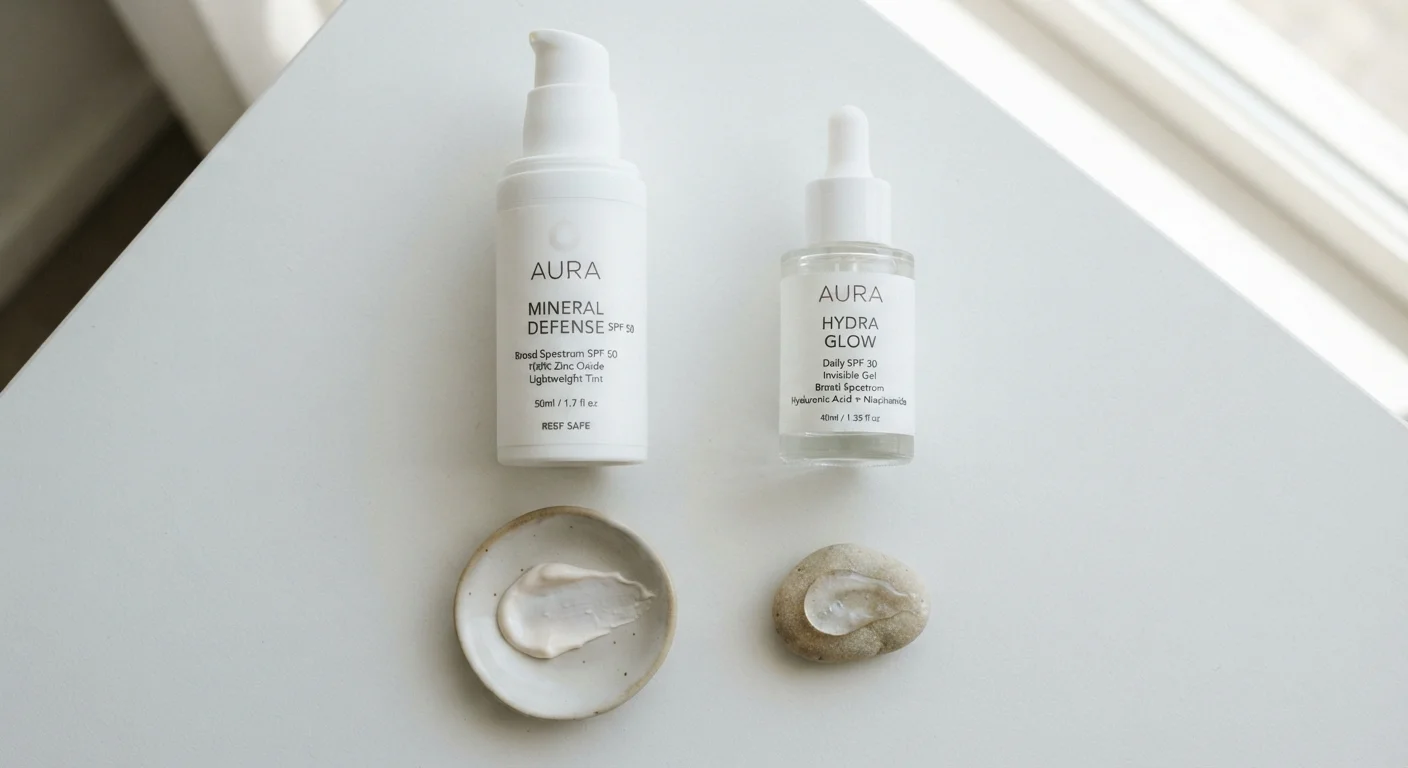
How Each Type Actually Works
Sunscreen is one of the most researched skincare tools available, yet the difference between chemical and physical formulas still trips people up. Let's clear it up.
Chemical sunscreens contain organic (carbon-based) compounds - such as avobenzone, octinoxate, or homosalate - that absorb ultraviolet radiation. When UV rays hit your skin, these ingredients convert that energy into heat, which then disperses from the skin. Because the formula needs to be absorbed to work, chemical sunscreens require application roughly 15-20 minutes before sun exposure.
Physical sunscreens, also called mineral sunscreens, rely on zinc oxide, titanium dioxide, or both. These minerals sit on the surface of the skin and work by scattering and reflecting UV rays away. They're effective immediately upon application and are considered broad-spectrum by nature - meaning they protect against both UVA and UVB radiation.
For a deeper dive into what broad-spectrum protection actually means for your skin year-round, see our everyday SPF explainer.
| Criterion | Chemical Sunscreen | Physical Sunscreen |
|---|---|---|
| How it works | Absorbs UV rays, converts to heat | Reflects and scatters UV rays |
| Key ingredients | Avobenzone, octinoxate, homosalate | Zinc oxide, titanium dioxide |
| Time to effectiveness | ~15-20 minutes after application | Immediate upon application |
| Finish on skin | Sheer and transparent | Can leave white cast; tinted versions available |
| Sensitivity profile | May irritate reactive or sensitive skin | Generally gentler for sensitive skin |
| Broad-spectrum coverage | Depends on specific ingredients used | Inherently broad-spectrum |
| Wearability under makeup | Blends smoothly, ideal as a makeup base | Can pill or disrupt makeup layers |
Skin Compatibility and Common Trade-Offs
Neither formula wins across the board - your skin type, tone, and daily routine all factor into which one actually works for you.
Texture and finish: Chemical formulas are typically lightweight, transparent, and easy to layer under makeup - a genuine plus if you're building a full routine. Physical formulas have historically left a white cast, though newer tinted mineral sunscreens have addressed this significantly for a range of skin tones.
Sensitivity: Some chemical filter ingredients, particularly oxybenzone, have been associated with skin irritation in sensitive individuals. Physical filters - especially zinc oxide - are widely regarded as gentler and are often recommended for reactive or acne-prone skin. That said, everyone's skin responds differently, and what causes a flare-up for one person may be perfectly fine for another.
Reapplication reality: Regardless of which type you choose, reapplication every two hours - or after swimming or sweating - is necessary to maintain protection. SPF number alone doesn't extend that window.
1 in 5
Americans will develop skin cancer in their lifetime
According to the Skin Cancer Foundation, consistent sunscreen use is one of the most effective preventive measures available.
2 hours
Maximum effective window before reapplication is needed
The FDA and major dermatology organizations recommend reapplying any sunscreen - chemical or mineral - every two hours during sun exposure.
SPF 30+
Minimum recommended SPF for daily protection
The American Academy of Dermatology recommends using a broad-spectrum SPF 30 or higher as part of a daily sun-protection routine.
If you're layering sunscreen with other skincare steps, understanding where it fits matters. Our guide on toners, essences, and mists can help you sequence your routine confidently.
This article is for general informational purposes only and does not constitute medical or dermatological advice. Consult a qualified healthcare professional for guidance specific to your skin health needs.