Why Deal Aggregator Sites Can Work Against You
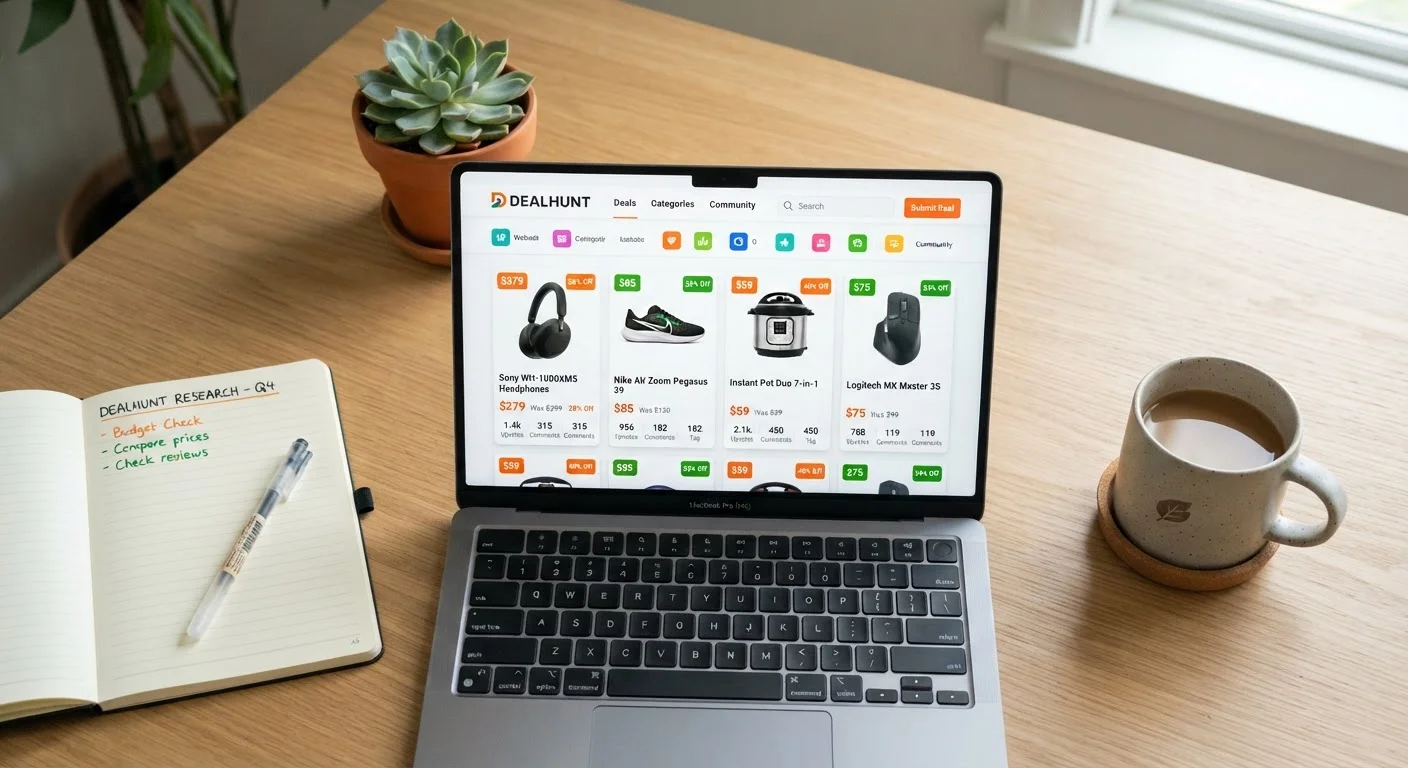
Deal aggregator sites compile discounts from across the web and rank them by community votes, recency, or both. At their best, they surface genuine price drops on items people already intended to buy. At their worst, they function as a continuous scroll of manufactured urgency that redirects spending toward unplanned purchases.
The core problem is structural: these platforms are optimized to surface popular posts, not to match offers to your specific needs or financial situation. The result is a feed calibrated for broad appeal rather than personal relevance. Without a deliberate reading strategy, it's easy to spend more across many small transactions than you would have through ordinary shopping - a dynamic explored in depth in sustainable saving habits that don't rely on deal hunting.
The steps below give you a repeatable framework for extracting genuine value from these platforms while neutralizing their built-in impulse triggers.
What you will need
A Framework for Reading Deals Critically
Before diving into the step-by-step process, gather the tools that make it efficient.
Price history browser extension
Displays a graph of an item's price over time so you can confirm the deal price is genuinely lower than normal.
Deal aggregator account (free tier)
Enables keyword alerts and category filters so you see only relevant offers without browsing the full feed.
Spreadsheet or notes app
Tracks your pre-planned shopping list to cross-reference against deals as they appear.
Build your shopping list before opening the site
Write down items you genuinely need or have budgeted for before visiting any deal aggregator. This list is your filter. Anything not on it requires a conscious decision to add - it should not happen automatically because a post looks attractive. Even a rough list ("winter jacket," "USB hub") is enough to anchor your browsing.
Apply category and price filters immediately
Every major deal aggregator offers category filters and minimum/maximum price inputs. Use them before you scroll. If you're looking for kitchen items under $40, set both parameters at the start. Browsing an unfiltered feed - sorted purely by votes or recency - exposes you to categories you never intended to shop, dramatically increasing impulse risk.
Interpret community votes as popularity, not value
Upvotes indicate that many users found a price compelling relative to what they expected to pay. They do not confirm the item is high quality, useful for your situation, or discounted from a legitimate regular price. Cross-reference heavily upvoted deals with the signals that distinguish a real discount from marketing packaging before acting.
Verify the price against historical data
Run the product URL through a price history tool. Look for the median price over the past 90 days, not just the listed "was" price. A common pattern on deal sites is a product whose "regular" price is rarely charged - the real-world price fluctuates, and the deal may represent only a modest dip. If the current price is at or near the 90-day low, the discount is more credible.
Apply a minimum wait period before purchasing
After identifying a deal that passes the above checks, wait at least 30 minutes before completing a purchase. Set a phone timer if it helps. During that window, close the deal site, verify your budget has room for this item, and confirm your shopping list includes it. If the deal expires during your wait, that is an acceptable outcome - comparable offers recur more often than deal-site urgency language implies.
Review your online reviews independently
Before completing checkout, search for the product on a retailer or review platform separate from the deal site. Deal aggregators do not vet product quality. Understanding how to read online reviews without being misled takes only a few minutes and can prevent a purchase that would otherwise need to be returned.
Urgency Language Can Override Good Judgment
Phrases like "going fast" or "limited stock" are often accurate descriptions of deal-site dynamics, but they are also reliable triggers for rushed decisions. If a deal expires before you can think it through, that outcome is almost always better than buying something you don't need. Most product categories see comparable deals recur within weeks.
Use Alerts Instead of Daily Browsing
Most deal aggregators allow keyword or category alerts delivered by email or app notification. Configuring alerts for items already on your shopping list keeps you informed without pulling you into the scroll. This passive approach is explored further in setting up price-drop alerts that work for you.
Once you've worked through a few deals using this process, it becomes fast - usually under five minutes per item. The goal is not to evaluate every post in the feed, but to apply structured scrutiny only to items that passed your initial category and list filters. If you want to go further and share deals with others, the framework for evaluating deals before sharing provides additional checkpoints worth reviewing.
A Low Price Is Not the Same as a Good Deal
Deal aggregator sites rank by community enthusiasm, not by whether an item fits your needs or budget. A heavily upvoted post means many people found the price attractive - it does not mean you need the product or that the discount is as deep as it appears. Always anchor your evaluation to whether you planned to buy this item before seeing it listed.