Why the Sticker Price Is Designed to Be Seen First
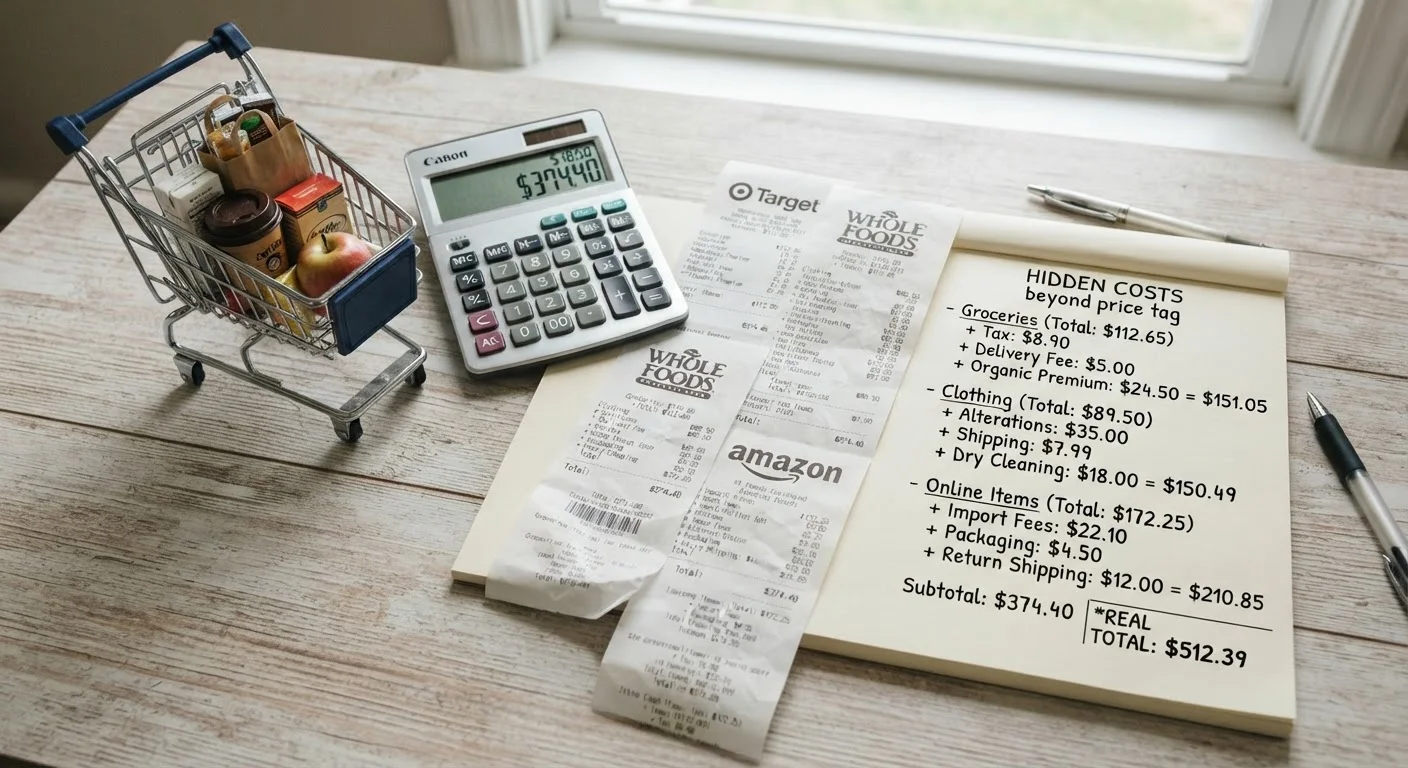
Retailers train consumers to anchor on the purchase price. It's the number in the ad, on the shelf tag, and in the checkout total. But that figure captures only the moment of acquisition - everything that comes after is invisible at the point of sale.
Manufacturers and retailers have little financial incentive to advertise lifetime costs. A refrigerator with a lower purchase price but higher energy consumption over 10 years may generate more total revenue for the supply chain than an efficient model priced higher upfront. Understanding Total Cost of Ownership (TCO) shifts that information asymmetry in your favor.
~50%
Of total vehicle cost attributed to depreciation and fuel alone
According to the American Automobile Association (AAA), depreciation and fuel routinely account for roughly half of average annual vehicle ownership costs.
10-15 yrs
Average lifespan of major home appliances
The U.S. Department of Energy notes that major appliances typically last 10-15 years, meaning energy costs accumulate significantly beyond the purchase price.
2-3x
Printer ink cost vs. printer purchase price over two years
Consumer advocacy research consistently finds that ink and toner expenditure frequently exceeds the original hardware cost within the first two years of ownership.
The Components of a Full TCO Calculation
A useful TCO estimate covers five categories of cost:
- Acquisition costs: Purchase price, sales tax, delivery, installation, and any setup fees.
- Operating costs: Energy or fuel consumption, consumable supplies (filters, ink, batteries), and subscription or service fees tied to the product.
- Maintenance costs: Routine servicing, replacement parts, and labor - whether paid to a professional or in your own time.
- Risk costs: Insurance premiums, extended warranty costs, and the probability-weighted cost of unexpected repairs.
- End-of-life costs: Disposal fees, trade-in value (subtract this), or the cost of replacement when the item wears out.
A workable formula: TCO = Acquisition Cost + (Annual Operating & Maintenance Costs × Years of Use) − Residual Value. You don't need precision - a reasonable estimate is far more useful than no estimate at all.
Use Free Tools to Estimate Operating Costs
The U.S. Department of Energy's EnergyGuide labels provide annual energy cost estimates for appliances - look for them on the product or in the specifications sheet online. For vehicles, the EPA's fueleconomy.gov publishes estimated five-year ownership costs by make and model. These free resources make the "operating cost" component of your TCO calculation much easier to complete.
TCO Applied: Vehicles, Appliances, and Everyday Goods
TCO is easiest to see in large purchases. For vehicles, the true costs of car ownership extend well beyond a loan payment - fuel, insurance, registration, tires, oil changes, and depreciation can collectively exceed the purchase price over five years. Two vehicles with the same sticker price can differ by thousands of dollars annually once fuel economy and insurance rates are factored in.
For home appliances, the U.S. government's EnergyGuide label estimates annual energy cost, letting you project 10-year operating expenses at a glance. A lower-efficiency unit priced $150 less might cost $300 more to run over a decade.
For smaller purchases - printers, power tools, coffee makers - the pattern repeats. Ink cartridge costs routinely exceed the price of the printer itself within two years. Understanding this before buying is the entire point of TCO analysis.
Home buyers face a similar dynamic: costs beyond the purchase price like property taxes, maintenance reserves, and insurance transform the real monthly obligation significantly. And for a related consumer math tool that works alongside TCO, see cost-per-use analysis.
Making TCO Part of Your Decision Process
You don't need a spreadsheet for every purchase, but building a habit of asking "what will this cost me over time?" before committing is a reliable defense against regret purchases. A few practical habits help:
- For any purchase over $100, spend five minutes estimating annual operating costs and multiplying by expected years of use.
- Search for the product's model number alongside terms like "annual operating cost" or "maintenance cost" - consumer reviews and product forums often surface real-world numbers manufacturers omit.
- Factor in your usage patterns honestly. A high-TCO item used daily may still be the smarter choice over a low-TCO item that sits unused.
Integrating TCO thinking into a broader personal budget framework - as explored in budgeting basics - helps ensure that the full financial impact of purchases is reflected in your planning, not just the upfront outlay.
TCO Is an Estimate, Not a Guarantee
Your actual costs will depend on usage habits, local energy rates, maintenance practices, and product reliability - all of which vary. Treat TCO as a decision-support tool that improves your comparisons, not as a precise prediction of future spending. Reasonable estimates made before purchase are still far more useful than no analysis at all.