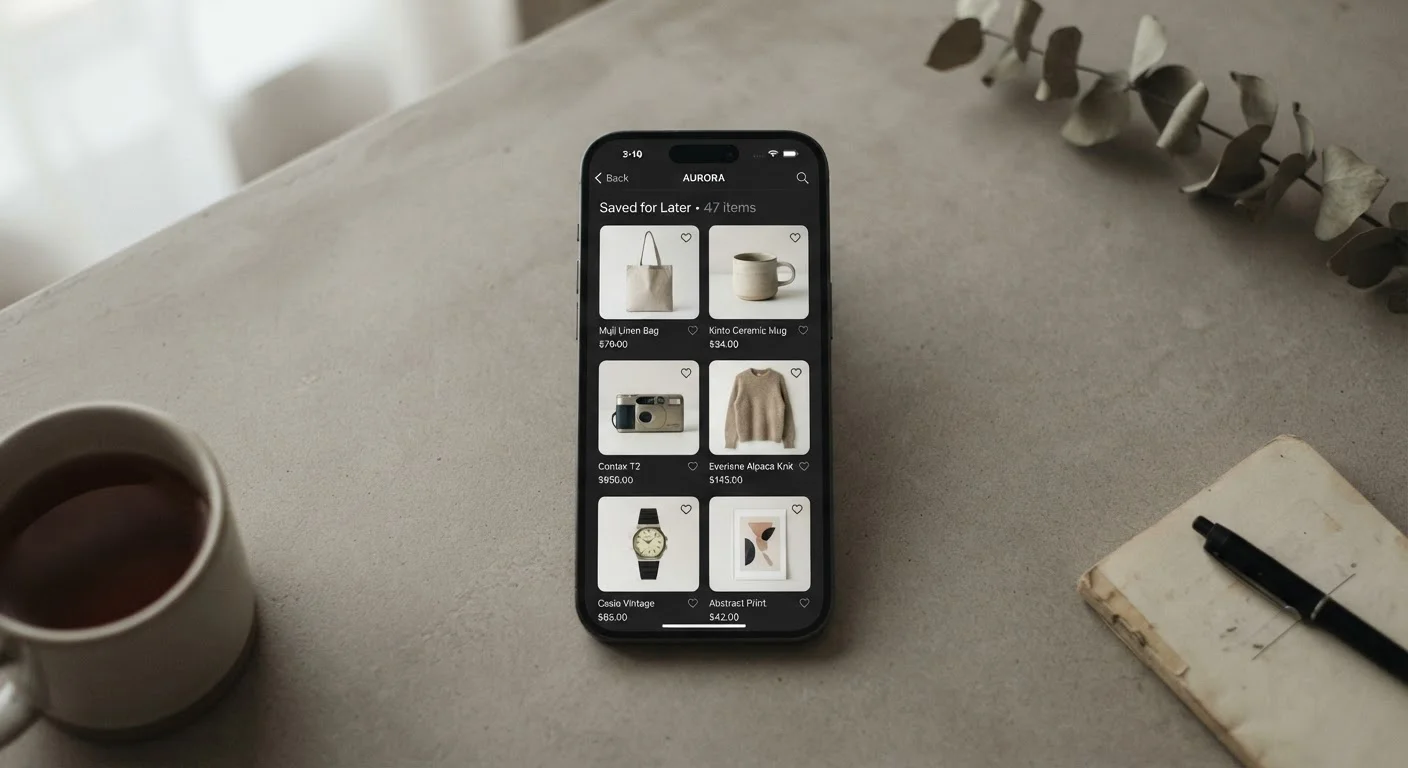
Why Wishlists Feel Responsible But Sometimes Aren't
The logic seems sound: instead of buying on impulse, you save the item for later. You've created distance between desire and purchase. That should be a win for your budget.
The problem is that the emotional payoff of wanting something doesn't always wait for the actual transaction. For many people, saving an item delivers a meaningful portion of the reward immediately - the anticipation, the sense of having found something, the mental image of ownership. The wishlist becomes a collection of micro-purchases that never clear the account but do satisfy a real psychological appetite.
This isn't a personal failing. It reflects how shopping environments are designed. Retailers invest heavily in features that make saving feel meaningful: curated lists, price tracking, share functions. These tools serve a genuine purpose, but they also extend and deepen engagement with products in ways that blur the line between browsing and buying.
~59%
Online shoppers who use wishlists regularly
According to research by Episerver (now Optimizely), around 59% of online shoppers use save-for-later or wishlist features during a typical browsing session.
30-40%
Wishlist items that convert to purchase within 60 days
Industry estimates from e-commerce analytics firms suggest fewer than 40% of saved wishlist items result in a purchase within two months, leaving the majority in perpetual deferral.
Understanding this dynamic is the first step to using wishlists as actual budget tools rather than a more socially acceptable form of impulse shopping. The habits that keep a shopping list working for your budget apply equally to wishlists - structure matters as much as intention.
Common Wishlist Mistakes and How to Avoid Them
The following mistakes describe how well-intentioned saving behavior drifts into substitute spending. Each has a concrete corrective.
Treating the act of saving as a substitute for deciding.
Why it happens: Adding an item to a wishlist feels like a responsible pause - you didn't buy it. But this framing skips the actual evaluation step, leaving the item in an unresolved state that invites repeated browsing.
Using wishlists as an emotional outlet rather than a planning tool.
Why it happens: Research into consumer behavior suggests that anticipating a purchase activates reward pathways. For some people, saving items satisfies enough of that reward signal that the wishlist becomes a mood-regulation habit, not a purchasing framework.
Letting wishlists grow indefinitely without pruning.
Why it happens: There's no natural pressure to remove items, so lists accumulate. A large wishlist creates a false sense of future intention - "I'll get to these eventually" - while the total implied spend quietly balloons.
Responding to price-drop alerts as if urgency changes the underlying need.
Why it happens: Retailer notifications reframe a saved item as a time-sensitive opportunity. A lower price on something you don't need is still money spent, but the alert triggers loss-aversion instincts that short-circuit evaluation.
Counting wishlist items as deferred savings rather than deferred spending.
Why it happens: People sometimes mentally account for a wishlist as "things I responsibly didn't buy," which can create a distorted sense of budget health. The money was never spent, but the spending intention persists.
Retailer Notifications Exploit Wishlist Psychology
Most e-commerce platforms are designed to send price-drop alerts and low-stock warnings for saved items. These notifications are engineered to convert passive interest into urgency-driven purchases. Consider disabling wishlist notifications entirely if you're using a wishlist as a genuine budget-management tool rather than a shopping queue.
Taken together, these patterns point toward a single underlying principle: a wishlist only functions as a budget tool when it has a defined review process. Without one, it defaults to being a shopping queue with extra steps - and the emotional accounting becomes correspondingly unreliable. For a broader look at how these patterns connect, the fundamentals of personal budgeting provide useful grounding.
Wishlist Behavior Can Mask Deeper Spending Patterns
If you find yourself adding items compulsively, feeling anxious when prices change, or returning repeatedly to a wishlist without any purchase intention, these may be signs of a broader emotional relationship with shopping worth examining. This article provides general consumer-awareness information, not psychological or financial advice. For persistent concerns about spending behavior, speaking with a qualified financial counselor or mental health professional is worthwhile.
If you want a framework that works alongside better wishlist habits, sustainable spending habits that don't require obsessive monitoring offer a practical complement to the self-awareness work described here.