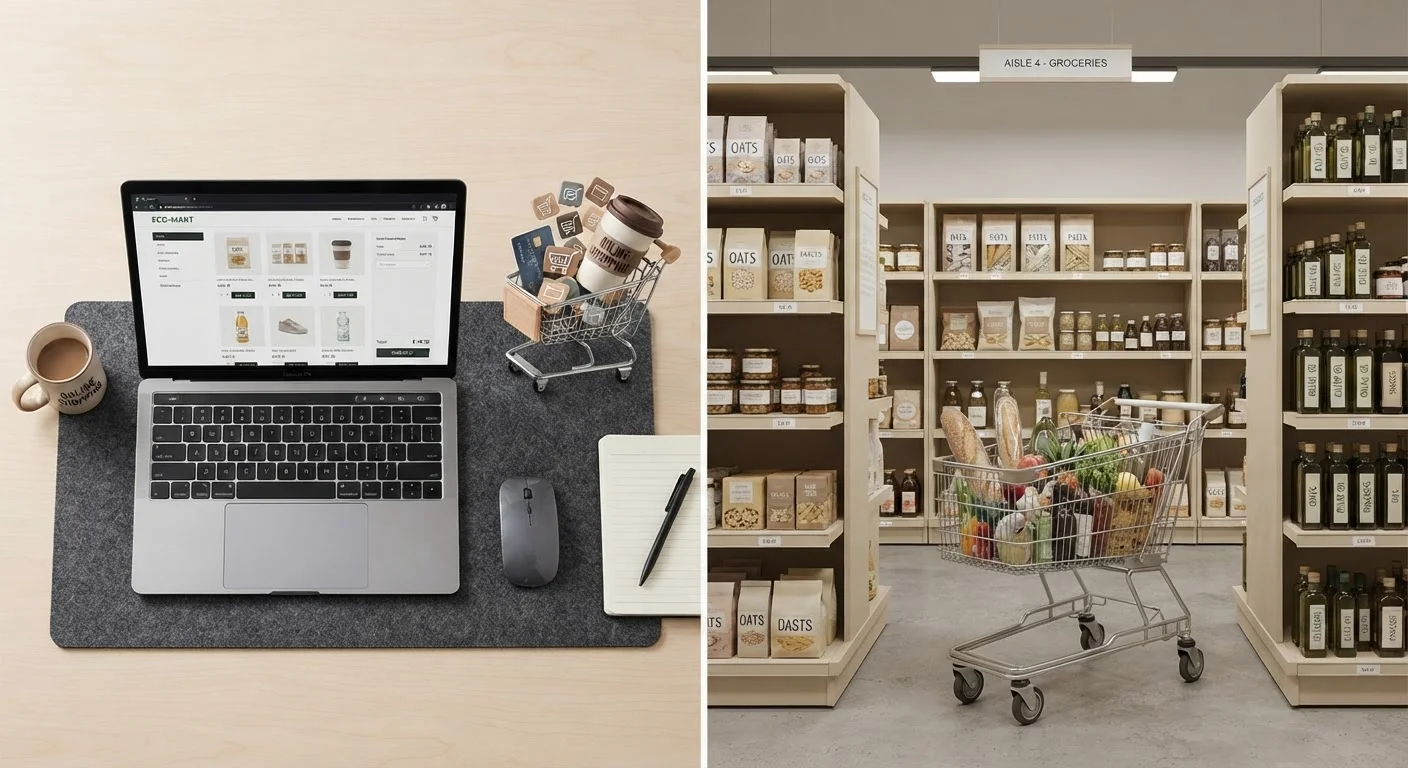
Where In-Store Shopping Has a Genuine Edge
Physical retail still outperforms online in several specific scenarios - and recognizing them upfront saves return trips and avoidance regret.
Tactile evaluation
Clothing, furniture, mattresses, shoes, and produce all depend on qualities - weight, texture, exact color under real lighting, structural feel - that photographs consistently misrepresent. Buying these categories in person cuts return rates substantially, along with the hassle of repackaging and scheduling pickup.
Same-day access
When timing matters - a replacement part, a gift needed today, medication or household supplies - a physical store removes delivery uncertainty entirely. No shipping windows, no carrier delays, no porch-theft exposure.
Price-match and negotiation leverage
Many physical retailers will match a competitor's price when you present it in-store, and certain categories (appliances, mattresses, electronics floor models) carry real negotiation room that online checkouts don't offer.
Easier dispute resolution on high-value items
If something goes wrong with a major purchase, walking into a store with the item in hand typically produces faster resolution than navigating an online return portal. Understanding your consumer rights before any large purchase strengthens your position in either channel, but in-person escalation is often more direct.
Return Policies Are Not Uniform
In-store and online return windows, restocking fees, and who pays return shipping vary significantly by retailer and product category. Before purchasing anything substantial, read the specific return policy for that transaction - not the general policy page. Online purchases sometimes trigger different terms than in-store purchases at the same retailer.
Where Online Shopping Holds the Advantage
Online retail's structural advantages are real - but they require deliberate use to deliver on their potential.
Selection depth
No single physical store can stock what the open internet offers. Niche sizes, discontinued items, specialized components, and international products are routinely available online when local shelves come up empty.
Price transparency
Side-by-side price comparison across sellers takes seconds online. Savings levers work differently by channel, and online tools - including browser extensions that track price history - make it much harder for retailers to obscure whether a listed "sale" represents a genuine reduction.
Research without pressure
Browsing in-store involves staff interaction, ambient noise, and subtle social pressure to decide quickly. Online research allows unhurried comparison of specs, reviews, and return policies at your own pace - a meaningful advantage for considered purchases.
Avoiding anchor-price manipulation
Physical stores use shelf placement, signage, and bundling to steer decisions. Online, those tactics still exist (sponsored placements, algorithmic sorting), but they're easier to bypass by searching directly rather than browsing. Comparison shopping most commonly breaks down at the decision stage - understanding that risk helps you hold your process together online and off.
~21%
U.S. retail sales share from e-commerce
According to U.S. Census Bureau quarterly retail e-commerce estimates, online's share of total retail has grown steadily but physical stores still account for the large majority of transactions.
~20-30%
Typical online return rate for apparel
Industry analyses consistently show apparel return rates online run significantly higher than in-store, largely because fit and color rendering are difficult to judge from photos alone.
The Hidden Costs Each Format Obscures
Advertised price is rarely the complete price in either channel. Mapping the full cost before committing is the most reliable way to compare formats fairly.
Online hidden costs: shipping fees, return shipping charges, restocking fees (common on electronics and large items), and delivery insurance on fragile goods can each add meaningfully to the stated price. Subscription programs that bundle free shipping often recoup their fee through other spending behavior.
In-store hidden costs: fuel and parking, time investment, and the well-documented tendency to buy additional items on impulse once inside a store. Retail environments are designed to expand basket size - end caps, in-store promotions, and sensory cues all serve that function.
How you pay adds another layer of trade-offs - credit card purchase protections, extended warranties, and dispute rights can differ meaningfully between online and in-store transactions, depending on the card and the merchant's policies.
| Criterion | In-Store | Online |
|---|---|---|
| Product selection | Limited to local inventory | Broad, including niche items |
| Price comparison ease | Requires visiting multiple stores | Side-by-side in seconds |
| Tactile evaluation | Full - touch, try, inspect | Photos and reviews only |
| Same-day access | Yes, always | Rarely; depends on delivery |
| Return process | Typically immediate, in-person | Varies; may include shipping cost |
| Impulse spending risk | High - ambient store design | High - one-click checkout, recommendations |
| Price negotiation | Possible on select categories | Rare; fixed checkout pricing |
| Research environment | Pressured, time-limited | Unhurried, self-paced |