Why the Phrase Is Almost Always Incomplete
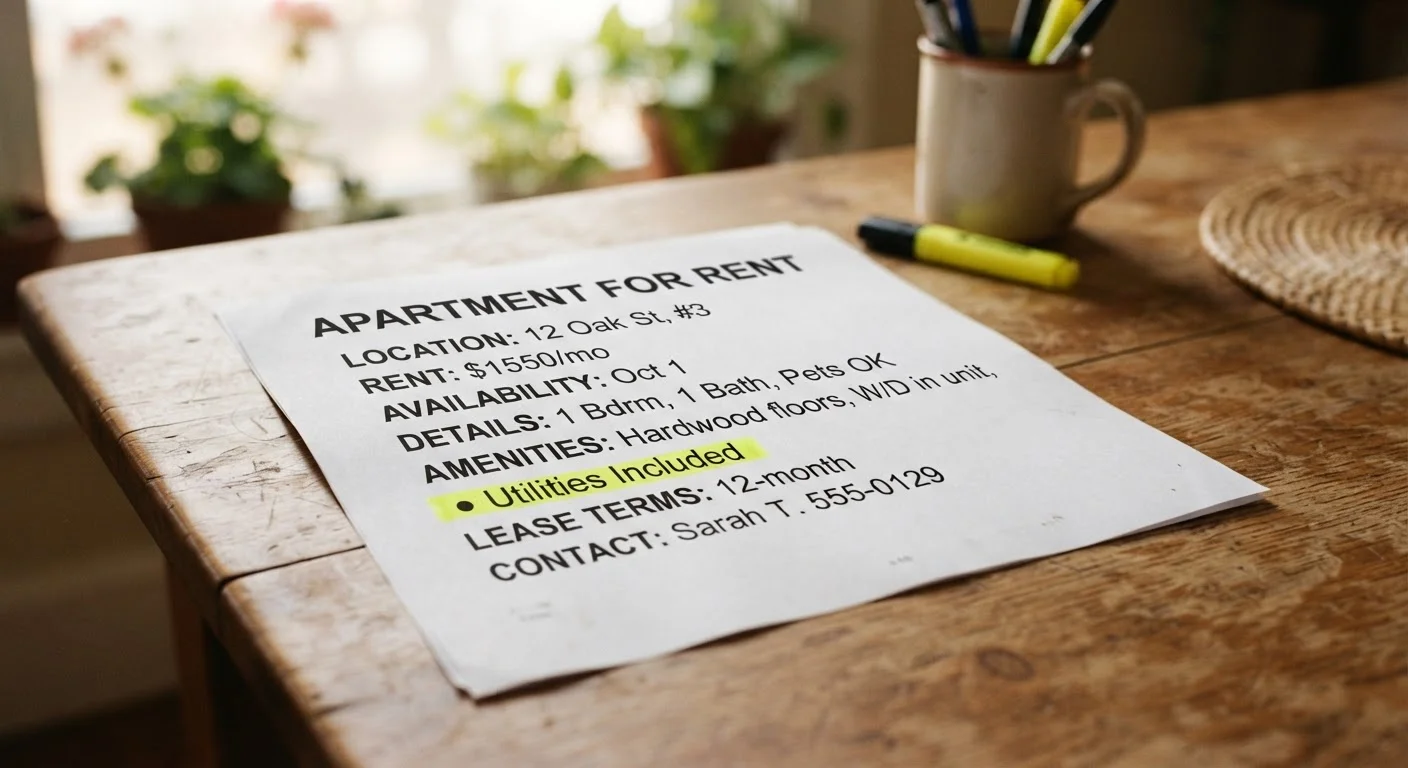
Few phrases in rental listings create more confusion than "utilities included." Renters naturally read it as a comprehensive promise - no separate bills, no setup calls, no surprises. Landlords often use it as shorthand for just one or two services they happen to cover. The gap between those two interpretations can cost hundreds of dollars a year.
The phrase has no standardized legal definition across the United States. A landlord in one city might include water, sewer, and trash; a landlord across town might only cover trash pickup. Neither usage is technically wrong - which is exactly why renters cannot rely on the phrase alone.
As a practical starting point, treat "utilities included" as a prompt to ask a follow-up question, not as a complete answer. For broader advice on decoding listing language, see how to read a rental listing without being misled.
Furnished Rentals May Bundle More Costs
Furnished short-term and extended-stay rentals are more likely to include a broader range of utilities - sometimes including internet - because the pricing model is closer to a hotel than a standard lease. If you are weighing furnished versus unfurnished options, see furnished vs. unfurnished rentals for a full comparison of what each arrangement typically includes.
Which Utilities Are Typically Included - and Which Are Not
Understanding the typical breakdown helps set realistic expectations before you ever contact a landlord.
- Water, sewer, and trash: The most commonly included bundle. Landlords often cover these because they are billed to the building as a whole and are difficult to divide by unit.
- Heat: Sometimes included in older buildings with central boiler systems, where individual metering is not feasible. Less common in newer construction.
- Electricity: Rarely included for individual units. When it is, expect either a premium rent or a usage cap.
- Gas: Occasionally covered if it serves a shared amenity like building heat; almost never covered for in-unit appliances in single-family rentals.
- Internet and cable: Almost never included unless the listing specifically names them. Some newer apartment communities offer building-wide internet as a marketing amenity - confirm this in writing.
Renters should also be aware that listings can contain other hidden costs beyond utilities. The hidden costs of renting that listings don't mention covers fees that often catch tenants off guard.
~$150-$200
Average monthly renter utility spend (electricity + gas)
The U.S. Energy Information Administration reports that average household electricity and natural gas costs combined frequently fall in this range, though amounts vary significantly by region, unit size, and season.
~30%
Share of U.S. rentals advertising some utilities included
Industry rental listing analyses consistently show that a significant minority of listings advertise some form of utility inclusion, most commonly water and trash rather than electricity or gas.
Utility Allowances: A Hidden Cap You Need to Know About
Some landlords who advertise utilities included are actually offering a utility allowance - a fixed monthly dollar amount they contribute toward your utility bill. If your usage stays under that cap, you pay nothing extra. If it exceeds the cap, the difference comes out of your pocket.
Allowance structures are more common in subsidized housing, but they also appear in market-rate rentals, particularly for electricity and gas. The lease will typically spell out the cap amount and the billing method for overages. If the lease is silent on this, ask specifically: "Is there a maximum dollar amount you cover, or do you pay the full bill regardless of usage?"
Ask for Utility Bills from Previous Tenants
Landlords are often willing to share anonymized copies of prior utility bills if you ask. This is especially valuable for electricity and gas in older, less-insulated buildings where seasonal costs can be volatile. Even a rough 12-month average gives you a more accurate monthly budget than any listing description.
Households that work from home, run high-draw appliances, or live in extreme climates are especially exposed to overage charges. Factor your typical consumption into any comparison between a utilities-included unit and one where you pay your own bills.
How to Confirm Coverage Before You Sign
Three steps can protect you from misunderstanding what is actually included.
- Ask for a written list. Before or during a showing, request that the landlord or property manager provide a specific list of every utility they cover. Vague verbal confirmation is not enough.
- Check the lease line by line. The lease is the controlling document. If it does not name a utility as included, assume you are responsible for it - regardless of what the listing or a verbal conversation suggested.
- Ask about past average bills. For any utility you will pay directly, ask the landlord what previous tenants typically paid per month. This gives you a realistic budget baseline, particularly for gas and electric in climates with extreme seasonal swings.
If you are comparing multiple rentals and trying to gauge whether the local market gives you negotiating room on terms like utilities, reading a rental market can help you interpret supply and demand signals in your area.
This article is for general informational purposes only and does not constitute legal or financial advice. Lease terms and landlord-tenant laws vary significantly by state and locality. Consult a qualified attorney or tenant advocate for guidance specific to your situation.