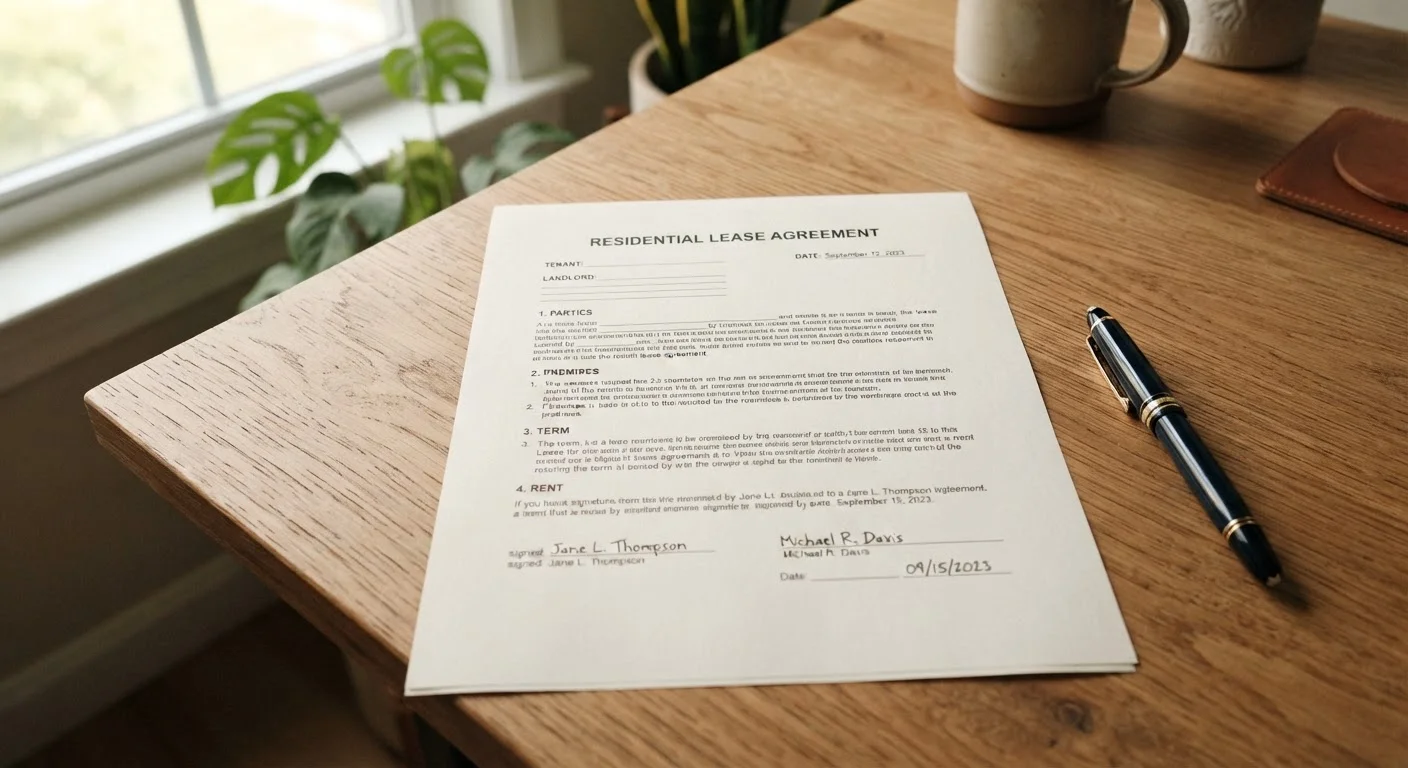
Why Reading Every Line Actually Matters
Most renters skim a lease, sign it, and move in - only to discover costly surprises months later. A lease agreement isn't a formality; it's a contract with enforceable legal consequences. Understanding what you're agreeing to before you sign is one of the most important financial decisions a renter can make.
Leases can run anywhere from one to several pages, and the language is often deliberately dense. But every clause is there for a reason, and some of the most consequential terms are buried in fine print. This is especially true for provisions around fees, restrictions, and tenant obligations - areas where commonly overlooked lease clauses can have significant financial impact.
Ask for Time to Review the Lease
You are never obligated to sign a lease on the spot. Request at least 24 to 48 hours to review it at home, free from pressure. If a landlord refuses to allow this, treat it as a red flag. A reasonable landlord will have no objection to a prospective tenant reading what they are agreeing to.
The Core Clauses You Must Understand
While every lease differs, most residential agreements in the U.S. include the following foundational elements:
- Rent amount and due date: Specifies the monthly rent, the date it is due, and any grace period before late fees apply. Confirm whether the grace period is written into the lease or just verbal assurance.
- Lease term: Defines the start and end dates of the tenancy. After the term ends, the lease may convert to a month-to-month arrangement unless renewed - understand what triggers that shift.
- Security deposit terms: States how much is required, what conditions allow the landlord to deduct from it, and how long the landlord has to return it after move-out. State law heavily governs this area.
- Maintenance and repairs: Clarifies who is responsible for routine maintenance versus major repairs. Tenants are often responsible for minor issues; landlords are generally required to maintain habitability under state law.
- Pet policy: Outlines whether pets are allowed, any breed or weight restrictions, and whether a pet deposit or monthly pet fee applies.
45%
Renters who report not reading lease fully
According to apartment industry surveys, nearly half of renters admit to not reading their lease agreement in full before signing.
$250-$500
Typical disputed security deposit amount
The National Consumer Law Center notes that security deposit disputes are among the most common landlord-tenant legal conflicts in the U.S.
30-90 days
Typical notice required to avoid auto-renewal
Required notice periods for lease non-renewal vary by state law and lease terms, ranging from 30 days to as many as 90 days in advance.
Clauses That Deserve Extra Scrutiny
Beyond the basics, certain lease provisions carry outsized risk if misunderstood:
Early Termination Fees
These fees apply when a tenant ends the lease before the agreed end date. They can range from one month's rent to the total remaining rent owed. Some leases include a buyout clause - a defined fee that releases both parties - while others leave the landlord's full losses on the table.
Subletting and Assignment Restrictions
Many leases prohibit subletting without written landlord approval. Violating this can result in eviction. If you anticipate needing flexibility - due to travel, job changes, or shared living arrangements - negotiate this clause before signing.
Rent Escalation Clauses
Some leases allow rent to increase during the lease term, not just at renewal. If your lease includes this, understand the trigger (inflation index, fixed percentage, landlord discretion) and the notice requirement.
Automatic Renewal Provisions
Certain leases automatically renew for another full term unless the tenant provides written notice - sometimes 60 to 90 days in advance. Missing that window can bind you for another year. Mark the notice deadline on your calendar the day you sign.
For comparison, the same discipline of reading fine print applies in other contexts - such as auto financing contracts, where buried terms can be equally costly.
Verbal Promises Don't Hold Up
If a landlord makes a verbal promise - to fix the HVAC before move-in, to allow a specific pet, to waive a fee - it is generally unenforceable unless it appears in the written lease or a signed addendum. Always get modifications and promises in writing, signed by both parties, before you sign the main agreement.
Tenant Rights and Unenforceable Clauses
Not every lease clause is valid. Tenant protection laws - which vary considerably by state and municipality - may override certain lease provisions regardless of what you signed. Common examples of clauses that may be unenforceable include:
- Waiving the landlord's duty to provide a habitable dwelling
- Retaliatory rent increases after a tenant reports code violations
- Clauses that allow landlord entry without reasonable notice (typically 24-48 hours under state law)
If a clause seems unusually punitive or one-sided, it's worth verifying with your state's attorney general's office or a local tenant rights organization. Similarly, if the lease includes a mandatory arbitration clause, understand that it may limit your ability to pursue disputes in court - a dynamic also present in other consumer agreements, as explored in our guide to arbitration clauses in purchase agreements.
This article is for general informational purposes only and does not constitute legal advice. Lease laws vary significantly by state and locality. Consult a qualified housing attorney or tenant rights organization for guidance specific to your situation.