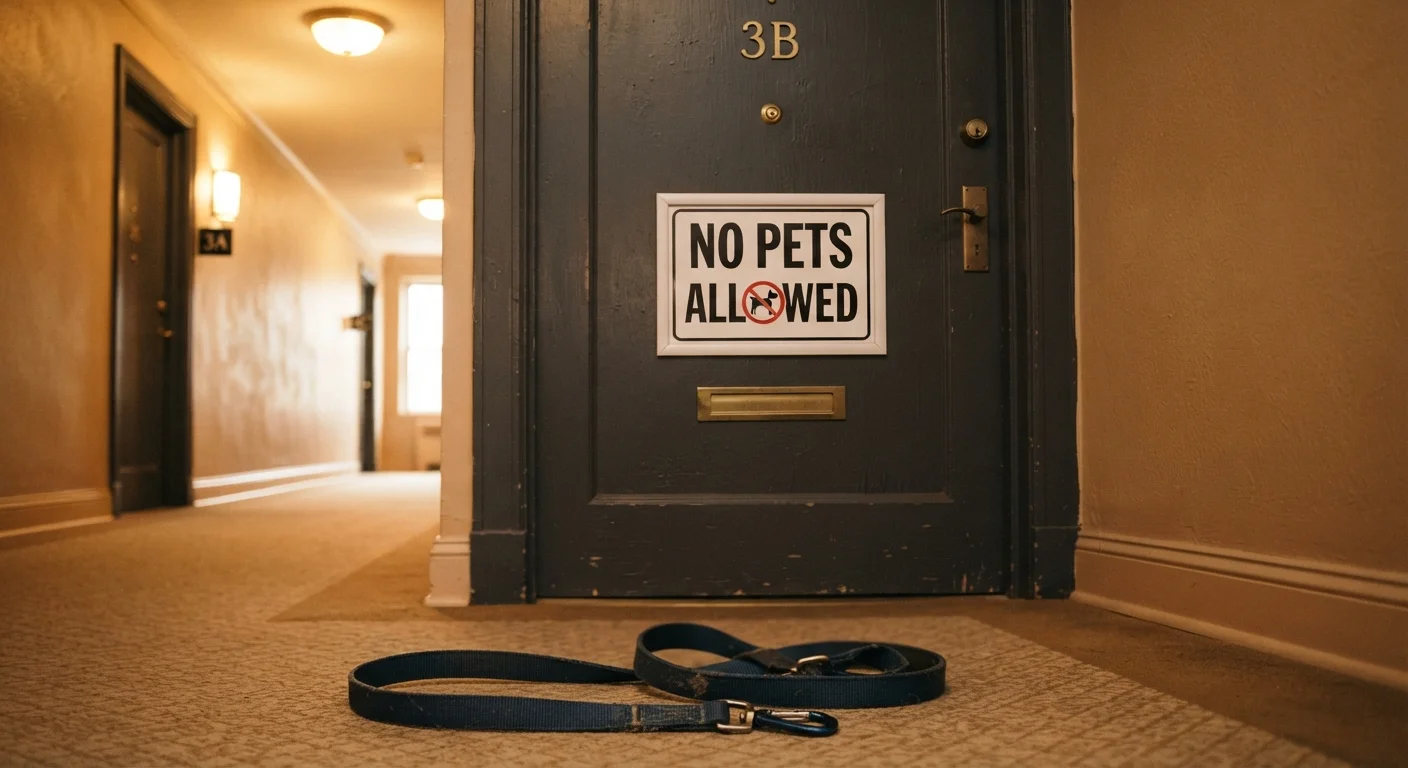
Why 'No Pets' Isn't Always the Final Word
When a rental listing states 'no pets allowed,' many renters assume the conversation ends there. In reality, that phrase covers several distinct situations that carry very different consequences - from a negotiable landlord preference to a hard policy backed by a homeowners association, to a federal legal protection that overrides the clause entirely.
Understanding which situation you're in can mean the difference between walking away from a great apartment and securing a home for you and your animal. See our guide to reading rental market signals for context on when you're more likely to have negotiating power.
Myth
A 'no pets' clause in a lease is legally binding and cannot be challenged under any circumstances.
Fact
Federal fair housing law requires landlords to accommodate assistance animals even when a no-pets policy exists.
A no-pets clause is a contractual term between landlord and tenant - not a blanket legal prohibition. The Fair Housing Act creates an important exception: landlords must make reasonable accommodations for tenants with disabilities who rely on assistance animals. This federal protection supersedes a lease clause, meaning a landlord who refuses an approved assistance animal may be in violation of federal law, not the tenant.
Myth
Emotional support animals and service animals are treated the same way under housing law.
Fact
Both are protected under the Fair Housing Act, but the documentation requirements and scope of protection differ meaningfully.
Service animals - typically dogs trained to perform specific disability-related tasks - receive broad protection under both the FHA and the Americans with Disabilities Act. Emotional support animals are protected under the FHA in housing contexts, but landlords are generally permitted to request a letter from a licensed mental health or healthcare professional documenting the disability-related need. Unlike service animals, ESAs do not require specialized task training, but the documentation process is a legitimate requirement a landlord may enforce.
Myth
If a landlord verbally agrees to allow your pet, you're covered even if the lease says otherwise.
Fact
A verbal agreement is generally unenforceable; only a written lease addendum or amendment protects you.
In landlord-tenant law, the written lease is the governing document. A friendly verbal conversation rarely constitutes an enforceable modification to a signed lease. If a landlord agrees to allow your pet, that agreement needs to be documented in writing - either as a pet addendum attached to the lease or a formal amendment - and signed by both parties. Without documentation, you remain in technical violation of the no-pets clause and could face penalties, including eviction proceedings in some jurisdictions.
Myth
Landlords can charge any pet deposit amount they choose, regardless of state law.
Fact
Many states cap the total security deposits a landlord can collect, which limits how much can be charged for pets.
Security deposit caps vary by state, but a significant number of states restrict total deposits to one to two months' rent - including any pet deposit. In states with these caps, a landlord cannot simply stack a large pet deposit on top of a full security deposit if doing so would exceed the statutory limit. Additionally, landlords are generally prohibited from charging any deposit for a legally approved assistance animal. Renters should review their state's landlord-tenant statute or consult a local tenant's rights organization to understand the applicable limits.
Myth
Breed and weight restrictions in no-pets policies are always legally enforceable.
Fact
Breed and weight restrictions are generally enforceable for standard pets, but they cannot be applied to approved assistance animals.
Landlords have wide latitude to set restrictions on the type, size, and breed of pets they allow in standard pet policies. However, those restrictions do not apply to assistance animals, which must be evaluated based on the individual's disability-related need rather than the animal's breed or weight. Outside of assistance animals, renters should note that some municipalities have their own breed restriction ordinances, while others have laws prohibiting breed-based discrimination - so local law matters here too.
The Legal Landscape: When Landlords Must Say Yes
The Fair Housing Act (FHA) and its amendments prohibit housing discrimination based on disability. Under this federal law, landlords are generally required to make reasonable accommodations - including waiving a no-pets policy - for tenants who need an assistance animal due to a documented disability. This applies to both service animals and emotional support animals (ESAs), though the rules differ in important ways.
Service animals trained to perform specific tasks are broadly protected under both the FHA and the Americans with Disabilities Act. ESAs - animals that provide emotional or therapeutic support - are protected under the FHA in housing, but landlords may request written documentation from a licensed healthcare provider. Landlords cannot charge a pet deposit for an approved assistance animal, though they can hold the tenant responsible for any actual damage caused.
Assistance Animal Requests Must Be Taken Seriously
Landlords who deny a reasonable accommodation request for a documented assistance animal - or who charge a pet deposit for one - may be violating the Fair Housing Act. Tenants who believe their rights have been violated can file a complaint with the U.S. Department of Housing and Urban Development (HUD). Retaliation against a tenant for making a good-faith accommodation request is also prohibited under federal law.
It's worth noting that these protections apply to most private landlords, but rules for condominiums, co-ops, or HOA-governed communities can be more complex. Always verify local and state-level requirements as well, since many states extend additional protections. For a broader look at what landlords can and cannot legally ask you, see our article on landlord inquiry limits.
Negotiating a Pet Policy Before You Sign
Outside of legal protections, a no-pets policy in a lease is essentially a contractual preference - and like many lease terms, it may be open to discussion before you sign. Landlords often restrict pets out of concern for property damage and liability, so addressing those concerns directly is the most effective approach.
72%
Renters who own at least one pet
According to the American Pet Products Association, roughly 72% of renters have pets, highlighting the scale of the housing challenge pet owners face.
~10%
Rentals that openly allow pets
Industry estimates suggest fewer than 10-25% of rental listings explicitly welcome pets, though availability varies widely by market and property type.
Offering a refundable pet deposit, agreeing to professional cleaning at move-out, or providing references from a previous landlord who housed your pet are all concrete ways to reduce a landlord's perceived risk. Some landlords will add a formal pet addendum to the lease specifying allowed animals, weight limits, breed restrictions, and any additional monthly fees. Be sure to get any agreement in writing - a verbal okay is not enforceable. Our article on negotiating with landlords explains how to approach these conversations professionally. Also review hidden rental costs - pet fees and deposits can add up quickly and aren't always disclosed upfront.
If a landlord's no-pets stance is non-negotiable, verify whether it stems from an HOA rule or building policy, as those constraints genuinely cannot be waived. Review any lease clauses carefully before signing - violations of pet restrictions are a common basis for lease termination or forfeiture of your security deposit.