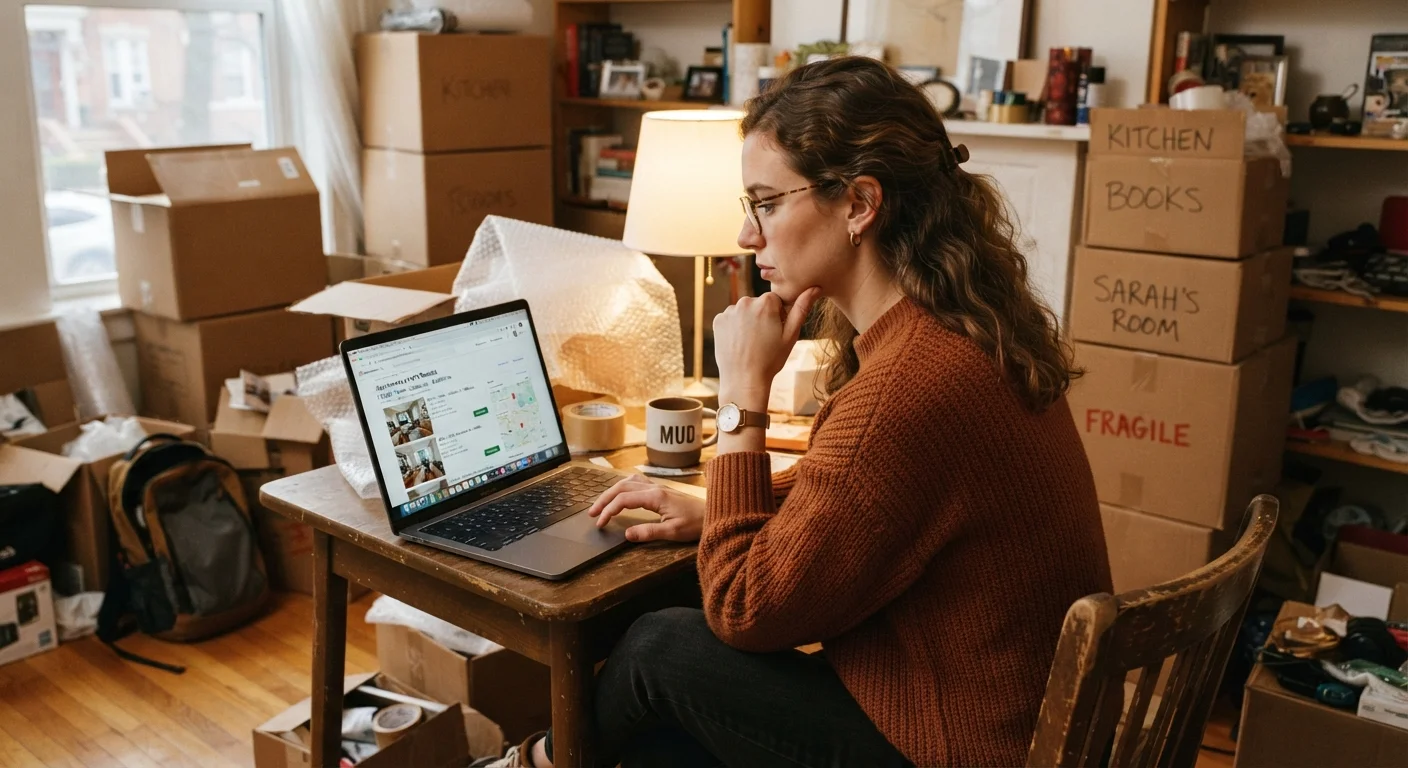
Why Long-Distance Rentals Require a Different Playbook
Relocating for work, family, or a fresh start often means signing a lease on an apartment you've never physically entered. While the process mirrors a standard rental search in many ways, the inability to walk through the unit in person significantly raises the stakes. You're trusting listing photos, a landlord's word, and digital tools to make one of your most consequential near-term financial decisions.
The risks are real: misrepresented unit conditions, outright rental scams, and neighborhoods that look fine on a map but feel different at street level. That said, renters successfully secure apartments remotely every day - the difference lies in the depth of verification they do before signing anything. For a foundational overview of the full renting process, see our First-Time Renter's Roadmap.
26%
Renters who relocated long-distance in a recent year
According to U.S. Census Bureau migration data, a significant share of renters move across county or state lines each year, many without prior in-person visits to their new unit.
~$4,000
Median loss in rental scam cases
The Federal Trade Commission has reported that real estate and rental fraud consistently ranks among the costlier consumer scam categories, with losses often including forfeited deposits.
Verified Vetting: How to Confirm What You Can't See
Remote vetting is a systematic process, not a single step. The goal is to build a layered picture of the unit, the landlord, and the building through multiple independent channels.
Request a live, unscripted video walkthrough - not a pre-recorded tour
Pre-recorded tours can be edited, re-used, or created for a different unit entirely. A live video call with the landlord forces real-time disclosure of conditions and gives you the chance to ask to see specific features - inside closets, under sinks, the parking situation - that staged photos omit.
Verify ownership through county property records before paying anything
Most U.S. counties publish property ownership records online through the county assessor or recorder's office. Confirming that the person you're communicating with matches the recorded owner - or is a licensed property manager for that owner - is a foundational fraud-prevention step.
Read recent tenant reviews on multiple platforms independently
Landlord reviews on apartment listing platforms can be curated or sparse. Searching the property address alongside terms like 'reviews' or 'complaints' on Google, Reddit's local subreddits, and Yelp often surfaces experiences that never appear on the listing itself.
Engage a local contact - friend, real estate agent, or relocation service - for an in-person check
Having someone physically walk the unit and building on your behalf provides verification that no digital tool can replicate. A licensed real estate agent familiar with the local rental market can also flag whether the asking rent is reasonable for the area.
Document every pre-lease communication in writing
Verbal promises about repairs, furnished items, parking, or move-in dates are unenforceable. Requiring written confirmation - even a simple email reply - creates a paper trail and often reveals whether a landlord's commitments will hold up.
Listing language itself can hide as much as it reveals. Our guide on how to read a rental listing without being misled breaks down common phrasing that warrants closer scrutiny.
Protecting Your Deposit and Avoiding Scams
Rental fraud disproportionately targets long-distance searchers because scammers know you can't drop by unannounced. Common schemes involve stolen listing photos applied to a property the scammer doesn't own or manage, with urgency tactics used to pressure a quick deposit payment.
How to Spot a Rental Scam Before It Costs You
Red flags include prices that are noticeably below comparable units in the area, a landlord who claims to be out of the country and unable to show the unit, and requests for payment before a signed lease is in hand. Reverse-search listing photos using Google Images or TinEye - scammers frequently reuse photos from legitimate listings. If an online listing asks you to 'apply' through an external link unrelated to the listing platform, treat it as high-risk and do not submit personal or payment information.
Legitimate landlords and property managers will not require payment via wire transfer, Zelle, Venmo, or gift cards before you've signed a lease and they've verified your identity through a formal application. Always confirm the lease and payment arrangements through an email trail you initiated - not one that arrived unsolicited.
Once you've secured a unit, the next layer of due diligence is understanding the neighborhood itself. Researching a neighborhood without visiting in person is entirely possible using public data sources, transit maps, and community forums.
Lease Terms That Matter More When You're Remote
A standard lease becomes more consequential when you're signing it from across the country. Certain clauses carry greater weight in a long-distance scenario, and it's worth requesting modifications in writing before you commit.
Pay close attention to the move-in inspection process. Establish in writing how the condition of the unit will be documented on arrival - ideally a timestamped photo or video walkthrough you conduct and submit within 24 hours of taking possession. This protects your security deposit when you eventually move out.
Look also at the early-termination clause. If the unit turns out to misrepresent what was advertised - a persistent maintenance issue, noise that wasn't disclosed - you'll want to know your exit options and associated costs before you're locked in. If you find yourself needing to sublet the unit for any reason, understand that the process involves legal steps that vary by lease and jurisdiction; our guide on subletting outlines what's typically involved.
Finally, consider whether a short-term rental in the target city before committing to a 12-month lease makes financial sense. Arriving without a permanent lease and renting month-to-month briefly can give you ground-level insight that no virtual tour can replicate - a strategy explored in depth in our piece on renting in a neighborhood before buying.
“The lease is a legal contract, and distance doesn't reduce your obligations under it. Read every clause - especially termination, repair responsibilities, and deposit return conditions - as carefully as if you were signing in person.”
— Consumer Financial Protection Bureau, U.S. federal consumer finance agency