Deed vs. Title: Clearing Up a Common Confusion
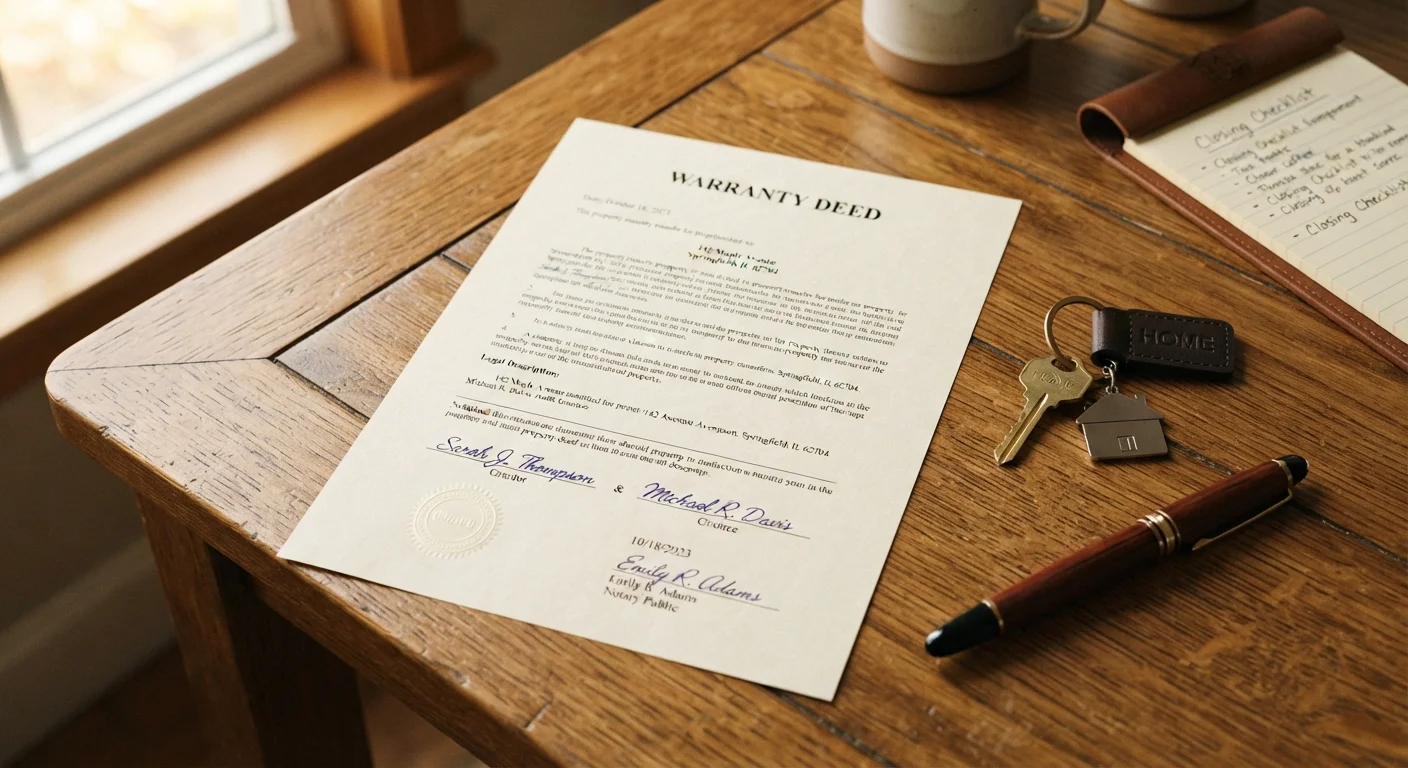
When you buy a home, two terms come up repeatedly: deed and title. They are often used interchangeably, but they mean different things. A deed is a physical, signed document that transfers ownership from the seller (the grantor) to the buyer (the grantee). Title is the legal concept of owning the property - your right to use, occupy, and sell it.
Think of a deed as the vehicle and title as the destination. The deed delivers the title to you at closing. Once signed, notarized, and recorded with your local county office, the deed becomes part of the public record and establishes your place in the property's chain of ownership.
For a broader look at what property ownership legally entails, see An Introduction to Property Ownership for First-Time Buyers.
The Three Most Common Deed Types
Not all deeds are equal. The type of deed you receive determines how much legal protection the seller is extending to you about the property's ownership history.
~80%
Conventional home sales using warranty deeds
General warranty deeds are the prevailing instrument in most U.S. residential real estate transactions outside foreclosure and family transfers.
1 in 3
Titles with a defect found during search
The American Land Title Association has reported that roughly one-third of title searches uncover some issue requiring resolution before closing.
3-5 days
Typical deed recording turnaround
Most county recorder offices process and return recorded deeds within a few business days, though timelines vary by jurisdiction and volume.
General Warranty Deed
This is the gold standard for buyers. A general warranty deed means the seller guarantees that the title is free and clear of any defects - not just problems they caused, but any claim that could arise from the property's entire history. If a long-ago lien or ownership dispute surfaces after closing, the seller is legally obligated to defend you and compensate you if the claim succeeds. Most conventional residential sales use general warranty deeds.
Grant Deed
Common in California and a few other states, a grant deed offers a more limited warranty. The seller guarantees only that they have not previously sold the property to someone else and that they have not personally created any undisclosed encumbrances (such as a lien or easement). Historical defects from prior owners are not covered. It is stronger than a quitclaim deed but narrower than a general warranty deed.
Quitclaim Deed
A quitclaim deed conveys whatever interest the grantor currently holds - nothing more, nothing less. There are no warranties whatsoever. If the seller turns out to have had no valid ownership interest, the buyer receives nothing of value and has no legal recourse against the grantor. Quitclaim deeds are typically used between family members, to add or remove a spouse from title, or to correct a name error in the public record - not in arm's-length purchases.
Ask About Deed Type Before Closing
During contract negotiations, ask your real estate attorney or agent what type of deed you will receive at closing. If a seller proposes a quitclaim or limited warranty deed for a standard purchase, understand why and consider what additional protections - such as an enhanced title insurance policy - may be appropriate. This is especially important in estate sales, foreclosures, or transactions involving corporate sellers.
Why the Deed Type You Receive Has Long-Term Consequences
Title defects don't always surface immediately. A forged signature from a sale decades ago, an unresolved estate claim, or an improperly released mortgage can lie dormant in the chain of title and emerge years after you've moved in. The deed type you received at closing determines your legal standing when that happens.
With a general warranty deed, you can seek damages from the original seller. With a quitclaim deed, you have no such remedy. This is one reason title insurance matters - it provides financial protection independent of the deed type, backed by an insurer rather than an individual seller who may no longer be reachable.
“The deed is where ownership is legally born. Understanding what protections - or limitations - your deed carries is not a technicality; it is the foundation of your property rights.”
— Real Estate Editorial Team, Editorial team covering property ownership and mortgages
Regardless of deed type, always verify that your deed is recorded promptly after closing. An unrecorded deed may leave your ownership vulnerable to competing claims.
This article is for general informational and educational purposes only and does not constitute legal or financial advice. Consult a licensed real estate attorney for guidance specific to your transaction and jurisdiction.