What an Escrow Account Actually Holds
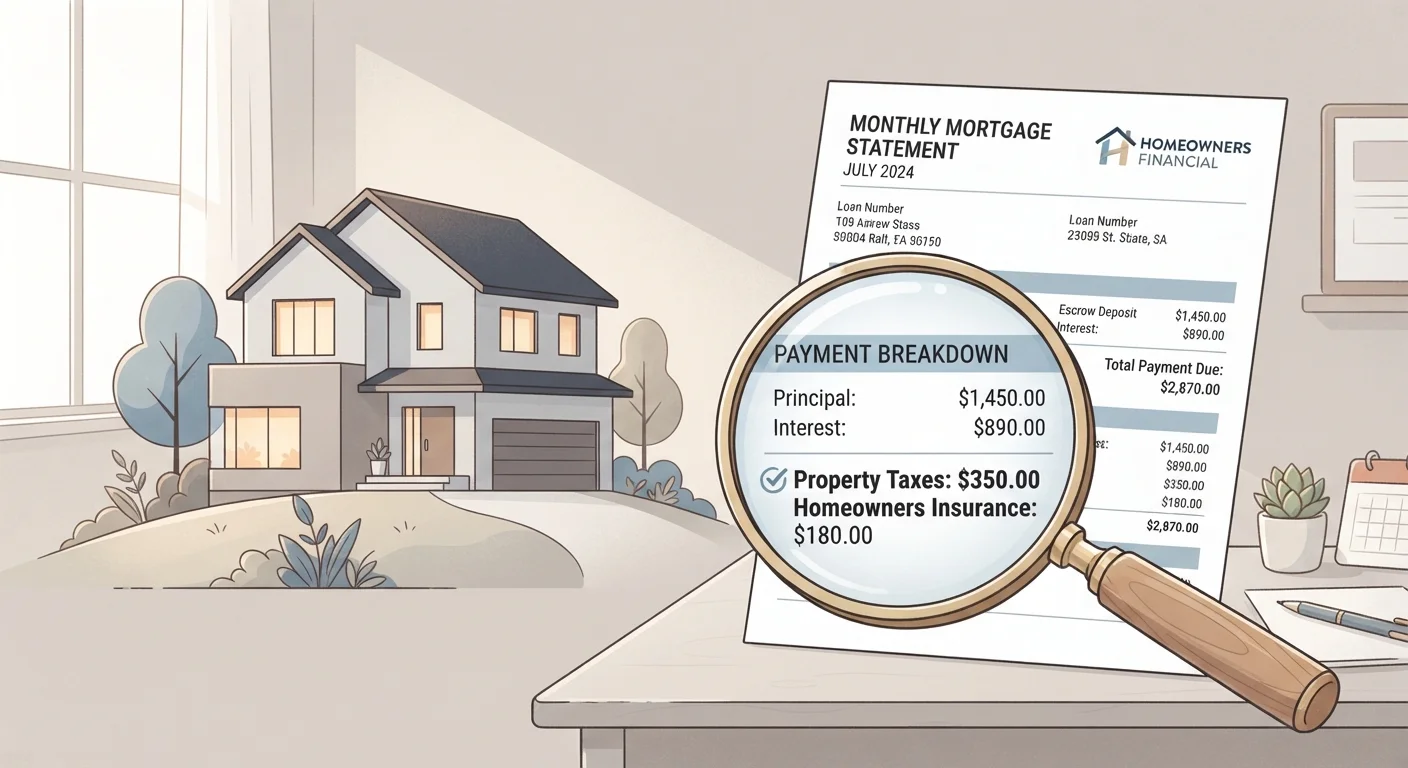
When you close on a home and take out a mortgage, your monthly payment is often more than just principal and interest. Many borrowers pay into an escrow account that covers two major ongoing obligations: property taxes and homeowners insurance.
Property taxes are levied by local governments and typically billed once or twice a year. Homeowners insurance protects the structure and your belongings - and it's a lender requirement, because the lender has a financial stake in the property. In some flood zones, flood insurance is also collected through escrow.
Borrowers with FHA loans also pay mortgage insurance premiums (MIP) through their escrow account. For a broader look at how mortgage insurance works, see our guide on private mortgage insurance.
Escrow Is Not the Same as a Savings Account
Unlike a personal savings account, you do not earn interest on funds held in a typical mortgage escrow account (with limited state-specific exceptions). The account exists solely to ensure required bills are paid on time. For a comparison of everyday banking accounts, see checking vs. savings accounts.
How the Account Is Managed
Your loan servicer - the company that collects your monthly payments - administers the escrow account on your behalf. Each month, a calculated portion of your payment goes into the account. When property tax bills or insurance renewal premiums arrive, the servicer pays them directly.
Once a year, your servicer performs an escrow analysis - a review comparing what was collected to what was actually paid out, and projecting the coming year's expected costs. The results determine whether your monthly escrow contribution needs to increase or decrease.
If the account holds more than needed (a surplus), RESPA regulations generally require servicers to refund amounts above a certain threshold. If there's a shortage, the servicer typically spreads the difference across your next 12 monthly payments, raising your payment modestly. You may receive the option to pay the shortage in one lump sum instead.
Review Your Escrow Statement Every Year
When your annual escrow analysis arrives, compare the projected tax and insurance figures to any notices you've received directly from your insurer or local tax assessor. Errors in estimated costs can lead to unnecessary shortages. If your homeowners insurance premium changed, confirm your servicer has the correct renewal amount on file.
When Escrow Is Required - and When It Isn't
Whether escrow is mandatory depends on your loan type and your lender's policies.
- FHA loans: Escrow is required for the life of the loan in most cases.
- Conventional loans with less than 20% down: Most lenders require escrow because of the higher risk profile.
- Conventional loans with 20% or more equity: Some lenders allow borrowers to waive escrow and manage taxes and insurance independently, sometimes for a small fee.
- VA loans: Escrow is generally required, though servicer-specific rules can apply.
If you're still evaluating your overall financial readiness, the pre-application financial checklist walks through what lenders will review before approving your loan.
Reading Your Escrow Statement
Servicers are required by federal law to send an annual escrow account statement that breaks down deposits, payments made, and any projected changes. Here's what to look for:
- Projected escrow payments
- The amount your servicer expects to collect each month in the coming year, based on estimated tax and insurance bills.
- Escrow balance history
- A month-by-month record of what came in and what went out during the prior year.
- Shortage or surplus amount
- Any adjustment your servicer is proposing to your monthly payment.
If anything looks off - such as an insurance premium that doesn't match your own records - contact your servicer promptly. You can also request an escrow account review outside the annual cycle if you believe there's an error.
~80%
Mortgages with escrow accounts
Industry estimates suggest the large majority of U.S. mortgage borrowers have escrow accounts, either by requirement or lender preference.
2 months
Maximum escrow cushion allowed
RESPA limits the reserve a servicer may hold to two months of the total annual escrow payment, protecting borrowers from excessive withholding.
This article is for general informational purposes only and does not constitute financial, legal, or tax advice. Consult a qualified professional regarding your specific mortgage situation.