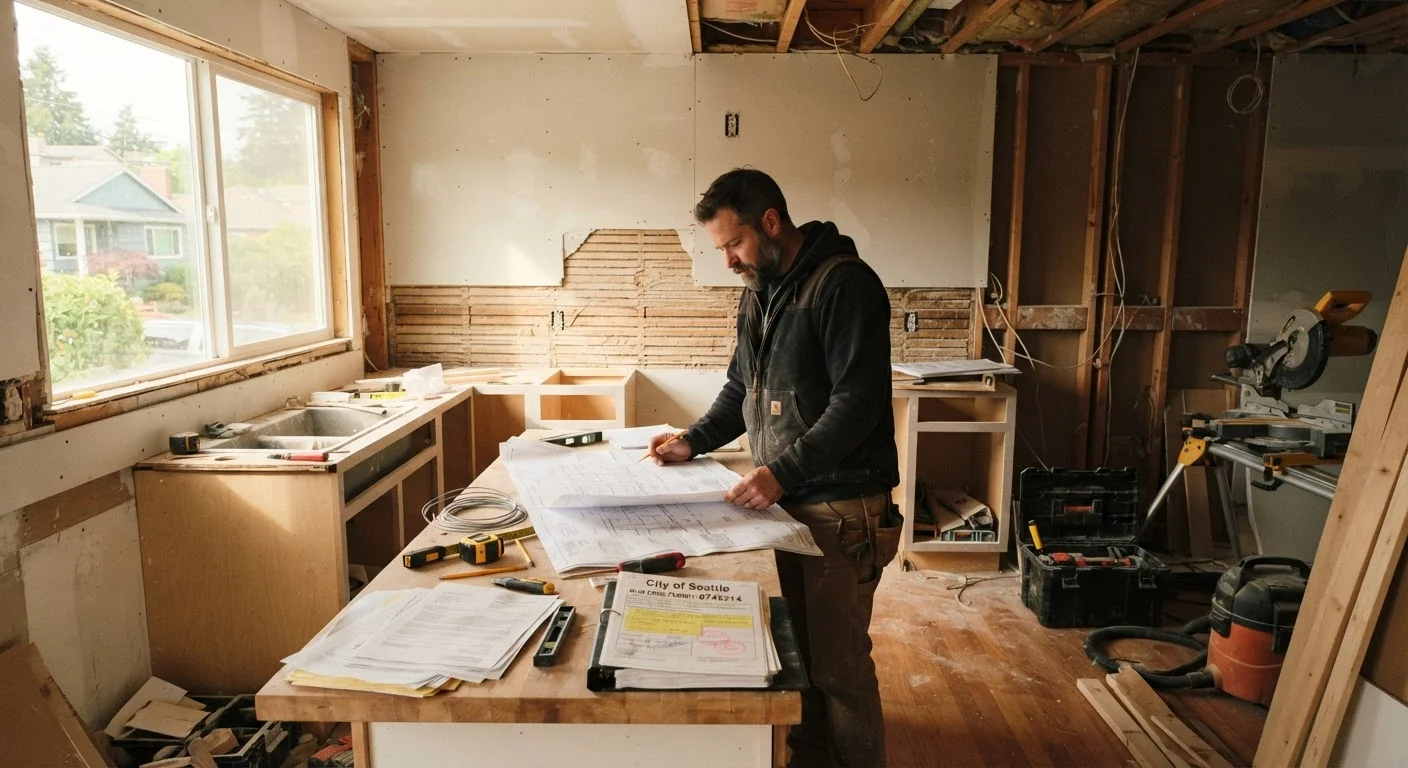
Why Renovation Budgets Almost Always Come Up Short
Most homeowners enter a renovation with a number in mind - a figure assembled from contractor quotes, online calculators, and a rough sense of material costs. What that number rarely includes are the secondary costs that accumulate before, during, and after the main work is done. These aren't obscure line items; they're predictable expenses that simply don't make it onto most initial budgets.
Understanding them in advance isn't pessimism - it's preparation. A renovation that blows past budget isn't just a financial setback; it can stall the project mid-completion, strain contractor relationships, and create lasting stress. For a deeper look at how estimates can mislead before work even starts, see our guide on how low-ball renovation bids backfire.
Below are the hidden costs most budgets forget - and why each one deserves its own line item.
Building Permits and Inspection Fees
Permits aren't optional for most structural, electrical, plumbing, or HVAC work - they're legally required. Yet homeowners frequently leave them out of early budget estimates, either because a contractor didn't mention them or because the scope seemed minor enough not to need them.
Permit costs vary widely by municipality and project type. A bathroom remodel might require permits for electrical and plumbing work separately, each with its own fee and inspection schedule. Failing to pull required permits can lead to fines, forced removal of completed work, and complications when selling the home. Always verify local requirements with your municipal building department before construction begins.
Unpermitted work can force costly teardowns and complicate future home sales.
Code Compliance Upgrades
Opening walls or touching electrical panels often triggers a legal obligation to bring adjacent systems up to current code - even if those systems weren't part of the original project. This is sometimes called the "opening the can of worms" problem in contractor conversations.
For example, a kitchen renovation that exposes old wiring may require a full panel upgrade. A bathroom addition might necessitate updated ventilation or plumbing venting to meet current standards. These upgrades are non-negotiable once work begins, and their costs can rival the original scope of the project itself.
Touching one system often legally requires upgrading adjacent systems to current code.
Debris Removal and Dumpster Rental
Demolition generates significant waste - drywall, tile, cabinetry, flooring, insulation - and someone has to remove it. Many contractor bids list "demo" as a labor line item without specifying how or where debris is disposed of. Dumpster rentals, landfill tipping fees, and hazardous material disposal (for older homes containing lead paint or asbestos) are often separate costs entirely.
For larger projects, budget separately for debris logistics. If your home was built before 1980, factor in the possibility of testing for hazardous materials, which requires licensed abatement contractors and adds both time and expense.
Hazardous material abatement in older homes can turn a small demo into a significant added expense.
Temporary Housing and Living Costs
A kitchen gut renovation, major bathroom remodel, or whole-floor project can render parts of your home functionally unusable for weeks. If you planned to stay in the home throughout, factor in the real costs: hotel stays, short-term rentals, or boarding pets.
Even if you remain in the home, expect higher food costs if your kitchen is offline - takeout and restaurant meals add up faster than most people anticipate over a multi-week project. For strategies on managing daily life during major work, see living through a renovation.
Weeks of takeout meals and hotel stays can easily add thousands to a renovation's true cost.
Material Storage and Staging
When materials arrive before the space is ready - or when work pauses unexpectedly - somewhere to store cabinets, fixtures, flooring, or appliances becomes a real logistical and financial problem. Portable storage containers, off-site storage units, and even climate-controlled facilities for certain materials carry monthly fees that aren't typically included in contractor bids.
This becomes especially relevant for custom or special-order items that require long lead times and arrive well before installation is scheduled.
Custom materials often arrive weeks before installation, requiring paid storage solutions.
Design Changes and Scope Creep
Change orders - modifications to the original project scope after work has begun - are among the most expensive sources of budget overruns. A tile upgrade, a relocated doorway, or a last-minute fixture swap each triggers new labor calculations, material restocking fees, and potentially revised permit filings.
Contractors are generally entitled to charge for changes beyond the original contract, and markups on change order work are often higher than on originally bid work. Before signing, review the anatomy of a renovation contract to understand how change orders are typically handled and priced.
Change orders mid-project often carry higher markups than work included in the original bid.
Contingency Reserve
No matter how thorough the planning, renovations - particularly in older homes - encounter surprises: rotted subfloor beneath tile, outdated plumbing behind a wall, or foundation issues uncovered during an addition. Industry guidance commonly suggests setting aside 10-20% of the total project budget as a contingency reserve specifically for these discoveries.
This isn't money you expect to spend - it's money you need access to so the project doesn't stall when the unexpected surfaces. A contingency fund is distinct from your main budget and should remain untouched unless genuinely needed. If the project wraps without drawing on it, those funds can go directly toward savings or debt reduction.
A 10-20% contingency reserve is one of the most reliable protections against mid-project financial stress.
Build These Into Your Budget Before Work Begins
The costs above aren't hypothetical edge cases - they show up in the majority of mid-to-large renovation projects. The homeowners least surprised by them are those who itemized them upfront rather than folding them into a vague contingency bucket.
Ask Contractors to Itemize These Costs
When soliciting bids, give contractors a checklist that includes permits, debris disposal, and temporary facilities. A complete bid should specify what is and isn't included for each category. Gaps in a bid aren't always bad faith - sometimes they reflect assumptions that can be clarified before you sign. Getting three itemized bids makes these gaps much easier to spot.
When reviewing a contractor's estimate, ask explicitly which of these costs are included and which are not. Our article on reading a renovation estimate line by line walks through how to interpret each section of a typical bid. And if you're weighing whether a renovation makes financial sense in the first place, the broader framing in budgeting basics can help you structure the decision.
This article is for general informational and educational purposes only. Renovation costs vary significantly by region, project scope, and local regulations. Consult licensed contractors and verify permit requirements with your local building authority before beginning any project.