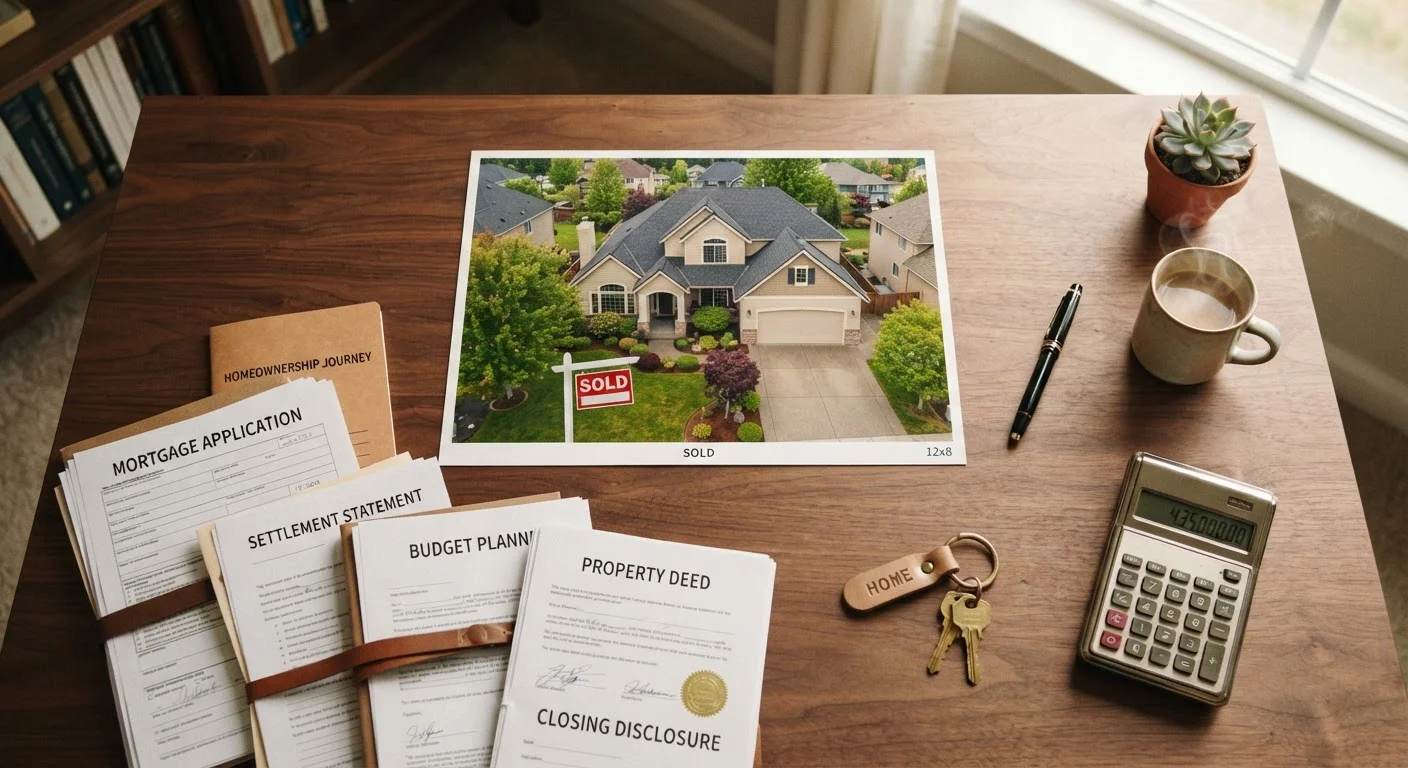
Why the Purchase Price Is Only the Starting Point
Most buyers focus on the mortgage payment, but the true upfront cost of buying a home can run 2% to 5% above the purchase price before you ever turn the key. On a $350,000 home, that's $7,000 to $17,500 in additional cash you'll need ready at closing - and that figure doesn't include moving expenses, immediate repairs, or the cash reserves lenders often require.
Understanding every line item before you make an offer is not paranoia - it's basic financial preparation. The full lifecycle of a home purchase involves several distinct financial moments, each carrying its own costs. This reference breaks them down clearly so nothing catches you off guard.
| Typical closing cost range | 2%-5% of purchase price (Consumer Financial Protection Bureau) |
| Standard home inspection cost | $300-$500 (National general industry range) |
| Recommended first-year maintenance reserve | 1% of home value annually (Common financial planning guideline) |
| Cash reserves often required by lenders | 2-6 months of mortgage payments (Lender underwriting standards vary) |
| Average local professional moving cost | $800-$2,500 (Industry estimates; varies by distance and volume) |
| Escrow upfront deposit (taxes + insurance) | 2-3 months prepaid (Standard lender requirement at closing) |
Closing Costs: The Largest Surprise for Most Buyers
Closing costs are fees paid at settlement to finalize the mortgage and transfer ownership. They typically include:
- Loan origination fees: Charged by the lender for processing your mortgage, often 0.5%-1% of the loan amount.
- Title search and title insurance: Protects you and the lender against ownership disputes. Lender's title insurance is usually required; owner's title insurance is optional but advisable.
- Appraisal fee: Lenders require an independent appraisal to confirm the home's market value, typically $300-$600.
- Home inspection fee: A standard inspection runs $300-$500; specialized inspections (radon, mold, sewer) add more.
- Attorney fees: Some states require a real estate attorney at closing.
- Prepaid interest: Interest accruing between closing day and your first mortgage payment.
- Escrow setup: Lenders usually collect 2-3 months of property taxes and homeowners insurance upfront into an escrow account.
Avoid common home buying myths that lead buyers to assume sellers always cover these costs - in most markets, they don't.
Closing costs
Fees and expenses paid at the final settlement of a home purchase, beyond the purchase price itself. They typically include loan origination fees, title insurance, appraisal, and prepaid items like taxes and insurance.
Escrow account
A lender-managed account that collects monthly installments of property taxes and homeowners insurance from the borrower and pays those bills on the borrower's behalf when due.
Title insurance
A policy that protects against financial loss from defects in a property's title, such as undisclosed liens, ownership disputes, or recording errors. Lender's title insurance is typically required; owner's title insurance is optional but recommended.
Cash reserves
Liquid savings a borrower must have remaining after paying the down payment and closing costs. Lenders verify reserves as evidence that the buyer can continue making payments if income is disrupted.
HOA fees
Monthly or annual charges paid by homeowners in a planned community or condominium to fund shared maintenance, amenities, and community management.
Loan origination fee
A fee charged by a lender to process and underwrite a new mortgage loan, typically expressed as a percentage of the loan amount (often 0.5%-1%).
Taxes, Insurance, and Ongoing Ownership Costs
Beyond closing, new homeowners face recurring annual costs that should be built into any realistic budget.
2%-5%
Average closing costs as share of purchase price
According to the Consumer Financial Protection Bureau, buyers should budget this range on top of their down payment.
$7,000-$17,500
Closing cost dollars on a $350,000 home
Applying the 2%-5% range illustrates how significant these costs are in real dollar terms for a mid-priced home.
1%
Annual home maintenance rule of thumb
Financial planners commonly suggest budgeting at least 1% of a home's purchase price per year for ongoing maintenance and repairs.
- Property Taxes
- Rates vary significantly by state and county. Many lenders collect monthly installments through your escrow account, but buyers should verify the actual assessed tax rate - not just the seller's last bill, which may reflect different exemptions.
- Homeowners Insurance
- Required by virtually all mortgage lenders, homeowners insurance premiums vary based on location, home age, and coverage limits. In flood- or wildfire-prone areas, separate hazard policies are often required and can add hundreds to thousands per year.
- HOA Fees
- If the property is in a homeowners association, monthly dues can range from under $100 to several hundred dollars - and are non-negotiable once you own.
- Immediate Repairs and Move-In Costs
- Even a home that passes inspection may need new locks, fresh paint, appliance replacements, or HVAC servicing. Budget at least 1% of the purchase price for first-year maintenance, separate from your emergency fund.
For a broader view of how housing compares to other major ownership expenses, see the true cost of owning a car - the pattern of hidden costs is strikingly similar.
Cash Reserves and Moving Expenses
Many lenders require buyers to demonstrate cash reserves - liquid savings remaining after closing - equivalent to 2-6 months of mortgage payments. These aren't spent at closing, but they must be documented and available, which means your total savings requirement is higher than closing costs alone.
Moving costs are often underestimated. A local move using professional movers averages $800-$2,500; a long-distance move can easily reach $5,000 or more depending on distance and volume. Storage, utility deposits, and service transfers add further to the tally.
If you're weighing whether to buy or continue renting, it's worth reviewing the hidden costs of renting as a comparison - ownership carries more upfront cost, but renting has its own underappreciated expenses. Budgeting guidance from resources like budgeting basics can help you map out all of these cash flows before committing.
This article is for general informational and educational purposes only and does not constitute financial, legal, or investment advice. Costs, rates, and requirements vary by location, lender, and individual circumstance. Consult a licensed real estate professional, financial adviser, or attorney before making purchasing decisions.