Step 1: Submitting Your Offer and Getting It Accepted
The process officially begins when you submit a written purchase offer - typically a legally binding contract prepared by your real estate agent. The offer includes the proposed price, your preferred closing date, the amount of earnest money you'll deposit, and any contingencies (conditions that must be met for the sale to proceed).
Common contingencies include financing (your mortgage must be approved), inspection (the home must pass a satisfactory inspection), and appraisal (the home must appraise at or above the purchase price). The seller can accept, reject, or counter your offer. Once both parties sign, the contract is executed and the clock starts.
Review Your Contract Contingency Deadlines
Every contingency in your purchase contract has a deadline. Missing an inspection or financing contingency deadline can mean you lose your right to exit the deal - or your earnest money. Mark all dates on your calendar the day you go under contract and confirm them with your agent.
Step 2: Earnest Money Deposit and Opening Escrow
Within a few days of a signed contract, you'll submit your earnest money deposit - usually 1% to 3% of the purchase price - held in a neutral escrow account managed by a title company, escrow company, or attorney, depending on your state. Escrow is a legal arrangement where a third party holds funds and documents until all conditions are met.
This deposit signals your commitment. If you walk away without a valid contingency reason, you risk losing it. If the deal falls apart due to a failed contingency, your deposit is typically returned. For a deeper look at the broader financial journey, see our complete buyer's journey guide.
43 days
Median time to close a financed purchase
According to ICE Mortgage Technology's Origination Insight Reports, the average time to close a purchase loan has generally ranged from 40 to 50 days in recent years.
2%-5%
Typical closing costs as a share of purchase price
The Consumer Financial Protection Bureau (CFPB) notes that closing costs generally fall in this range, varying by loan type, lender, and location.
1%-3%
Typical earnest money deposit range
Industry norms suggest earnest money deposits commonly represent 1% to 3% of the purchase price, though competitive markets may see higher amounts.
Step 3: Home Inspection and Negotiating Repairs
A home inspection - conducted by a licensed inspector you hire - examines the property's structure, systems (HVAC, plumbing, electrical), roof, foundation, and more. This is one of the most important steps in protecting your interests. The inspector provides a written report, typically within 24 to 48 hours.
If issues surface, you have options: request the seller make specific repairs before closing, ask for a price reduction, negotiate a closing cost credit, or - if the problems are severe enough - walk away under your inspection contingency. Not every finding requires action, but you should understand what you're taking on.
Inspection vs. Appraisal: Not the Same Thing
A home inspection is performed for the buyer's benefit and evaluates the condition of the property. An appraisal is ordered by the lender and assesses the property's market value. Both are standard steps, but they serve entirely different purposes - and both results can affect whether your deal proceeds.
Step 4: Appraisal, Title Search, and Final Loan Approval
Your lender will order an independent appraisal to verify the home's market value. This protects the lender from loaning more than the property is worth. If the appraisal comes in below the purchase price, you'll need to renegotiate with the seller, cover the gap out of pocket, or invoke your appraisal contingency to exit the deal.
Simultaneously, a title company conducts a title search - reviewing public records to confirm the seller has clear ownership and no unresolved liens exist. Most buyers also purchase title insurance to protect against any undiscovered claims. Your lender is completing final underwriting during this period as well, which may require additional documentation from you. Respond to any requests promptly - delays here are the most common cause of late closings. Explore more on mortgages and property ownership at our Property & Mortgages hub.
Step 5: The Closing Disclosure and Final Walk-Through
At least three business days before closing, your lender must provide a Closing Disclosure - a standardized five-page document detailing your final loan terms, monthly payment, and all closing costs. Review it carefully and compare it to your original Loan Estimate. If figures have shifted significantly, ask your lender to explain.
Before closing day, conduct a final walk-through of the home - typically within 24 hours of closing. Confirm that agreed-upon repairs were completed, appliances are in working order, and the property is in the expected condition. This is your last chance to flag issues before ownership transfers.
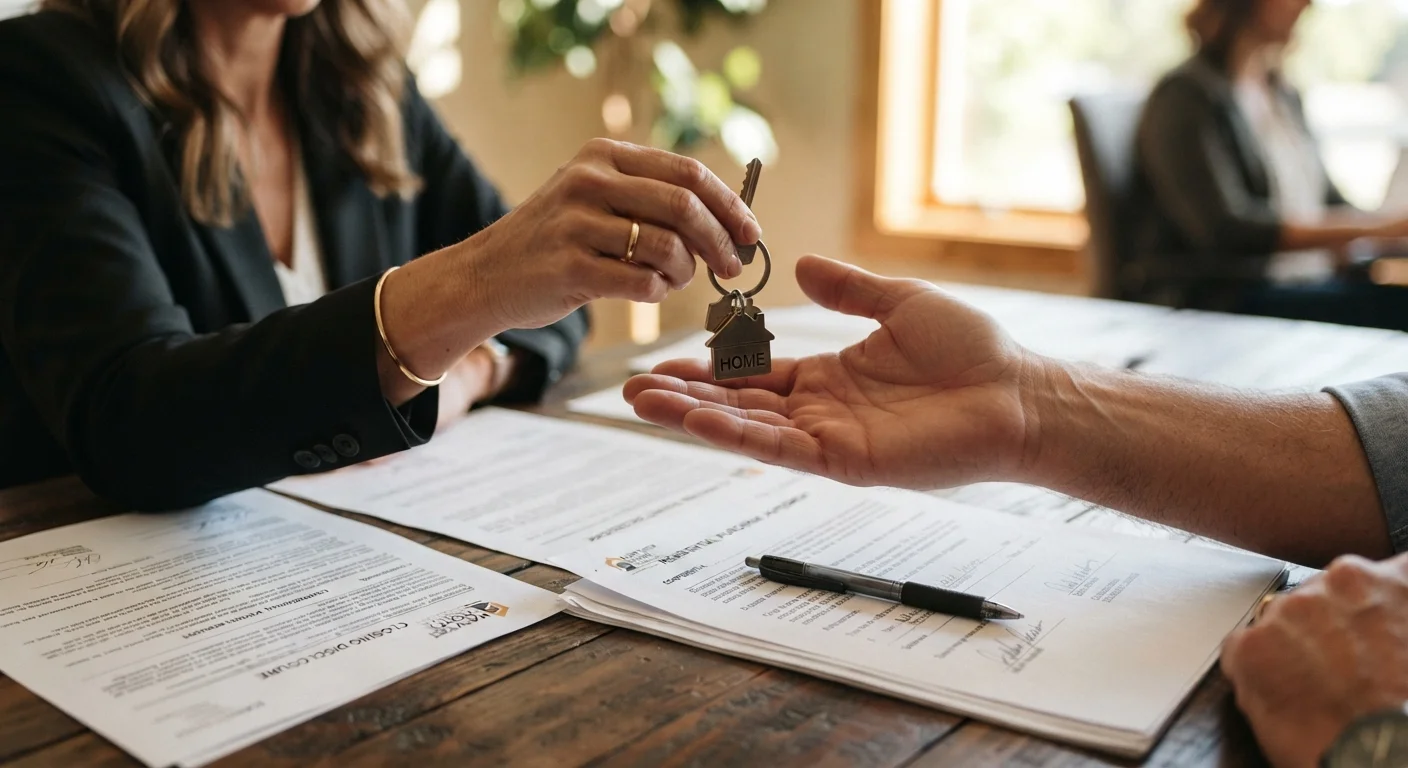
Step 6: Closing Day - Signing, Paying, and Getting the Keys
On closing day, you'll sign a substantial stack of documents - the mortgage note, deed of trust, and various federal and state disclosures. Your closing agent or attorney will guide you through each. You'll also pay your remaining closing costs and down payment, typically via wire transfer or certified check arranged in advance.
Once all documents are signed and funds are confirmed, the deed is recorded with your local government and ownership officially transfers to you. Then comes the moment you've been working toward: the keys are yours. The full experience of navigating a major asset purchase - from research through paperwork - shares structural similarities with other large purchases; our guide to buying a new car illustrates how these structured processes compare across categories.
This article is for general informational purposes only and does not constitute legal, financial, or real estate advice. Consult a licensed real estate professional, lender, or attorney for guidance specific to your situation and local market.