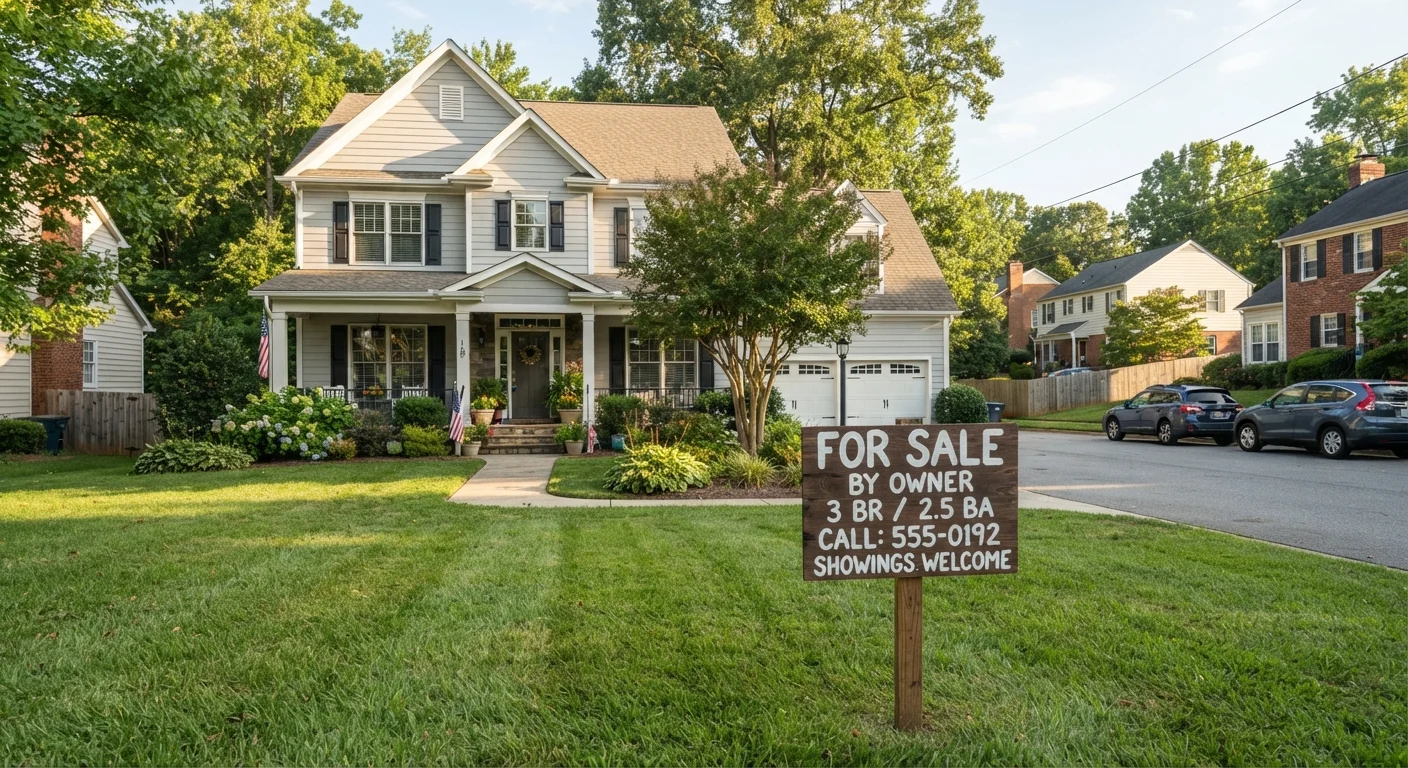
What FSBO Actually Means
For-sale-by-owner (FSBO, pronounced "fizz-bo") means the homeowner sells their property without hiring a listing agent. The seller handles pricing research, marketing, showings, offer negotiations, and transaction paperwork directly. The primary motivation is almost always saving the listing agent's commission - typically 2.5% to 3% of the sale price.
However, FSBO does not automatically eliminate all commission costs. If a buyer is represented by their own agent - which is common - the seller may still offer a buyer's agent commission to attract those buyers. Understanding this distinction upfront is essential for realistic cost planning. See what sellers often underestimate about closing costs for a fuller picture of transaction expenses.
The Real Work Involved
FSBO sellers take on every task a listing agent would normally handle:
- Pricing: Setting the right price requires analyzing comparable sales ("comps") in your area. Overpricing stalls the listing; underpricing leaves money behind. Without access to a full MLS database, this research is harder to do precisely.
- Marketing: Sellers can pay to list on the MLS through flat-fee listing services and post on major real estate platforms. Professional photography, yard signage, and open houses remain the seller's responsibility.
- Showings: Coordinating access, vetting buyers for pre-approval, and hosting showings takes consistent availability during what is often a full-time job.
- Negotiation: Responding to offers, navigating contingencies (inspection, financing, appraisal), and managing counteroffers requires familiarity with contract terms.
- Legal compliance: State disclosure laws require sellers to document known defects and material facts about the property. Missing required disclosures can create legal liability after closing.
~7%
Share of U.S. home sales that are FSBO
According to the National Association of Realtors' annual Profile of Home Buyers and Sellers, FSBO transactions have represented roughly 7% of sales in recent years, down from about 19% in 1981.
~$60K
Median price gap vs. agent-listed homes
NAR data has shown FSBO homes consistently sell for a lower median price than agent-assisted sales, though the gap varies by market and is influenced by property type and location.
Real estate attorneys are commonly used in FSBO transactions to review contracts and ensure state-specific legal requirements are met. This adds cost but reduces exposure significantly.
Pros and Cons of Selling FSBO
Whether FSBO makes sense depends heavily on the seller's experience, local market conditions, and available time. Here is an honest breakdown:
Saves the listing agent commission
Eliminating the listing agent typically saves 2.5%-3% of the sale price - on a $400,000 home, that's $10,000-$12,000 retained by the seller if no buyer's agent commission is offered either.
Full control over pricing and showings
The seller sets the list price, decides when to show, and determines which offers to pursue without deferring to an agent's timeline or strategy.
Direct negotiation with buyers
Some sellers find that negotiating directly - without messages relayed through intermediaries - leads to cleaner communication and faster resolution on offer terms.
Can work well in high-demand markets
In markets with low inventory and motivated buyers, a well-priced FSBO home can attract strong offers quickly, reducing the disadvantage of limited marketing reach.
Accurate pricing is genuinely difficult
National Association of Realtors data has consistently shown FSBO homes sell for less on average than agent-listed homes - often attributed to pricing errors that are hard to correct once a listing goes stale.
Limited MLS access reduces buyer exposure
Most buyers and their agents search the MLS first. Without a full MLS listing (which requires either an agent or a flat-fee service), a FSBO home reaches a narrower audience.
Legal and disclosure liability falls entirely on the seller
State disclosure requirements vary and can be extensive. Failing to disclose a known defect - even unintentionally - can result in post-closing legal claims from the buyer.
Time-intensive process with no off-switch
Managing inquiries, scheduling showings, vetting buyers, and handling contract paperwork can consume evenings and weekends for weeks or months.
Emotional involvement can hurt negotiations
Sellers negotiating directly on their own home sometimes take lowball offers or inspection requests personally, which can derail deals that a detached agent would have managed smoothly.
Flat-Fee MLS Services: A Middle Path
Some sellers choose a hybrid approach: paying a flat fee (often $300-$1,000) to a licensed broker who lists the home on the MLS without providing full-service representation. This increases buyer exposure while keeping overall costs lower than a traditional listing agreement. The seller still handles showings, negotiations, and contracts independently. Evaluate any flat-fee service carefully - terms vary widely by provider and state.
Who FSBO Tends to Work For - and Who It Doesn't
FSBO is not inherently a bad decision, but it is a high-effort one. Sellers who succeed tend to share a few characteristics: they have sold property before, they are in a hot local market with strong demand, they have access to a real estate attorney, and they can respond quickly to buyers during the process.
Sellers navigating divorce, estate sales, complex title situations, or unfamiliar markets face meaningfully higher risk going unrepresented. The transaction itself - from accepted offer to closing - involves title searches, escrow coordination, lender requirements, and final walkthroughs that all require attention.
It is also worth understanding the buyer's perspective. Some buyers - particularly those in competitive markets - may hesitate on FSBO listings, concerned about disclosure gaps or negotiating directly with an emotionally invested owner. What a buyer's agent does and how they interact with FSBO sellers is useful context for any seller going this route.
This article is for general informational purposes only and does not constitute legal or financial advice. Real estate transactions involve legally binding contracts; consult a licensed real estate attorney or qualified professional for guidance specific to your situation and state.