Two Tools, Two Jobs
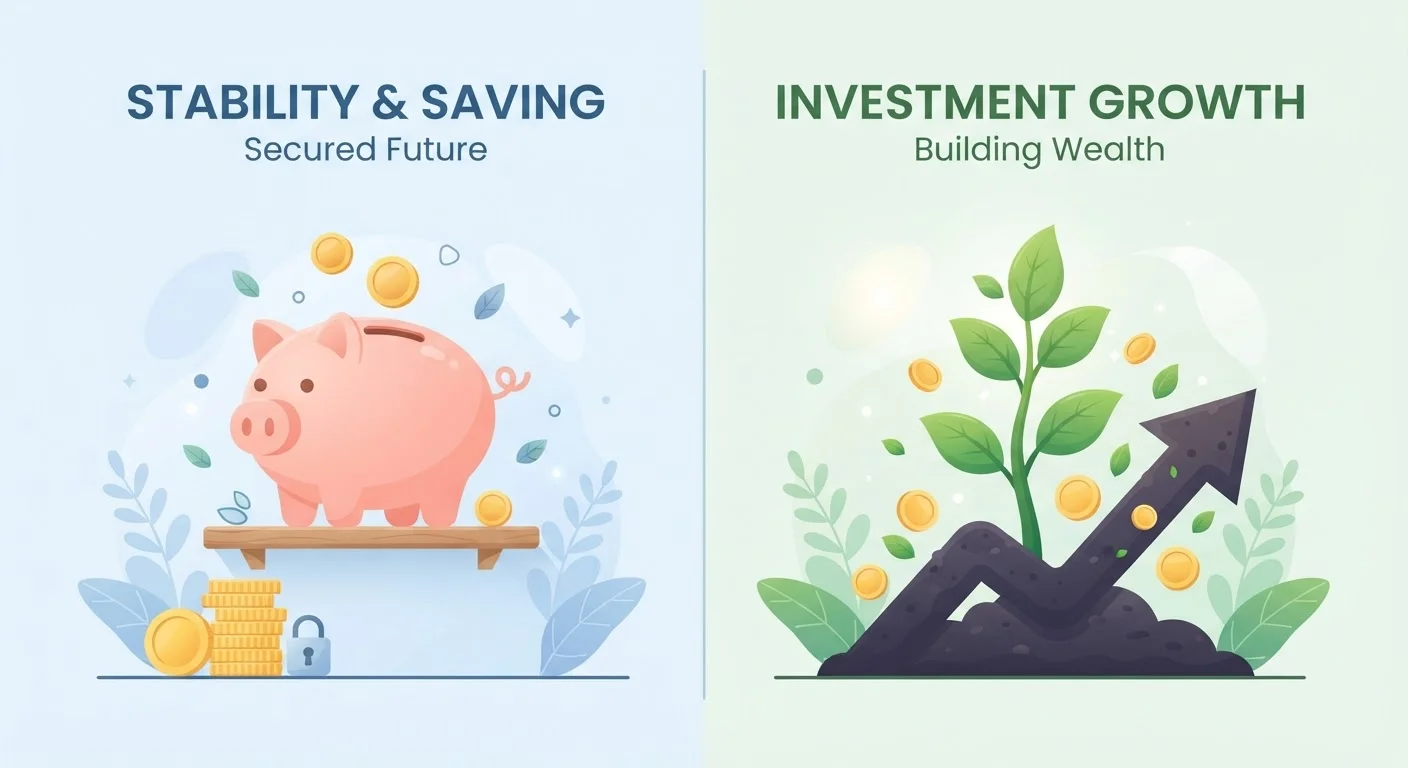
Saving and investing are often mentioned in the same breath, but treating them as interchangeable can lead to real financial missteps. Each one is a distinct tool designed for a specific job - and using the wrong tool for the job creates problems.
Saving is the act of accumulating money in a stable, low-risk account - usually a checking, savings, or money market account. The goal is preservation: your $500 today should still be $500 (plus modest interest) when you need it tomorrow, next month, or next year. The Federal Deposit Insurance Corporation (FDIC) insures deposits at member banks up to $250,000 per depositor, per institution, which makes savings accounts among the safest places to hold money.
Investing is deploying money into assets - stocks, bonds, mutual funds, exchange-traded funds (ETFs), real estate, and others - with the expectation that those assets will grow in value over time. The potential reward is greater than what a savings account offers, but it comes with genuine risk. Markets fluctuate, and the value of investments can fall as well as rise. Past performance does not guarantee future results.
For more on how savings accounts function day to day, see our guide to checking vs. savings accounts.
~55%
Americans who own stocks or stock funds
According to Gallup polling, roughly 55-61% of U.S. adults report owning stocks, either directly or through retirement accounts like 401(k)s.
$250,000
FDIC deposit insurance limit per depositor
The Federal Deposit Insurance Corporation insures deposits at member banks up to $250,000 per depositor, per institution, per ownership category.
~40%
Americans without enough savings for a $400 emergency
Federal Reserve surveys have consistently found that a significant share of U.S. adults would struggle to cover an unexpected $400 expense without borrowing or selling something.
When to Save and When to Invest
The right choice - saving or investing - depends on three questions: When do you need the money? What happens if its value drops? And how stable is your financial foundation?
Use Saving For:
- Emergency funds - Typically three to six months of essential living expenses, held somewhere liquid and safe.
- Short-term goals - A car down payment, vacation, or appliance purchase planned within one to three years.
- Money you cannot afford to lose - Rent, bill payments, and any funds you may need on short notice.
Use Investing For:
- Retirement - Long time horizons (10 years or more) give investments the runway to recover from downturns and compound over time.
- Long-term wealth building - Goals five or more years away, such as a child's education fund or financial independence.
- Beating inflation - Savings account interest rates often lag inflation, meaning the purchasing power of saved money can slowly erode. Investing historically offers the potential for returns that outpace inflation over the long run, though this is not guaranteed.
Match the Account to the Timeline
A quick rule of thumb: if you'll need the money in less than three years, keep it in a savings or money market account. If the goal is five or more years away and you can tolerate fluctuations in value, a tax-advantaged investment account may be appropriate. Goals in between - say, three to five years out - call for careful judgment about how much risk you can absorb.
A useful framework: think of saving as your financial foundation and investing as the structure you build on top of it. Without the foundation, the structure is unstable. A three-tier savings structure can help you organize money across short-, medium-, and long-term purposes before allocating anything to investments.
The Order of Operations Matters
For most Americans starting to get their finances in order, a sensible sequence looks like this:
- Build a small starter emergency fund (around $1,000) to cover minor financial shocks.
- Pay down high-interest debt - credit card balances charging 20%+ annually, for example - because eliminating that interest is a guaranteed return.
- Grow your emergency fund to three to six months of expenses.
- Begin or increase contributions to tax-advantaged retirement accounts, such as a 401(k) or IRA.
- Save for medium-term goals in dedicated accounts.
This sequence isn't rigid - personal circumstances vary - but it captures the logic of stabilizing before growing. Jumping into investing before you have liquid savings can force you to sell investments at a loss during an emergency, eliminating the benefit of investing in the first place.
For a deeper look at automating how money moves through these stages, see our practical guide to automating your savings. If you're managing several goals at once, saving for multiple goals simultaneously walks through how to allocate without losing focus.
If any of the terminology here feels unclear, our guide to commonly confused financial terms explains concepts like APR vs. APY, gross vs. net income, and more.
This article is for general informational and educational purposes only and does not constitute personalized financial, investment, tax, or legal advice. Consult a licensed financial adviser or other qualified professional before making decisions based on your individual circumstances.