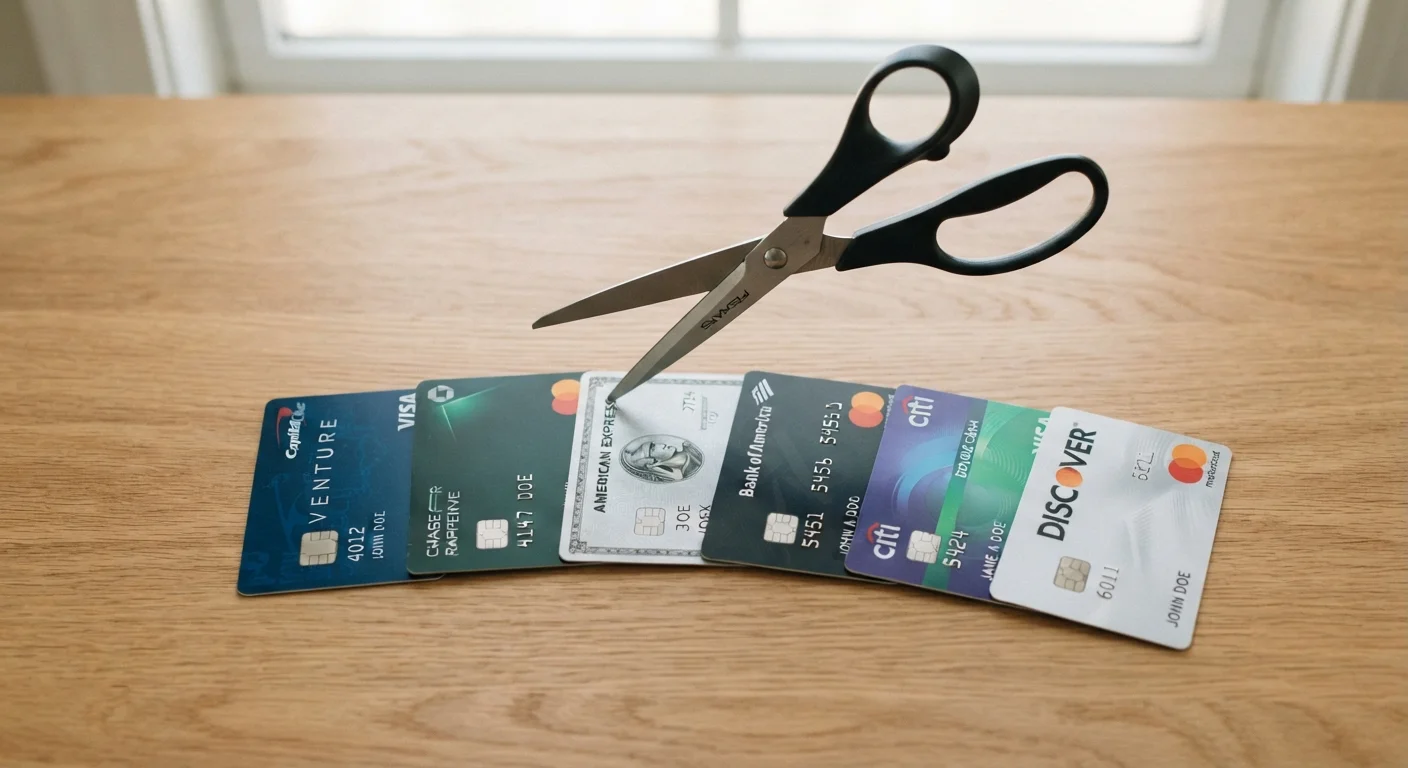
The Logic Behind Closing Cards - and Why It Often Misfires
The instinct makes sense on the surface: you have a credit card you barely use, the annual fee feels like a waste, and simplifying your wallet sounds like sound financial hygiene. So you call the issuer and cancel it. What could go wrong?
Quite a bit, actually. Closing a credit card - especially an older one - can set off a chain reaction in your credit profile that takes months or even years to recover from. Understanding why that happens puts you in a much stronger position to make the right call for your situation.
Your credit score is influenced by several factors, and two of them are directly affected when you close a card: your credit utilization ratio (how much of your available credit you're using) and your length of credit history. When you cancel a card, you lose that card's credit limit from your total available credit - instantly making your utilization look worse - and you potentially shorten your average account age.
For practical context on how credit cards fit into a broader financial picture, see responsible credit card use principles that help prevent debt from growing in the first place.
Closing your oldest credit card without considering the impact on account age.
Why it happens: People often focus on the card they use least, which tends to be an older account opened when they were just starting out.
Canceling a card right before applying for a major loan, such as a mortgage or auto loan.
Why it happens: Borrowers often try to 'clean up' their credit profile before a big application, not realizing that closing accounts can temporarily lower their score.
Assuming that closing a card removes it from your credit report immediately.
Why it happens: It's a natural assumption - once you close an account, it feels like it should disappear. But credit reporting doesn't work that way.
Closing a card with a balance still on it.
Why it happens: Some consumers believe closing the account stops interest from accruing or signals to the issuer that they're done with the card.
Closing multiple cards at once to simplify finances.
Why it happens: Streamlining feels efficient, and closing several underused cards in one go seems logical.
How to Think Through Keeping vs. Closing a Card
Not every card is worth keeping forever - there are genuine cases where canceling makes sense, such as when a card carries a high annual fee that isn't offset by any benefit, or when the temptation to overspend is real and harmful. The key is making an informed decision rather than a reflexive one.
30%
Credit utilization threshold widely cited by experts
Credit scoring models generally view utilization above 30% as a risk signal; keeping it lower is associated with stronger scores.
15%
Share of FICO score tied to length of credit history
According to FICO's published scoring criteria, the length of your credit history - including your oldest and newest accounts - accounts for 15% of your score.
Before closing any card, run through this checklist:
- Check your utilization: Add up your total balances across all cards, then add up your total credit limits. If removing this card's limit would push your utilization above 30%, consider keeping it open.
- Note the account age: If this is one of your oldest accounts, closing it could lower your average account age. Closed accounts in good standing do stay on your credit report for up to 10 years, but they eventually disappear.
- Look for a no-annual-fee downgrade: Many issuers will let you convert a card with an annual fee to a no-fee version of the same card. You keep the credit limit and account history without the recurring cost.
- Consider a small recurring charge: Keeping a card active with one small, auto-paid monthly charge - such as a streaming subscription - prevents the issuer from closing it due to inactivity while keeping it off your mental radar.
If you're in the process of rebuilding or establishing credit, the stakes of losing an account are even higher. Our guide on building credit with no credit history outlines practical paths for those starting from a thin or damaged file.
Watch Out for Issuer-Initiated Closures
If you leave a card completely unused for an extended period, the issuer may close it on their own - creating the same credit impact as if you had canceled it yourself. Keeping even a small recurring charge on an otherwise dormant card can prevent this from happening without any effort on your part.
This article is for general informational purposes only and does not constitute personalized financial or credit advice. Consult a qualified financial professional for guidance specific to your situation.