What Insurance Fraud Actually Looks Like
Insurance fraud isn't just a crime thriller plot - it happens across every coverage type, every day. Regulators divide it into two broad categories. Hard fraud means inventing a loss that never happened: staging a car accident, burning down a building for the payout, or reporting jewelry stolen when it's still in a drawer. Soft fraud - far more common - involves exaggerating a real but smaller loss, such as adding items to a legitimate burglary claim or inflating a medical bill.
Fraud can also happen at the application stage. Misrepresenting your driving record, listing a car at a cheaper-to-insure address, or omitting a pre-existing condition to get lower health premiums all qualify. That matters because your policy may be voided if an insurer later discovers material misrepresentation - leaving you without coverage when you need it most. To understand how honest disclosures shape the price you pay, see our guide to how insurers calculate your premium.
Fraud Affects All Coverage Types
While auto and health insurance tend to generate the most fraud headlines, the problem exists across every coverage line - including homeowners, life, and workers' compensation. No insurance type is immune. Understanding the types of coverage you carry helps you recognize red flags specific to each.
How Fraud Drives Up Premiums for Everyone
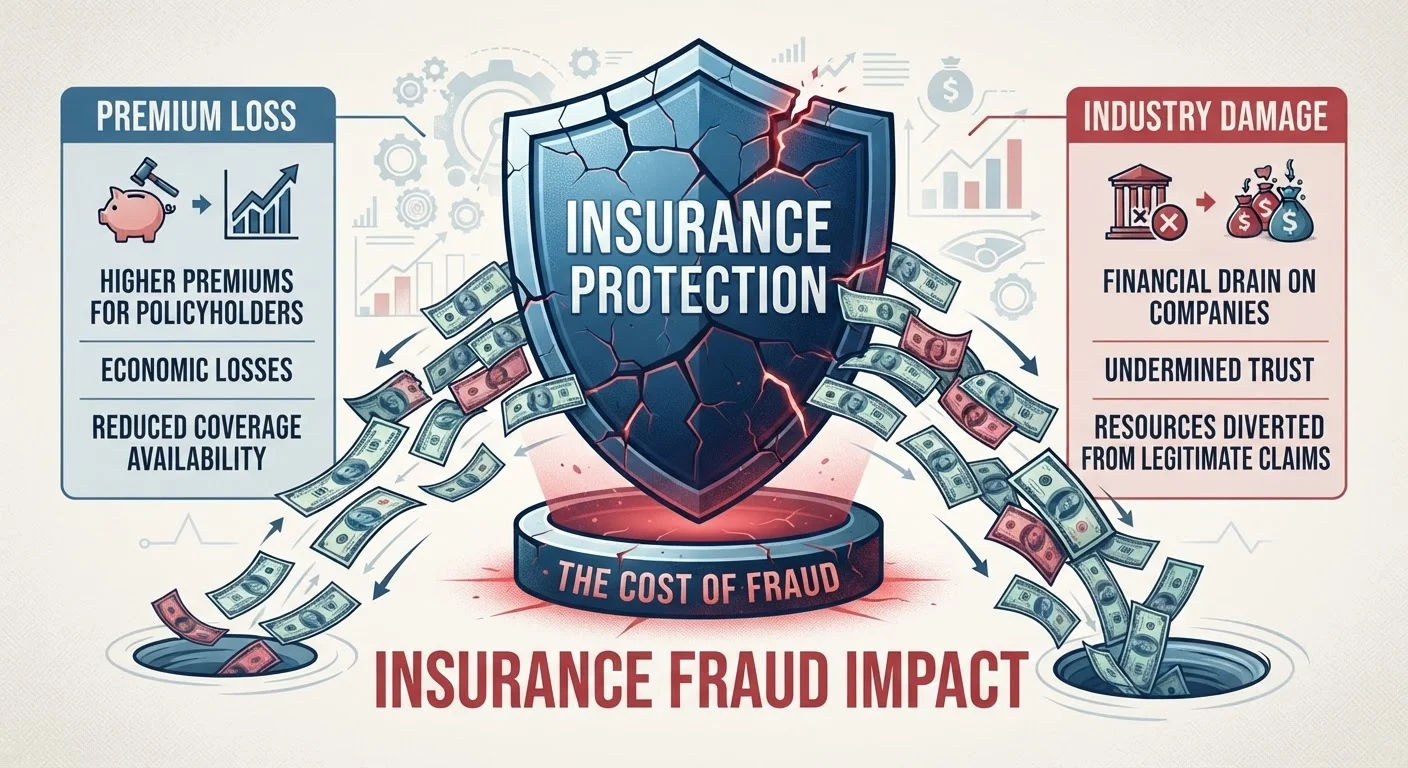
Insurers are, at their core, risk-pooling systems. Your premium - and everyone else's - is calculated to collectively cover expected claims, operating costs, and a margin of reserve. When fraudulent claims enter that pool, the math changes. The insurer pays out more than it should, and to remain solvent, it must recover those losses through future pricing.
The result is a premium increase distributed across all policyholders in a given risk category or region - including people who have never filed a single claim. For a deeper look at what your monthly payment is actually funding, see what you're actually paying for each month.
$308B
Estimated annual U.S. insurance fraud cost
The Coalition Against Insurance Fraud estimates total fraud losses across all insurance lines exceed $308 billion annually in the United States.
$400-$700
Extra premium cost per household per year
Industry sources estimate that fraud adds hundreds of dollars to the average American household's annual insurance costs across auto, home, and health policies.
~10%
Share of all claims estimated to involve fraud
Estimates from insurance industry research suggest roughly one in ten claims contains some element of exaggeration or misrepresentation.
Fraud's cost isn't abstract. Industry estimates consistently place total U.S. insurance fraud losses in the hundreds of billions of dollars annually. Those losses don't disappear - they're priced back into the system.
Who Commits Fraud - and Why It's Not Always Obvious
It's tempting to picture insurance fraud as a sophisticated criminal enterprise, but the majority of soft fraud is committed by ordinary policyholders who rationalize their behavior: "I've paid premiums for years and never claimed anything" or "The insurer can afford it." The reality is that the insurer redistributes those inflated payouts to all its customers.
Organized fraud rings - which may involve medical clinics, repair shops, or legal professionals filing coordinated false claims - represent a smaller but more damaging share of total losses. These networks specifically exploit high-volume claim lines like auto injury and workers' compensation.
Understanding these patterns helps you recognize when a contractor, clinic, or other third party may be pulling you into a scheme - even without your full awareness. Being an unwitting participant can still create legal exposure for you.
Watch for Third-Party Fraud Schemes
Be cautious if a contractor, clinic, or tow-truck operator pressures you to file a claim, offers to waive your deductible, or asks you to sign documents before you've reviewed them carefully. These are common warning signs of organized fraud schemes that use policyholders as unwitting participants. When in doubt, contact your insurer directly before signing anything.
What You Can Do as a Policyholder
Protecting yourself starts with honesty on your own applications and claims. Accurate disclosures aren't just a legal obligation - they're what keep your coverage valid when a real loss occurs. Review your policies for accuracy at renewal, particularly after life changes like moving, adding a driver, or buying a new vehicle. Our guide to coverage myths walks through the most frequent misunderstandings that lead to accidental gaps.
If you suspect fraud - by a third party, a contractor pushing you to file a questionable claim, or an unusually aggressive "witness" at an accident scene - report it. Every state has an insurance fraud reporting mechanism, either through the Department of Insurance or a dedicated fraud bureau. Reports are typically confidential and can be made anonymously.
Finally, review your own coverage types periodically. Adequate, accurate coverage at a fair price depends on a system where claims reflect real losses. Every honest participant in that system helps keep it functional for everyone.
This article is for general informational and educational purposes only and does not constitute legal, financial, or insurance advice. Coverage terms, fraud definitions, and reporting procedures vary by state and insurer. Consult a licensed insurance professional or your state's Department of Insurance for guidance specific to your situation.