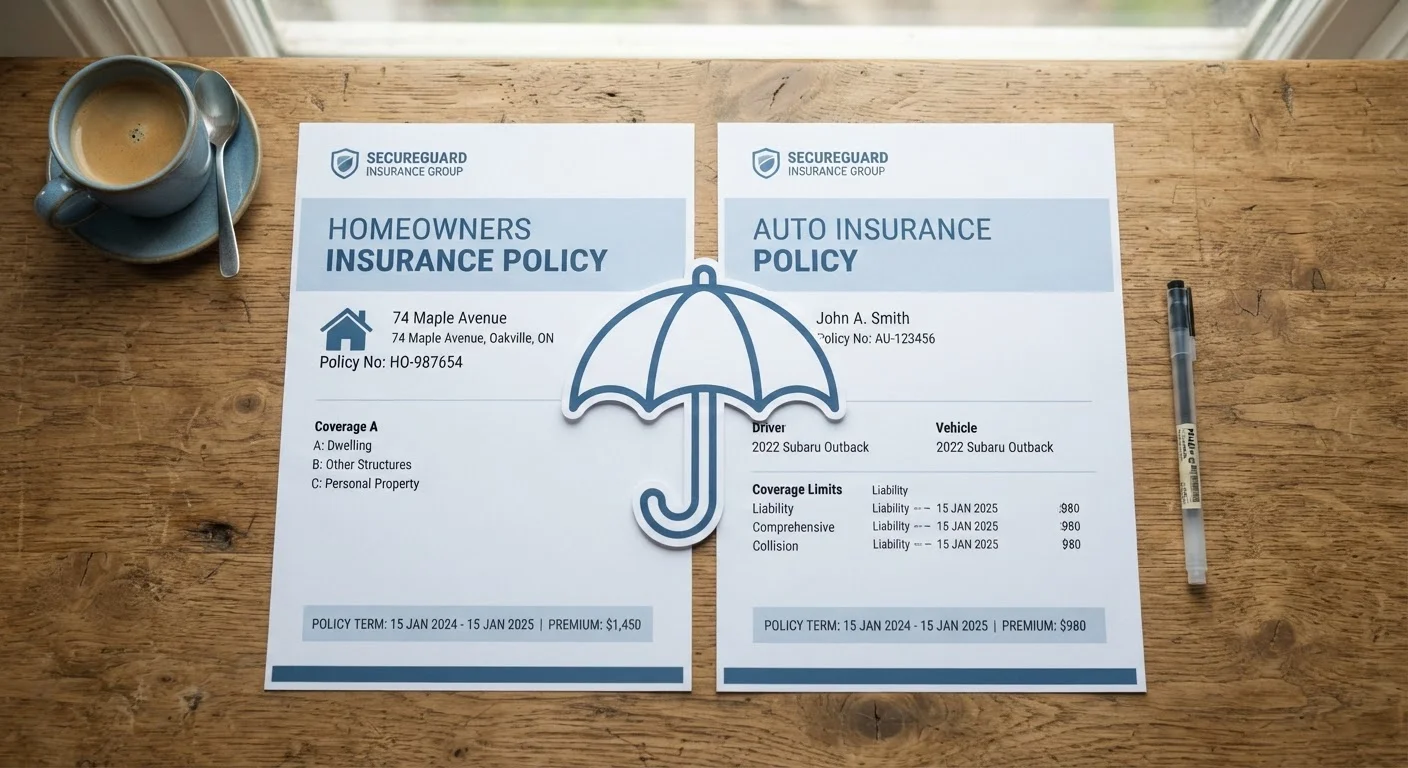
What Bundling Actually Means
Bundling refers to purchasing two or more insurance policies - most commonly homeowners and auto - from the same insurance carrier. Insurers often refer to this as a multi-policy discount or a package policy. Life insurance or renters insurance may also be added to the mix, depending on the carrier.
The appeal is straightforward: one insurer, one billing relationship, and the possibility of lower premiums. But understanding what you actually gain - and what you give up - requires looking past the marketing pitch. For a broader look at navigating coverage decisions, see the Choosing Coverage hub, which walks through how to evaluate plans for your specific needs.
The Advantages of Bundling
There are legitimate reasons millions of policyholders consolidate coverage with one carrier. Here are the most meaningful benefits:
Multi-policy discounts can reduce total premiums
Insurers commonly offer discounts ranging from roughly 5% to 25% when policyholders bundle home and auto coverage, though actual savings depend on the carrier, your risk profile, and your location.
Simplified billing and account management
Managing a single insurer means one login, one renewal cycle to track, and one customer service relationship - which reduces the administrative burden of keeping multiple policies current.
Potentially smoother claims involving multiple policies
When an incident touches more than one type of coverage, having both policies with the same company can simplify the claims process and reduce the back-and-forth between separate adjusters.
Loyalty benefits may accrue over time
Some carriers offer additional perks - such as diminishing deductibles or accident forgiveness - to long-term customers, which can add value beyond the initial bundling discount.
One point worth noting: when a claim involves both a vehicle and a home - say, a car damages a garage during a storm - having a single insurer can reduce the coordination friction that sometimes arises between two separate companies.
The Drawbacks You Should Weigh
Bundling is not always the financially sound choice, and several real downsides deserve honest consideration before you consolidate:
You may overpay if individual policies are uncompetitive
A bundle discount applied to an already-high base premium can still result in a higher total cost than purchasing separate policies from carriers that specialize in each coverage type.
Switching becomes more complicated and costly
If you become dissatisfied with your insurer's service or rates, replacing a bundle means renegotiating both policies simultaneously, which creates friction and potential coverage gaps during the transition.
Coverage quality may not be uniform across policy types
A carrier that excels at auto insurance may not offer the most comprehensive or competitively priced homeowners product - and bundling can obscure that imbalance.
Discount percentages can shrink at renewal
The introductory multi-policy discount is not always guaranteed to remain the same at each renewal, and premium increases can erode the initial savings over time.
Bundling Is Not the Same as Comprehensive Coverage
Combining policies under one roof does not automatically mean all your coverage needs are met. Each policy in a bundle still has its own limits, deductibles, and exclusions. For example, a bundled homeowners policy may still exclude flood damage, which requires a separate policy entirely. Always review individual policy terms - not just the bundle price - before deciding.
If you already carry multiple policies and are unsure whether your current bundle is still competitive, the guide to navigating overwhelming coverage choices offers practical strategies for re-evaluating without starting from scratch.
How to Evaluate Whether Bundling Makes Sense for You
The most reliable way to assess bundling is to gather apples-to-apples quotes. Request separate quotes for each policy from multiple carriers, then compare them against the bundled price from carriers who offer both. Look at the total combined premium, not just the discount percentage.
5%-25%
Typical multi-policy discount range
The Insurance Information Institute notes that bundling home and auto policies commonly yields discounts in this range, though actual figures vary by insurer and policyholder profile.
~66%
U.S. policyholders who bundle home and auto
Industry surveys have consistently found that a substantial majority of homeowners with auto coverage purchase both from the same carrier, citing convenience as the primary reason.
Also examine the coverage terms themselves. A discounted premium means little if the policy has a higher deductible, lower liability limits, or exclusions that a separate policy would not carry. Unfamiliar terms like deductibles, coverage limits, and exclusions are explained in the Policy Terms Explained hub.
It is also worth considering how your circumstances may change. If you move, sell a vehicle, or change your home ownership status, a bundled arrangement may need to be renegotiated - potentially disrupting both policies simultaneously.
This article is for general informational purposes only and does not constitute personalized insurance, financial, or legal advice. Coverage terms, discounts, and eligibility vary by insurer and state. Always read your policy documents carefully and consult a licensed insurance agent or adviser before making coverage decisions.