Why Plan Structure Matters Before You Compare Costs
When shopping for health insurance, it's tempting to focus immediately on premiums - the monthly cost of coverage. But the plan type you choose determines something equally important: how and where you can access care, and how much flexibility you have when you need it.
The four most common plan structures in the U.S. - HMO, PPO, EPO, and HDHP - each place different rules around provider networks, referrals, and cost-sharing. Understanding these structures first makes it easier to evaluate specific plans fairly. For a deeper look at how premiums, deductibles, and out-of-pocket maximums interact across all plan types, see our guide on how these three numbers work together.
| HMO | PPO | EPO | HDHP | |
|---|---|---|---|---|
| PCP Required | Yes | No | No | Varies by structure |
| Referrals Needed | Yes | No | No | Varies by structure |
| Out-of-Network Coverage | Emergency only | Yes, at higher cost | Emergency only | Depends on plan type |
| Typical Premium Level | Lower | Higher | Moderate | Lower |
| Deductible Level | Moderate | Moderate to high | Moderate | High (by definition) |
| HSA Eligible | Generally no | Generally no | Generally no | Yes |
| Best For | Cost-conscious, network-comfortable | Maximum flexibility seekers | No-referral, network-based care | Healthy, savings-oriented individuals |
HMO: Coordinated Care Within a Defined Network
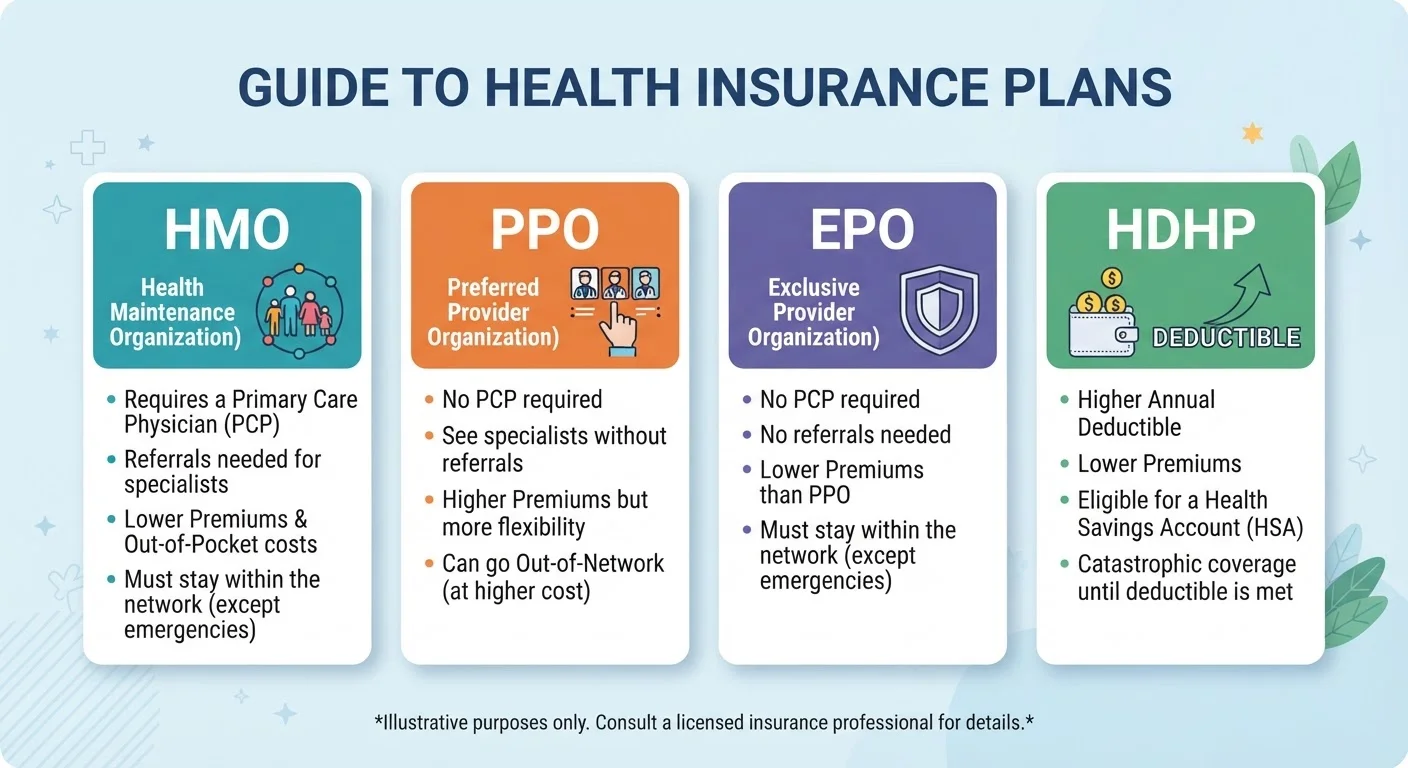
A Health Maintenance Organization (HMO) requires you to select a primary care physician (PCP) who acts as your central point of care. To see a specialist, you typically need a referral from your PCP. Care outside the HMO's network is generally not covered except in genuine emergencies.
This coordination model allows insurers to manage costs more tightly, which is why HMOs usually carry lower monthly premiums and predictable copays. The trade-off is reduced freedom: if a specialist you want isn't in-network, you may have to pay entirely out of pocket or switch providers.
Check the Provider Directory Before Enrolling
Before choosing any plan type, look up the insurer's provider directory to confirm your current doctors and preferred hospitals are in-network. Network composition varies widely between insurers and even between plan tiers from the same insurer. A plan's structure only benefits you if the providers you need are actually included.
HMOs tend to work well for people who live near a robust network of providers, have a consistent primary care relationship, and prioritize keeping monthly costs low.
PPO: Flexibility at a Premium
A Preferred Provider Organization (PPO) gives you the broadest access to care. You don't need a PCP or referrals, and you can see both in-network and out-of-network providers - though out-of-network visits come with higher cost-sharing.
This flexibility makes PPOs popular, but it comes at a price: premiums are generally higher than HMOs or EPOs, and the cost-sharing structure can be more complex. For a plain-language explanation of how deductibles, copays, and coinsurance interact under any plan type, see how these out-of-pocket costs shape real coverage.
PPOs are a strong fit for people who have established relationships with specific specialists, travel frequently, or simply want the option to seek out-of-network care without a referral barrier.
EPO: Network-Only Coverage Without the Referral Requirement
An Exclusive Provider Organization (EPO) sits between an HMO and a PPO. Like an HMO, it restricts coverage to an in-network provider list - going out of network (except in emergencies) means paying the full cost yourself. But like a PPO, EPOs typically do not require referrals to see specialists.
This makes EPOs a useful option for people who are comfortable staying within a defined network but don't want the administrative step of obtaining referrals for specialist visits. Premiums are often lower than PPOs but higher than many HMOs.
Out-of-Network Surprises Can Be Costly
With EPO and HMO plans, receiving care from an out-of-network provider (except in a documented emergency) can result in the full bill becoming your responsibility. Even in emergencies, balance billing rules vary by state and plan. Always confirm network status before scheduled procedures and ask whether any facility-based providers - such as anesthesiologists - are also in-network.
EPO coverage eligibility and network size can vary significantly by region. Before enrolling, verify that your preferred hospitals and specialists are included in the plan's network.
HDHP: Lower Premiums, Higher Deductibles, and HSA Eligibility
A High-Deductible Health Plan (HDHP) is defined by federal thresholds: as of the most recently published IRS guidance, the minimum annual deductible must meet a specified floor (check the IRS website for current figures, as these amounts are adjusted periodically). HDHPs typically have lower monthly premiums, but you pay more out of pocket before coverage kicks in for most services.
The significant benefit of an HDHP is eligibility to open a Health Savings Account (HSA) - a tax-advantaged account you can use for qualified medical expenses. Contributions reduce your taxable income, and funds roll over year to year. This pairing can be financially advantageous for generally healthy individuals who don't expect frequent care.
HDHPs can be structured as HMOs, PPOs, or EPOs - the "HDHP" label refers to the deductible and premium structure, not the network model. For a side-by-side breakdown of how all four plan types compare on key dimensions, see our detailed HMO, PPO, EPO, and HDHP comparison.
This article provides general information about health insurance plan types and is not personalized insurance or financial advice. Coverage details, network availability, costs, and eligibility vary by plan and provider. Read your plan's Summary of Benefits and Coverage carefully, and consult a licensed insurance professional for guidance specific to your situation.