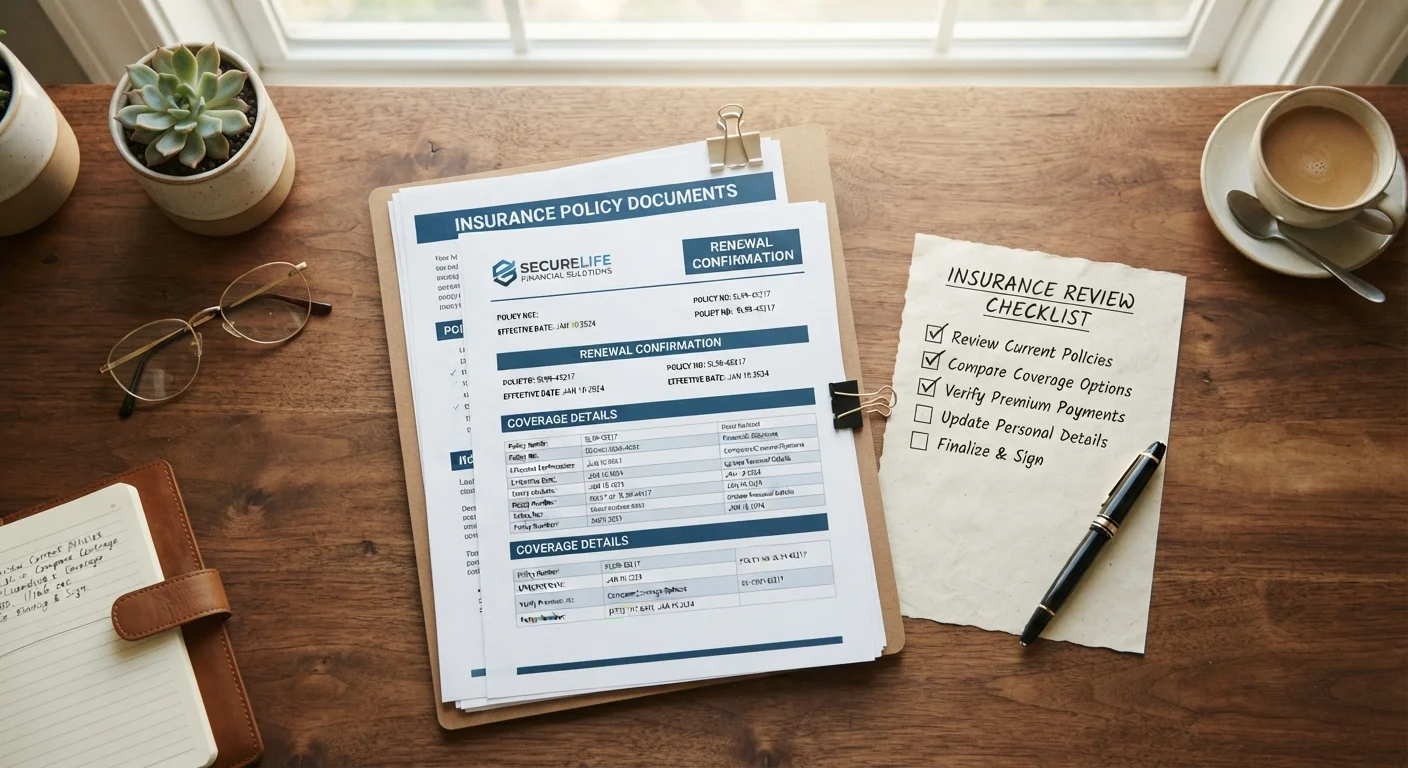
What Insurance Coverage Really Means
Most people know they need insurance, but far fewer understand what coverage actually provides when a loss occurs. At its core, insurance is a contractual agreement: you pay a premium, and in exchange, the insurer agrees to cover certain defined losses - not all losses. The contract defines precisely which events trigger a payout, which are excluded, and under what conditions.
This distinction matters enormously. A homeowner who assumes flood damage is covered by a standard homeowners policy may discover after a storm that it is not. Understanding what coverage actually means - including what it excludes - is the foundation of every smart insurance decision. For a thorough breakdown, see what insurance coverage really includes.
40%
Underinsured homeowners in the U.S.
Industry research from CoreLogic has consistently estimated that a significant share of U.S. homes are insured for less than their full rebuild cost.
1 in 3
Americans with no life insurance
LIMRA's annual Insurance Barometer study has found that approximately one-third of U.S. adults carry no life insurance coverage.
Coverage is not one-size-fits-all. Policies differ by insurer, state regulations, and the options you select. Reading the policy itself - not just a summary brochure - is the only reliable way to know what protection you hold.
This article is for general informational purposes only and does not constitute insurance, financial, or legal advice. Coverage terms, exclusions, and regulations vary by provider and state. Always read your policy documents carefully and consult a licensed insurance professional for guidance specific to your situation.
Assessing Your Personal Risk Profile
Before comparing plans or talking to an agent, the most empowering step you can take is a candid inventory of your own risk exposure. This means asking: What assets do I have that need protecting? What liabilities could I face? What financial loss could I absorb on my own versus what would be devastating?
A renter in their twenties with no dependents has a very different risk profile than a homeowner in their forties with a family and a mortgage. Life events - marriage, a new child, a home purchase, a job change, retirement - each shift the risks you carry. Mapping that profile before you shop prevents the common mistake of either over-buying coverage you don't need or leaving critical gaps exposed.
List your assets and their approximate values before your first conversation with an agent. Agents can only recommend what you disclose - gaps in your inventory become gaps in your coverage.
Agents work from the information you provide. An incomplete picture of your assets and liabilities leads to incomplete recommendations, leaving you exposed without realizing it.
Treat your annual insurance review the same way you treat a yearly physical - schedule it, don't skip it, and document what changed.
Life circumstances shift gradually, and coverage rarely updates automatically to match. A scheduled review catches drift before a claim reveals it.
To build your risk map, consider four dimensions: your assets (home, vehicle, savings), your income and dependents, your health and life stage, and any legal or professional liabilities. The guide to mapping your insurance needs provides a structured approach to working through each dimension systematically.
Start With a Simple Risk Worksheet
Before contacting any insurer or agent, write down your key assets, monthly income, number of dependents, and any major liabilities. This one-page snapshot becomes the anchor for every coverage decision you make. Revisit and update it whenever a significant life event occurs.
Decoding Policy Documents and Key Terms
Insurance policies are legal contracts written in precise, often dense language. Fluency in that language is not optional - it is the difference between knowing your coverage and assuming it. Several terms appear across nearly every policy type and carry real financial weight.
- Premium: The amount you pay - monthly or annually - to keep the policy active.
- Deductible: The amount you pay out of pocket before the insurer's coverage kicks in.
- Coverage limit: The maximum the insurer will pay for a covered loss.
- Exclusion: A specific condition, event, or loss the policy does not cover.
- Coinsurance: A cost-sharing arrangement where you pay a percentage of a covered loss after the deductible.
Beyond these basics, terms like subrogation, loss payee, and actual cash value versus replacement cost value can significantly affect a claim outcome. The policy terms explained hub is a reliable reference for decoding this language. A complete quick-reference glossary is also available at key insurance terms every consumer should know.
Never Assume Coverage - Read the Exclusions
One of the most common and costly mistakes consumers make is assuming that a policy covers something without checking. Exclusions are listed in a dedicated section of every policy document. Reading that section before a loss - not after - is the only way to know where your protection ends. If an exclusion concerns you, ask your agent explicitly whether a rider or endorsement can address it.
Choosing the Right Coverage Types
Insurance is not a single product - it is a collection of coverage categories, each addressing a different category of risk. The most common types that consumers encounter include:
- Auto insurance: Covers liability from accidents you cause, damage to your vehicle, and protection from uninsured drivers. Auto insurance coverage from the ground up explains each layer clearly.
- Homeowners or renters insurance: Protects your dwelling or belongings and covers personal liability.
- Health insurance: Covers medical expenses through a range of plan structures (HMO, PPO, HDHP).
- Life insurance: Provides a death benefit to dependents and comes in term or permanent forms.
- Disability insurance: Replaces a portion of income if illness or injury prevents you from working.
The coverage types hub offers a broader overview of each category. The goal when selecting coverage is alignment between your risk profile and your protection - not simply purchasing the minimum required by law or a lender.
“Insurance is not about the premium you pay - it is about the claim you collect. The only thing that matters in the end is whether your coverage actually responds when you need it to.”
— J. Robert Hunter, Former Federal Insurance Administrator and Director of Insurance, Consumer Federation of America
Reviewing and Updating Coverage Over Time
Choosing coverage is not a one-time event. Life changes, and coverage that fit your situation three years ago may leave you underinsured - or paying for protection you no longer need - today. An annual review is a practical baseline; certain life events should trigger an immediate reassessment.
Events that warrant a coverage review include: buying or selling a home, getting married or divorced, having or adopting a child, starting or leaving a job with group benefits, acquiring significant assets, or retiring. Each of these shifts your risk profile and may affect the adequacy of your existing policies.
Update Coverage After Every Major Life Event
Failing to update your policies after a life change - a new home, a new child, a significant income shift - can leave you dangerously underinsured when you need coverage most. Insurers are not obligated to cover assets or circumstances that were not disclosed or included in your policy at the time of a loss. Make coverage review a standing item on your financial to-do list after any major change.
During a review, check your coverage limits against current replacement costs - not what you paid years ago. Verify that your beneficiaries are current. Confirm that any new assets (a second vehicle, a home renovation) are properly included. And read any notices your insurer has sent; policies can change at renewal.
Ultimately, the most informed insurance consumers are those who treat coverage as an ongoing, evolving framework - not a checkbox completed once and forgotten. Understanding the full arc, from assessing risk to reading the fine print to revisiting your needs over time, is what genuine financial preparedness looks like.