The Blood Sugar Connection
Every time you eat, your body breaks down carbohydrates into glucose, which enters the bloodstream and fuels your cells. Your pancreas releases insulin to manage that glucose. When a meal sends blood sugar rising sharply - a large soda, a white-flour bagel, a pastry - insulin responds forcefully, and blood sugar can drop just as fast as it rose. That drop is what most people recognize as an energy crash: sudden fatigue, difficulty focusing, irritability, or a craving for more sugar.
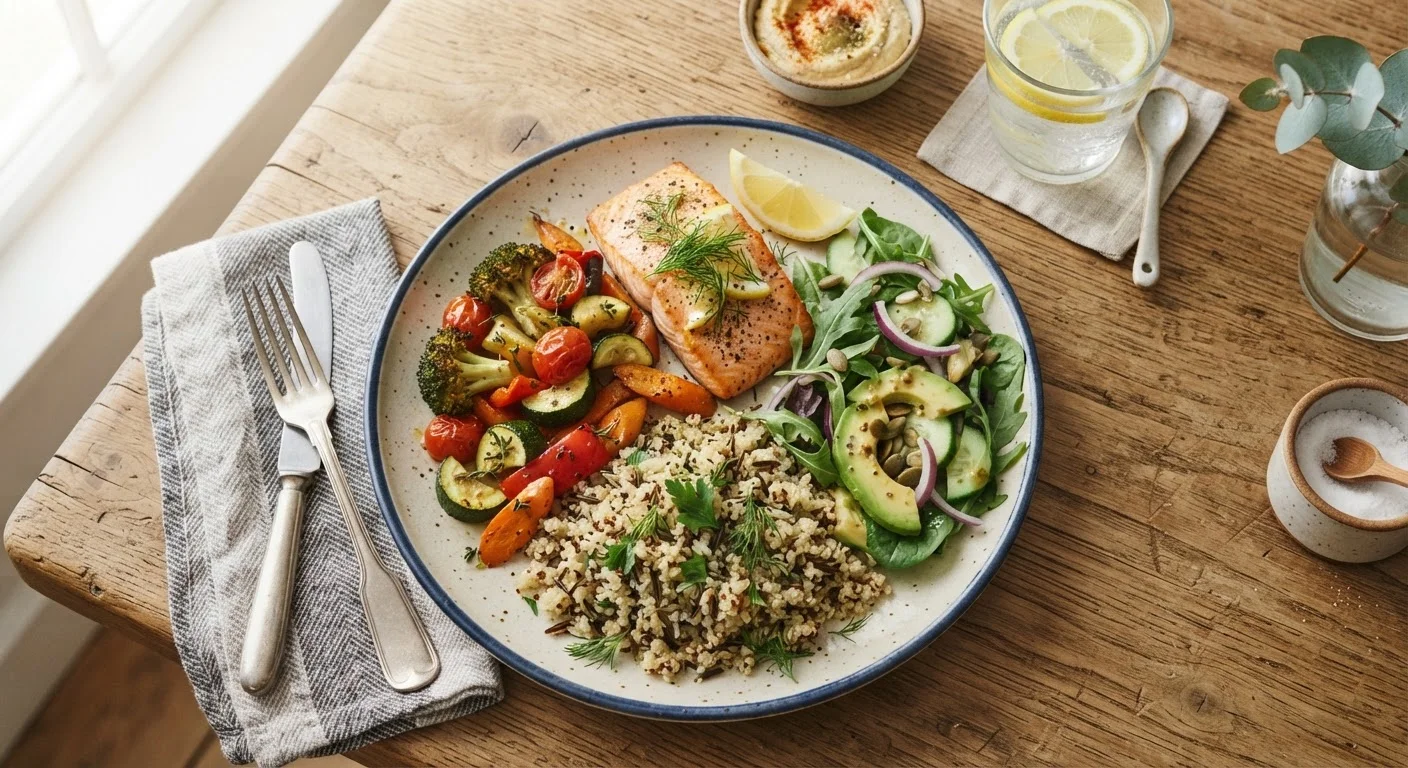
Meals that include fiber, protein, and healthy fats digest more slowly. Glucose enters the bloodstream gradually, insulin response is more measured, and energy tends to hold steady for longer. This is why a breakfast of eggs and vegetables tends to sustain alertness better than a bowl of sweetened cereal - even if both meals contain a similar number of calories.
~90%
Adults who experience afternoon energy dips
Survey data consistently show the majority of working adults report regular mid-afternoon fatigue, with diet and sleep being leading contributing factors.
2-3x
Greater glucose response from refined vs. whole grains
Studies comparing glycemic responses show refined grain products can produce postprandial glucose spikes two to three times higher than equivalent servings of whole grain alternatives.
How Meal Timing Shapes Your Day
It isn't just what you eat - it's when. The body follows a circadian rhythm that influences how it processes food at different times of day. Research suggests that glucose tolerance is generally higher in the morning than in the evening, meaning the same meal may produce a larger blood sugar swing eaten at dinner than at breakfast.
Going many hours without eating can cause blood glucose to fall low enough to impair concentration - a common cause of the mid-morning fog that sets in if breakfast was skipped or very light. Conversely, eating a very large meal at once overwhelms the digestive system and can trigger a pronounced postprandial (after-eating) slump. For people exploring structured approaches to meal timing, it's worth reading an honest overview - our article on intermittent fasting covers the evidence and important caveats in detail.
A Simple Meal Audit to Try
For one week, jot down what you ate and how your energy felt two hours later. You don't need precise tracking - just a rough note: stable, dipped, or crashed. Patterns often become obvious quickly, and that awareness is a practical starting point for adjustments. Share your observations with a registered dietitian if you want personalized guidance.
Food Composition: The Macronutrient Effect
The three macronutrients - carbohydrates, protein, and fat - affect energy in distinct ways:
- Carbohydrates are the body's preferred fuel source, but the type matters. Whole grains, legumes, and vegetables release glucose gradually. Refined carbohydrates do the opposite.
- Protein has minimal effect on blood sugar and increases satiety hormones, helping you feel full and mentally alert for longer.
- Fat slows gastric emptying, blunting post-meal glucose spikes and extending feelings of fullness.
Practically, this means a midday meal built around refined carbohydrates with little protein or fiber is a reliable recipe for a 2 p.m. slump. Swapping in more vegetables, a protein source, and whole grains shifts that trajectory noticeably for most people.
It's worth approaching nutrition information with some critical thinking. The science in this area continues to evolve - our guide on why nutrition advice keeps changing explains how research develops and why headlines can mislead.
Practical Habits That Support Steady Energy
You don't need a rigid meal plan to support better energy. A few consistent habits make a meaningful difference for most people:
- Include a source of protein at each meal to slow digestion and stabilize blood sugar.
- Prioritize fiber-rich vegetables, legumes, and whole grains over refined grain products.
- Avoid going more than four to five hours without eating if you notice cognitive dips between meals.
- Limit large, high-carbohydrate meals immediately before demanding mental tasks.
- Stay hydrated - even mild dehydration contributes to fatigue and reduced concentration.
Movement also plays a role. Brief physical activity after meals can help blunt glucose spikes. Our piece on exercise snacks explores how short bouts of movement throughout the day support both energy and overall health.
This article is for general informational and educational purposes only. It is not medical or dietary advice. Please consult a qualified healthcare professional or registered dietitian before making significant changes to your diet, especially if you have a health condition.