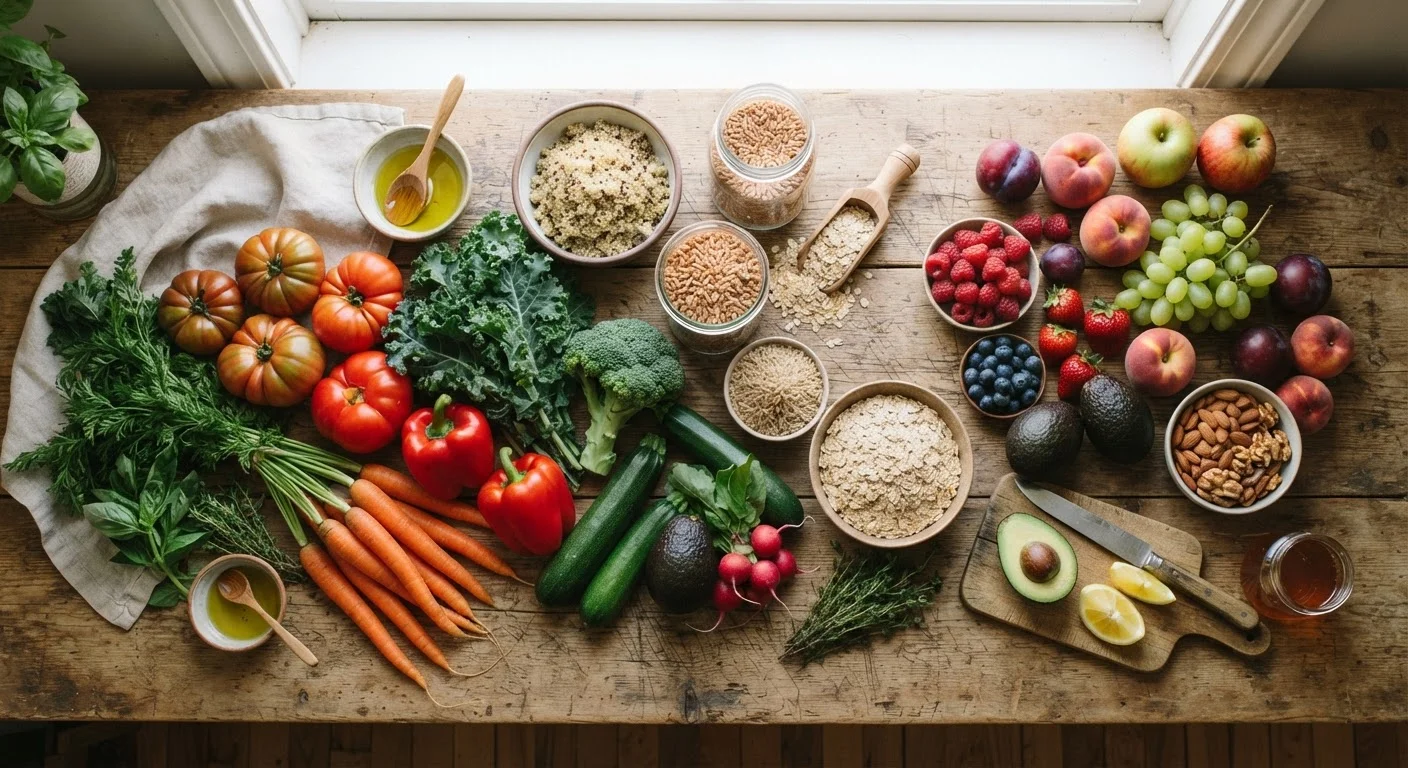
What Does 'Clean Eating' Actually Mean?
'Clean eating' is one of the most searched nutrition terms online, yet no single authoritative body - not the FDA, not the Academy of Nutrition and Dietetics - has formally defined it. In practice, it functions as an umbrella term covering everything from eating more whole foods to eliminating entire food groups. Because the phrase means something different depending on who is using it, myths have multiplied in the space where a clear definition should be.
For many people, clean eating simply means favoring vegetables, fruits, whole grains, lean proteins, and legumes over heavily processed alternatives. That general direction is well-supported by nutritional science. The problems arise when clean eating morphs into an inflexible system of moral rules about food. For a broader look at how food folklore spreads, see our examination of persistent nutrition myths.
Myth
'Processed' automatically means unhealthy, and all processing is the same.
Fact
Food processing exists on a spectrum. Minimally processed foods like frozen vegetables, canned legumes, and pasteurized milk retain substantial nutritional value.
The word 'processed' covers an enormous range - from washing and freezing spinach to manufacturing ultra-processed snack products with dozens of additives. Lumping them together ignores meaningful nutritional differences. Frozen peas, for example, are typically flash-frozen at peak ripeness and nutritionally comparable to fresh. Canned beans provide protein, fiber, and iron. The relevant question isn't whether a food was processed, but how and to what degree. Nutrition researchers often use the NOVA classification to distinguish minimally processed foods from ultra-processed products - a nuance that blanket 'no processed food' rules erase entirely.
Myth
'Clean eating' is a scientifically recognized dietary framework backed by clinical evidence.
Fact
No major health or nutrition authority has formally defined or endorsed 'clean eating' as a clinical dietary pattern.
Well-researched dietary patterns - such as the Mediterranean diet, the DASH diet, or dietary guidelines issued by the U.S. Department of Agriculture - have defined criteria and substantial clinical research behind them. 'Clean eating' does not. Its criteria shift depending on the source: some versions prohibit gluten, others ban dairy, others focus solely on organic sourcing. Because there is no standard definition, studies cannot consistently test it, and consumers cannot reliably follow it. This ambiguity is a feature of trend-driven nutrition culture, not evidence-based guidance. That context is worth keeping in mind when evaluating conflicting nutrition headlines.
Myth
Eating 'clean' means you don't need to pay attention to portion sizes or overall calories.
Fact
Even nutrient-dense whole foods contribute to energy intake, and total dietary balance still matters for health outcomes.
Nuts, avocados, whole-grain bread, and natural nut butters are genuinely nutritious foods, but consuming them in large quantities affects overall energy balance. This isn't a reason to obsessively count calories - for most people, that approach is neither practical nor psychologically helpful. It is, however, a reason to be skeptical of claims that food quality alone renders quantity irrelevant. Long-term health is shaped by a combination of food quality, overall eating patterns, physical activity, sleep, and stress - not any single variable in isolation. The same applies to fitness habits; widespread fitness myths follow a similar pattern of oversimplification.
Myth
Organic food is always more nutritious than conventionally grown food.
Fact
Systematic reviews have found minimal consistent differences in nutrient content between organic and conventional produce.
Choosing organic produce for reasons related to pesticide exposure preferences or environmental concerns is a personal and legitimate choice. However, the nutritional case for organic superiority is not well established. A frequently cited Stanford University analysis of dozens of comparative studies found little strong evidence that organic foods are significantly more nutritious than their conventional counterparts. Eating more fruits and vegetables - organic or conventional - is the dietary shift with the clearest, most consistent evidence behind it. Prioritizing produce consumption overall tends to matter more than the farming method.
Myth
Following a clean eating plan is always a positive, healthy behavior.
Fact
For some individuals, rigid food rules associated with clean eating can contribute to anxiety, social isolation, or disordered eating patterns.
Health professionals have documented a condition informally termed orthorexia nervosa - an unhealthy obsession with eating 'correctly' or 'purely' - that can result in nutritional deficiencies, social withdrawal, and significant distress. While not all people who eat mindfully are at risk, the moralization of food - treating eating as a test of character rather than a source of nourishment - can be genuinely harmful for vulnerable individuals. If concern about food purity is affecting daily life, relationships, or mental wellbeing, speaking with a qualified healthcare provider is strongly advised. This article is for general informational purposes only and is not a substitute for professional medical advice.
Why These Misconceptions Matter
Food myths aren't harmless. When people internalize rigid 'clean versus dirty' thinking, two patterns can emerge: they either feel guilt and shame after eating ordinary foods, or they swing toward unnecessarily expensive, restrictive diets that aren't more nutritious than moderate alternatives.
When 'Eating Clean' Becomes a Source of Stress
If following specific food rules creates significant anxiety, guilt after ordinary meals, or avoidance of social situations involving food, these are signs worth discussing with a healthcare professional. Healthy eating patterns should support overall wellbeing, not undermine it. This article provides general educational information - it is not medical or nutritional advice tailored to your individual circumstances.
Research published in nutrition and psychology journals suggests that highly moralized eating frameworks are associated, in some individuals, with disordered eating behaviors. This doesn't mean mindful food choices are harmful - far from it. It means the framing matters enormously. Eating a varied, largely whole-food diet without attaching moral worth to specific items is well aligned with mainstream dietary guidance.
If you find that nutrition headlines themselves feel confusing or contradictory, that's a documented phenomenon. Our article on why nutrition advice seems to keep changing explains how research cycles and media coverage interact to create that impression.
57%
of U.S. calories from ultra-processed foods
A study published in BMJ Open estimated that ultra-processed foods account for roughly 57% of total energy intake in the average American diet, underscoring why food quality conversations matter.
1 in 3
Adults who misidentify 'natural' as nutritionally superior
Consumer research consistently finds that front-of-package terms like 'natural' and 'clean' significantly influence purchase decisions, even when they carry no regulated nutritional meaning.
For most people, the goal is a sustainable, enjoyable eating pattern - not dietary perfection. If you have specific health conditions, food allergies, or concerns about your diet, a registered dietitian or your primary care provider is the best resource for personalized guidance. General articles like this one are educational in nature and are not a substitute for professional medical or nutritional advice.