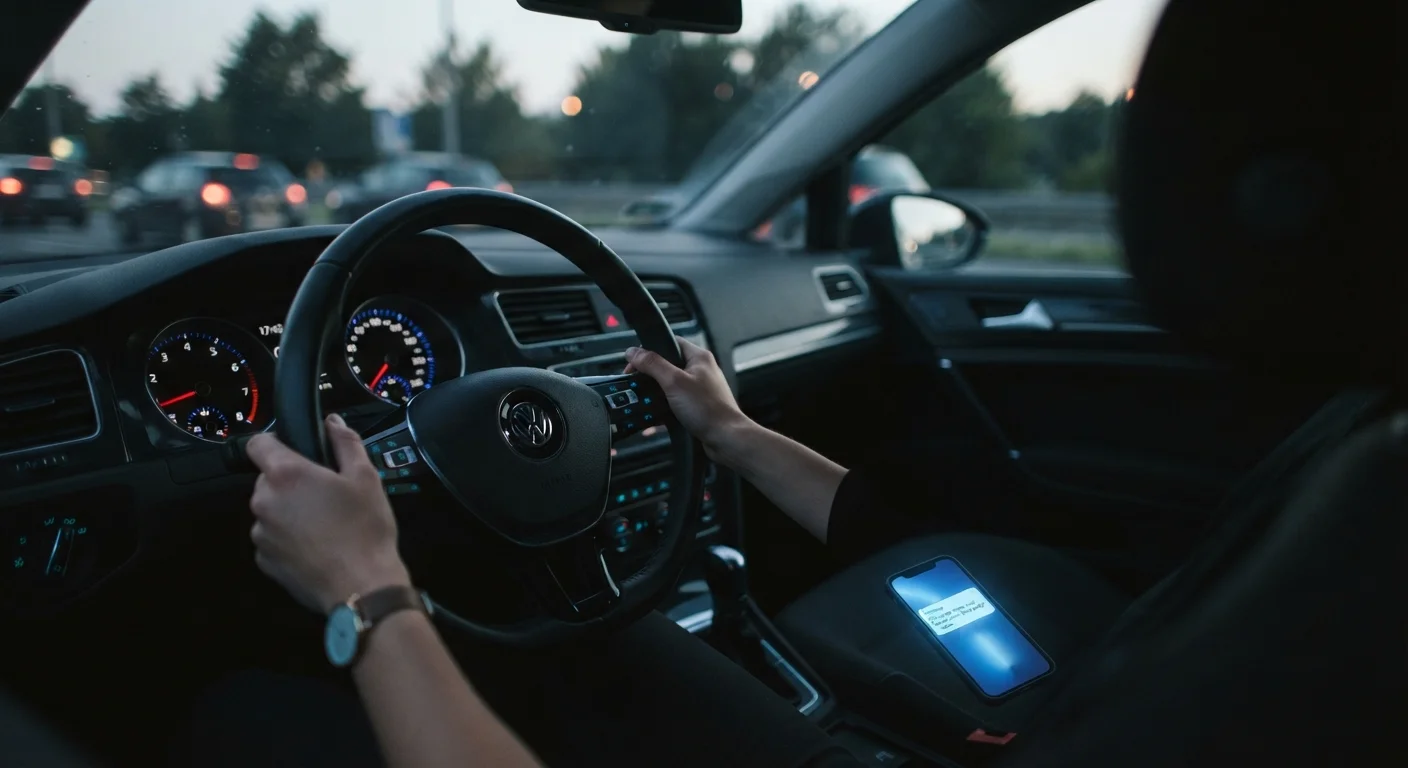
Why Your Brain Wasn't Built to Multitask Behind the Wheel
The human brain processes driving and conversation using overlapping neural resources. When those resources are split, neither task receives full attention - a phenomenon researchers call inattention blindness. Drivers looking at their phones can fail to register red lights, pedestrians, or vehicles merging into their lane, even when those hazards are in plain view.
The numbers are stark. The National Highway Traffic Safety Administration (NHTSA) consistently identifies distraction as a factor in thousands of fatal crashes each year in the United States. At 55 mph, a five-second glance at a phone means traveling roughly 100 yards without meaningful awareness of the road ahead.
Distracted driving shares important similarities with another underappreciated danger - driver fatigue. Both conditions degrade judgment and slow reaction time without the driver fully recognizing the impairment in real time.
~3,300
Distraction-related traffic fatalities per year (U.S.)
According to NHTSA data, thousands of lives are lost annually in crashes where driver distraction is identified as a contributing factor.
27 sec
Cognitive distraction lingering after voice-task use
AAA Foundation for Traffic Safety research found mental distraction can persist for up to 27 seconds after completing a voice-activated task.
~100 yds
Distance traveled in 5 seconds at 55 mph
The length of a football field covered effectively blind when a driver looks at their phone for just five seconds at highway speed.
The Three Types of Distraction - and Why Phones Hit All Three
Safety researchers classify driving distractions into three categories:
- Visual distraction: Eyes leave the road - reading a text, glancing at a map, or watching a notification pop up.
- Manual distraction: Hands leave the wheel - typing a message, adjusting in-car controls, or reaching for an object.
- Cognitive distraction: The mind disengages from driving - following a conversation, planning a response, or processing an emotionally charged message.
Sending or reading a text message engages all three simultaneously, which is why it stands out among the most dangerous behaviors researchers have studied. But smartphones aren't alone. Modern infotainment systems - with their touchscreens, voice commands, and app integrations - can also demand prolonged visual and manual attention at the worst possible moments.
Set Your Phone to Driving Mode Before You Start
Both iOS and Android offer automatic 'Do Not Disturb while driving' settings that suppress notifications and can send auto-replies to contacts. Activating this feature takes under a minute and removes a major source of temptation before it arises. Making it a pre-drive ritual - like buckling your seatbelt - helps it become automatic.
Beyond the Phone: Other Common Sources of Driver Distraction
Focusing exclusively on smartphones risks overlooking a broader landscape of in-vehicle hazards. Passengers - particularly children - are a well-documented source of distraction, drawing a driver's eyes and attention away from traffic. Eating and drinking while driving occupy hands and divide focus. Adjusting the radio, climate controls, or a GPS device mid-trip creates brief but meaningful windows of reduced awareness.
Daydreaming, which researchers sometimes call mind wandering, may be the most common cognitive distraction of all. A driver's eyes can be pointed straight ahead while their thoughts are somewhere else entirely. This is one reason that certain driving habits quietly elevate crash risk without ever involving a device.
“Distracted driving is not just a teen problem or a phone problem. It is a human attention problem - and understanding that is the first step toward changing behavior behind the wheel.”
— AAA Foundation for Traffic Safety, U.S. nonprofit dedicated to traffic safety research and education
Practical Strategies to Reduce Distraction
Behavioral changes are the most effective countermeasure, and several require nothing more than intention:
- Put the phone out of reach. Placing a device in a bag, glove box, or back seat removes the visual and physical trigger that prompts checking.
- Enable Do Not Disturb while driving. Most smartphones have a driving mode that silences notifications automatically. Using it consistently builds a protective habit.
- Pre-set your navigation and music. Adjusting routes or playlists before moving eliminates common manual distractions mid-trip.
- Pull over for urgent calls or texts. No message is worth the consequence of a crash. Finding a safe stopping point takes seconds.
- Limit passenger conversation during complex driving situations - merging onto highways, navigating unfamiliar roads, or driving in poor weather all demand higher cognitive load.
Parents of teen drivers carry extra responsibility. Beyond modeling good behavior, setting clear phone-use rules and discussing the science of attention can make the risks concrete rather than abstract. Resources on managing smartphone use for younger users can supplement those conversations at home.
This article is for general informational purposes only and does not constitute legal or safety advice. Driving laws and regulations vary by state - consult your state's motor vehicle authority for rules specific to your location.