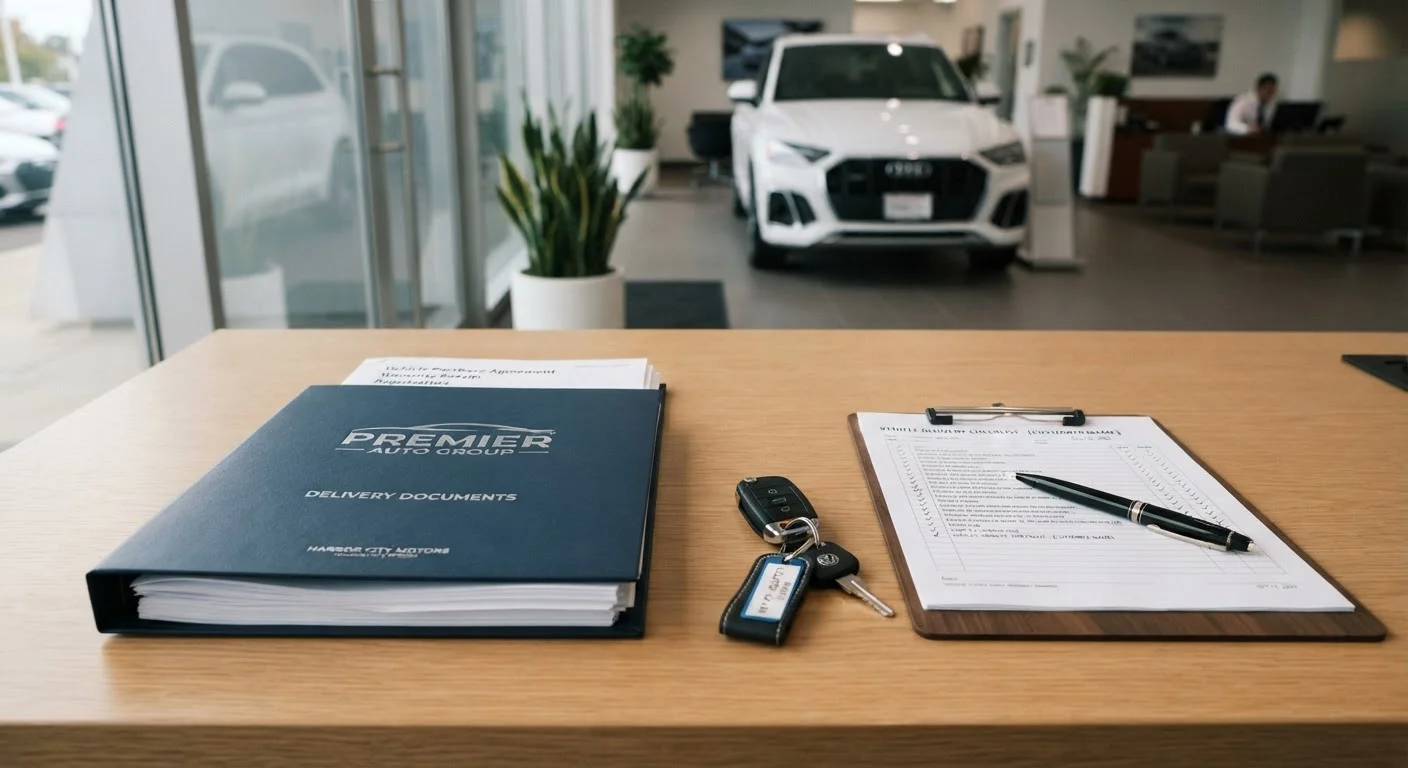
Why Preparation Is Your Best Negotiating Tool
Walking into a dealership without the right paperwork puts you on the back foot before the conversation even starts. Delays caused by missing documents aren't just inconvenient - they can extend the process for days and, in some cases, give the deal time to unravel. Knowing exactly what to bring lets you focus on the transaction itself rather than scrambling to fill gaps.
This checklist applies whether you're buying new or used, financing through the dealer, or arranging your own loan. For a broader view of how a car purchase unfolds from start to finish, see what happens from lot to keys.
Personal Identification & Insurance
Financing & Payment Documents
Trade-In Documentation
Research & Deal Documentation
What to Know Before You Sit Down at the Finance Desk
The finance and insurance (F&I) office is where deals most often slow down or get complicated. Dealers may present add-ons, extended service contracts, and financing packages in quick succession. Arriving with your own financing pre-arranged - and your documentation already sorted - keeps you in control of that room.
Don't Sign Until You Understand Every Line Item
Dealership contracts can include products and fees that weren't part of the original negotiation - paint protection, gap insurance, or service contracts added at the F&I stage. Review every line of the buyer's order before signing. Ask for an itemized breakdown and take the time you need; a reputable dealer will allow it.
If you're trading in a vehicle that still has a loan balance, contact your lender before your appointment to get a current payoff quote. Payoff amounts change daily, and having an accurate figure prevents confusion at closing. You should also review any written price quotes you received online or by phone - dealers are generally willing to honor documented offers, but you need the paperwork to back it up. For the questions you'll want ready once you're in that chair, see key questions to ask before you sign.
Bank or Credit Union Pre-Approval
Secures a financing baseline before you visit, giving you a rate to compare against whatever the dealer's finance office offers.
Vehicle History Report Service
Allows you to independently verify a used vehicle's ownership history, accident records, and title status using the VIN.
Independent Market Valuation Tool
Provides an objective estimate of a vehicle's current market value to inform both your purchase negotiation and trade-in expectations.
State DMV Requirements Reference
Confirms what documentation your specific state requires for vehicle registration and title transfer at time of purchase.
If You're Buying a Used Vehicle, Add These Steps
Used vehicle transactions introduce a few additional documentation considerations. You'll want the vehicle identification number (VIN) in hand so you can pull a vehicle history report independently - don't rely solely on the dealer's copy. Confirm that the seller's name on the title matches the person or entity you're buying from, and check whether the title is clean or marked as salvage, rebuilt, or flood-damaged.
Before committing, run through a mechanical and cosmetic review using a structured approach. Our used car pre-purchase checklist covers what to look for in person. If a pre-purchase inspection by an independent mechanic isn't already on your list, add it - dealerships should generally accommodate this request for third-party lot vehicles.
Title Issues Can Void a Purchase
If the vehicle's title is branded as salvage, rebuilt, or flood-damaged, this significantly affects resale value and insurability - and the designation must be disclosed in most states. Always verify title status through an independent vehicle history report before completing a used vehicle purchase. A clean bill of sale does not override a branded title.
This article provides general educational information about preparing for a dealership visit. It is not legal or financial advice. Financing terms, tax obligations, and documentation requirements vary by state and individual circumstance. Consult a licensed professional for guidance specific to your situation.