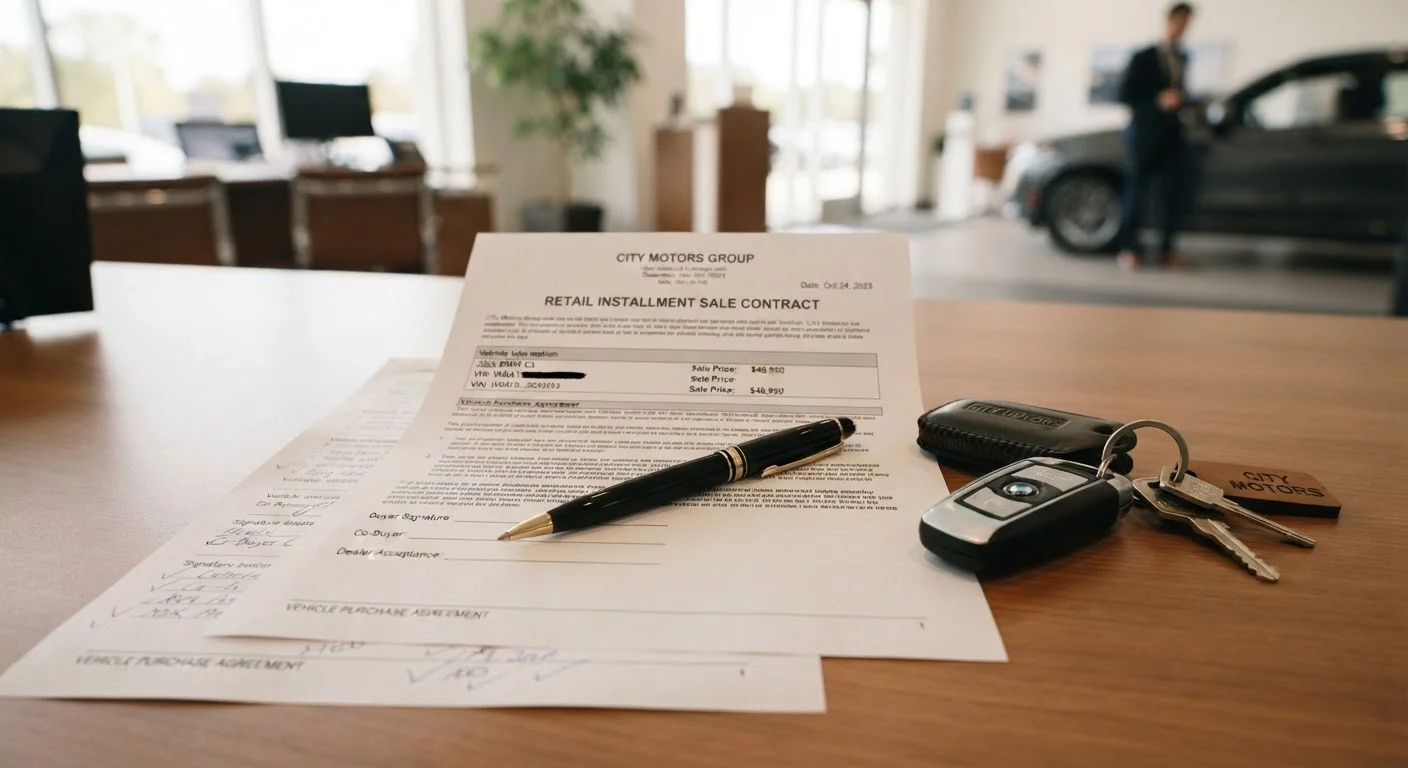
Why the 'Out-the-Door' Price Is Always Higher Than the Sticker
The advertised price on a vehicle - the Manufacturer's Suggested Retail Price (MSRP) for new cars, or the asking price for used - is just a starting point. By the time you sign, several mandatory government charges and dealership-assessed fees are added on top. For many buyers, these additions push the final figure 8-12% above the sticker, sometimes more depending on the state.
Knowing what each charge is before you sit down at the finance desk helps you confirm you're being billed accurately - and recognize any items that may be optional or negotiable. This article is a plain-language reference to the most common charges. For a broader look at ongoing costs, see our guide on the true cost of owning a car beyond the sticker price.
| Typical tax-and-fee addition above sticker | 8-12% (General industry estimate; varies by state and transaction) |
| States with no general vehicle sales tax | Alaska, Delaware, Montana, New Hampshire, Oregon (State tax law; verify current rules with your state DMV) |
| Documentation fee range | $50-$800+ (Varies by state; some states cap the maximum allowable amount) |
| Title fee typical range | $15-$100 (State-set; confirm with your state DMV) |
| Destination charge: who sets it | The manufacturer (Listed on the Monroney (window) sticker; same at every dealer) |
Government-Mandated Charges: Non-Negotiable
These fees are set by state, county, or local governments. Dealers collect them on the government's behalf and remit them directly. You cannot negotiate or waive them.
Sales Tax
Most states levy a sales tax on vehicle purchases, calculated as a percentage of the sale price (or sometimes the trade-in-adjusted price, depending on state law). Rates vary significantly - some states have no vehicle sales tax, while others exceed 10% when local taxes are layered in. The taxable base can also differ: some states tax the full purchase price, others reduce it by the value of any trade-in.
State Registration Fee
Every vehicle must be registered with the state DMV before it can be legally operated. Registration fees vary by state and are often tied to factors like the vehicle's weight, age, or value. Some states charge a flat fee; others use a sliding scale. How vehicle registration and title transfers work offers a detailed breakdown of this process.
Title Fee
A title is the legal document proving ownership. Transferring or issuing a title carries a state-assessed fee, typically ranging from under $20 to around $100, depending on the state.
License Plate Fee
New plates or a plate transfer from a previous vehicle both carry a fee. Some states include this in the registration fee; others bill it separately.
MSRP
Manufacturer's Suggested Retail Price - the price the automaker recommends a dealer charge for a new vehicle. It is a starting point for negotiation, not a fixed selling price.
Out-the-Door Price
The total amount a buyer actually pays, including vehicle price, taxes, and all applicable fees. This is the most accurate number for budgeting a purchase.
Documentation Fee
A dealership charge covering the administrative cost of processing title, registration, and loan paperwork. The amount varies widely by state and dealer.
Destination Charge
A fee set by the manufacturer to cover the cost of shipping a new vehicle from the factory to the dealership. It appears on the window sticker and is typically the same at every dealer selling that model.
Title Fee
A state-assessed fee for issuing or transferring the legal document that establishes vehicle ownership. It is collected by the dealer and remitted to the state.
Trade-In Credit
The value a dealer assigns to a vehicle you hand over as part of your purchase. In many states, this amount reduces the taxable sale price of the new vehicle.
Dealership Fees: What Each One Means
Dealers charge their own fees to cover administrative costs. Some of these are standard industry practice; a few are worth scrutinizing.
Documentation (Doc) Fee
This covers the cost of processing paperwork - title work, registration filing, and loan documents. Many states cap how high this fee can go; others leave it unregulated, and it can range from around $50 to over $800. In capped states, the dealer must charge every customer the same amount.
Destination / Freight Charge (New Cars)
This is the cost of shipping the vehicle from the factory to the dealership. It is set by the manufacturer and listed on the window sticker. It is not unique to any one dealer and is generally not negotiable.
Dealer Prep Fee
Sometimes listed as a preparation or inspection fee, this charge is meant to cover washing, fueling, and readying the vehicle for delivery. Its legitimacy is debated - many argue this cost is already built into the dealer's margin. Whether it's negotiable depends on the market and dealer.
Advertising Fee
Some dealers pass regional manufacturer advertising costs to the buyer. This fee isn't universal, but when it appears, it's often non-negotiable because it reflects a regional dealer group obligation.
Optional Add-Ons Are Different From Fees
Dealers may also present extended warranties, paint protection packages, GAP insurance, and other add-on products during the finance process. Unlike the taxes and fees described in this article, these are optional purchases - not government or standard transaction charges. Review each one carefully before agreeing, and ask for any item to be removed if you don't want it.
Understanding how these charges interact with your total financed amount is part of the full picture on buying a new car. If you're comparing vehicle prices across states or markets, the approach outlined in calculating your true cost after shipping, taxes, and fees can help you make apples-to-apples comparisons.